
National Food Agency Clarifies Beef Price Confusion: Super Quality Beef Not Regulated by HAP
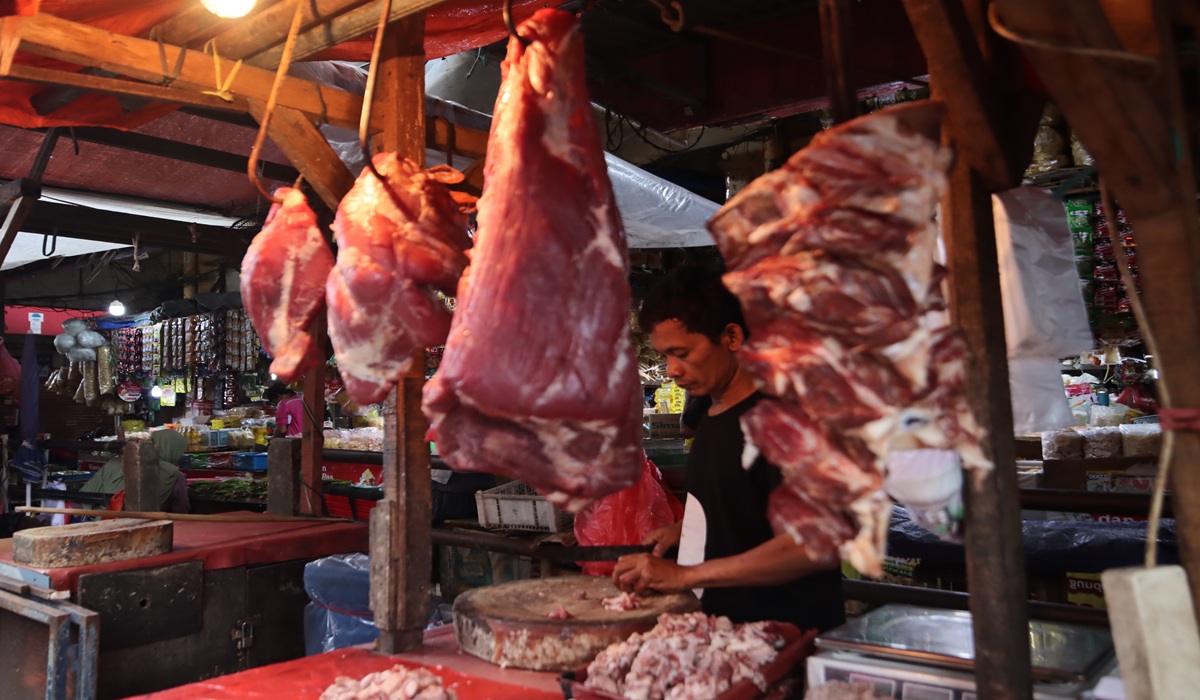
The National Food Agency (Bapanas) has issued clarification regarding reports of rising beef prices in several markets that allegedly exceed the Reference Sales Price (HAP).
The government has emphasised that the elevated prices circulating among consumers generally refer to beef of specific quality grades that do not fall within the scope of government price regulation.
Astawa, Deputy for Food Availability and Stabilisation at Bapanas, explained that the price surge to Rp160,000 per kilogramme recorded at Kosambi Market, for example, represents super-quality beef. Meanwhile, the HAP established by Bapanas targets only standard-grade beef.
“Colleagues, another report has just emerged from Kosambi with beef prices at Rp160,000. They claim this is a price increase, although they describe it as super-quality. So that Rp160,000 is for super-quality beef. We do not regulate this,” Astawa stated during a press briefing on Friday, 13 March.
In accordance with National Food Agency Regulation Number 12 of 2024, the government has established a beef price corridor at consumer level ranging from Rp105,000 to Rp140,000 per kilogramme.
Astawa stressed the importance of the public and regional Task Forces (Satgas) distinguishing the types of beef being monitored.
“The government regulates the price of standard-grade beef, namely hindquarter cuts with minimal fat content, not lean meat, with a maximum price of Rp140,000. So regional Saber Satgas units must demonstrate to the public that beef at Rp140,000 is indeed available,” Astawa added.
Data from the Central Statistics Agency (BPS) through the first week of March 2026 recorded increases in the Price Development Index (IPH) for beef in 90 districts and municipalities. However, following field verification, the majority of prices in these areas were reportedly controlled.
Of the 90 areas, 58 districts recorded prices still below HAP, whilst the remaining 32 areas exceeded HAP and are undergoing intensive intervention.
In a similar vein, the National Police Food Task Force reported a declining trend in the number of provinces experiencing IPH increases. Police Brigadier General Zain Dwi Nugroho disclosed that provinces experiencing price increases had declined from 26 provinces at the end of February to 23 provinces in the first week of March 2026.
This decrease is attributed to intensive monitoring efforts. Since 5 February through 11 March, the Task Force has conducted 47,217 monitoring activities.
Firm measures have also been implemented, including the issuance of 705 warning letters, 1,494 stock replenishment coordinations, and recommendations for business licence and distribution permit revocation for businesses violating regulations.
Frozen beef prices are now averaging above Rp110,000 per kilogramme, a significant increase from normal prices ranging from Rp80,000 to Rp90,000 per kilogramme. The surge in demand is driven by consumer needs to prepare beef as menu items for breaking fast and pre-dawn meals during Ramadan.
The Ministry of Agriculture is accelerating investment development for large-scale cattle ranching in Central Kalimantan with a target population of 200,000 head within one integrated region.
Ahead of Lunar New Year and Ramadan 2026 celebrations, beef sales at markets in Sungailiat City, Bangka Belitung Province, experienced significant surges.
The DKI Jakarta Provincial Government predicts increased food demand approaching Ramadan and Eid al-Fitr 2026, particularly for chicken eggs, meat, shallots, and cooking oil.
One of the most sought-after products is beef sold at Rp100,000 per kilogramme, considerably cheaper than market prices.
The Indonesian Meat Cutters and Traders Network (Jappdi) has requested the government oversee not only domestic beef trade but also imported buffalo meat circulating in markets.
At Sumber Market, Cirebon Regency, grade-one lower-quality rice was recorded at Rp14,000 per kilogramme and grade-two at Rp13,500 per kilogramme.
As the second week of Ramadan 1447 H progressed, egg, chilli, and shallot prices in Sukabumi City began declining.
At Tiban Center Market, packaged rice at 5 kilogrammes remained priced around Rp85,000, 10-kilogramme packaging at Rp155,000, and 25-kilogramme packaging ranging from Rp350,000.