
National Fertiliser Stocks Remain Secure Despite Hormuz Strait Conflict Disrupting Global Trade
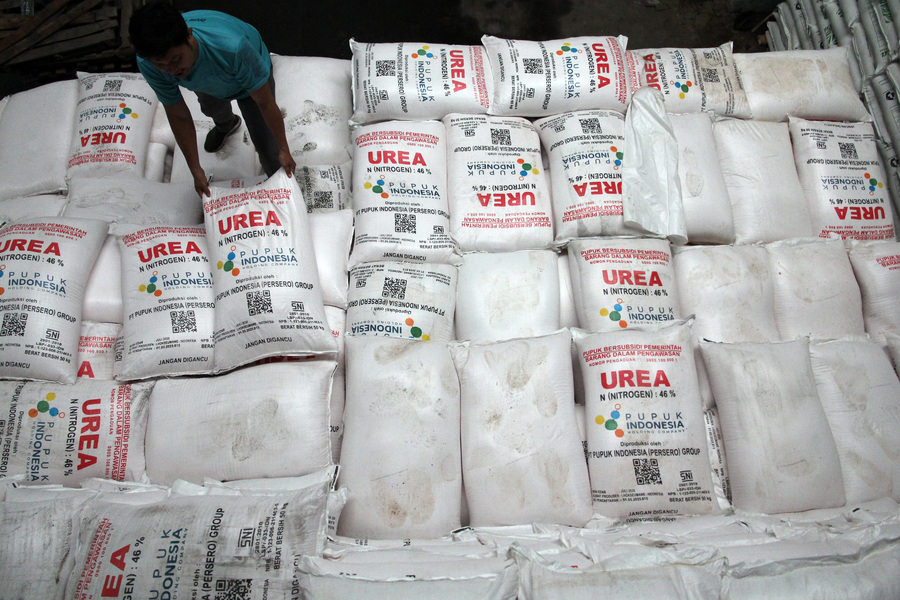
The availability of fertiliser in Indonesia remains secure despite tensions in the Strait of Hormuz in the Middle East, which are impacting international trade routes. This was stated by the President Director of PT Pupuk Indonesia (Persero), Rahmad Pribadi, during a working meeting with Commission IV of the House of Representatives (DPR RI) in Jakarta on Tuesday (7/4). He also assured that national fertiliser stocks are in a safe condition with factory operations running optimally.
“Alhamdulillah, stocks are safe; we have 1.29 million tonnes in stock, and all factories are operating well. This means we will continue to maintain this level; there are no problems,” said Rahmad.
He explained that the Strait of Hormuz plays a vital role in global fertiliser distribution, contributing around 30% to monthly worldwide fertiliser trade.
Nevertheless, Indonesia is deemed not to experience significant impacts due to its independent and strong national fertiliser industry.
“Up to today, even though the world is in turmoil, Indonesian fertiliser can actually function as a saviour for the global food ecosystem,” he clarified.
Several countries such as Brazil, India, Australia, Thailand, and the United States are beginning to feel the effects of disrupted global fertiliser supplies. However, Indonesia’s situation remains stable without significant disruptions.
The resilience of the national agricultural sector has once again been proven amid global dynamics, including the potential disruption of global fertiliser distribution due to conflicts in the region. The government assures that fertiliser stocks remain sufficient and distribution to farmers is proceeding smoothly.
Rahmad assessed that this success is inseparable from the directives of President of the Republic of Indonesia Prabowo Subianto, which are implemented optimally by Minister of Agriculture Andi Amran Sulaiman along with his team, as well as support from Commission IV of the DPR RI.
According to him, this condition is worth being grateful for as it demonstrates the strength of the integrated and responsive national food system to global situations.
“We should be proud and happy under the leadership of President Prabowo, executed exceptionally by the Ministry of Agriculture and of course with support from Commission IV of the DPR RI; we can all sleep soundly. Because our entire food ecosystem is secure,” said Rahmad.
Furthermore, Rahmad revealed that the government has undertaken major reforms in fertiliser governance since 2025 through two main regulations, namely Presidential Regulation Number 6 of 2025 and Presidential Regulation Number 113 of 2025.
“Under the instructions and leadership from the Minister of Agriculture and of course support from Commission IV, in 2025 we have already made quite significant changes in governance. The first is Presidential Regulation Number 6 of 2025, which essentially is deregulation,” he explained.
“Previously, fertiliser was available in factories and warehouses, but farmers couldn’t yet redeem it because the regulations were convoluted. This has been simplified so that if the Minister instructs us, we can directly distribute to farmers,” added Rahmad.
In addition, Presidential Regulation Number 113 of 2025 provides flexibility for Pupuk Indonesia to modernise factories and improve operational efficiency, which impacts affordability as fertiliser prices have been reduced.
“The essence (of Presidential Regulation Number 113 of 2025) is to give room for Pupuk Indonesia to rejuvenate and revitalise factories and operate according to efficiency principles. The result impacts affordability because the HET (highest retail price) for fertiliser has been lowered by 20%,” he added.
The ease of obtaining fertiliser and the price reduction have also driven increased fertiliser uptake by farmers throughout 2025 to 2026. This directly contributes to increased national agricultural production.
“Because farmers can easily redeem fertiliser and the price has dropped, fertiliser redemption in 2025 and 2026 continues to increase. This is also evident from the increasing absorption of unmilled rice by Bulog. It means there is a direct linkage between fertiliser and agricultural production,” said Rahmad.
He also emphasised that fertiliser is a crucial component in improving agricultural yields, so fertiliser subsidy policies have a significant impact on productivity and economic stability.
“Fertiliser is a critical agro input, a very important input for agricultural productivity. Unlike consumptive subsidies, fertiliser subsidies are production subsidies. If fertiliser uptake increases, it will certainly boost agricultural productivity and help maintain inflation,” he said.