
National Economic Stability in the Face of the Middle East Conflict
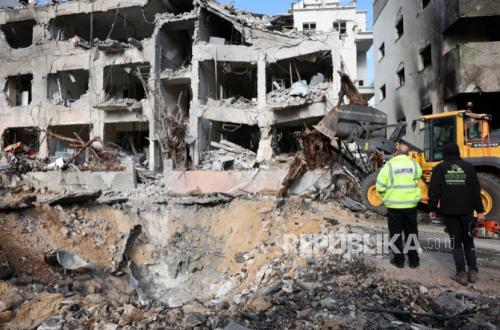
Geopolitical tensions in the Middle East are rising again as the conflict between Iran, the United States and Israel intensifies. The conflict is not only a regional security issue but also generates uncertainty in the global economic system. In a globally interconnected economy, escalations in a strategic region like the Middle East almost always have implications that extend beyond the conflict area itself.
The Middle East holds a strategic position in the global energy system. The region houses a large share of the world’s oil reserves and is a hub for international energy distribution. One of the most important routes is the Hormuz Strait, connecting the Persian Gulf with global energy markets. This route is among the most vital for global oil trade, with around one-fifth of global oil trade passing through the area each day.
When geopolitical tensions rise in the region, global energy markets usually respond swiftly with higher oil prices. This occurs because market participants factor in the risk of disruption to energy supply. Even without physical disruption, the threat of conflict is often enough to trigger volatility in oil prices.
These energy price rises affect not only oil-producing countries, but also energy-importing nations. In a global economy heavily dependent on fossil fuels, fluctuations in oil prices can quickly affect various sectors of the economy.
Indonesia’s economic vulnerability to energy shocks
For Indonesia, the dynamics of world oil prices have a significant impact. This is because domestic energy needs remain heavily dependent on imported oil.
Indonesia’s oil consumption is currently around 1.6 to 1.7 million barrels per day, while domestic production sits at around 800 to 900 thousand barrels per day. In other words, almost half of the national oil requirement must be met through imports.
Some of these energy imports come from the Middle East. Therefore, geopolitical dynamics in the region have the potential to directly influence the energy costs Indonesia must bear. When world oil prices rise, energy import costs rise as well, and this can place pressure on various domestic sectors.
As part of efforts to reduce vulnerability to Middle East geopolitics, Indonesia has begun diversifying oil import sources. The government has shifted about 25 percent of crude oil imports away from the region to other countries such as the United States, thereby reducing national energy supply dependence on a single geopolitical region.
Fiscal pressures, inflation, and exchange rate stability
Rising world oil prices also have direct implications for Indonesia’s fiscal conditions. In the state budget framework, the government still bears various forms of energy subsidies and compensations to maintain domestic fuel price stability.
If global oil prices rise, the costs the government must incur to maintain domestic energy price stability also rise. This can add pressure on the national budget.
Moreover, energy price increases often trigger a chain reaction in the economy. Transportation and distribution costs rise, which can in turn push up the prices of essential goods. This could heighten inflationary pressures and affect household purchasing power.
At the same time, higher oil prices increase the need for foreign exchange to pay for energy imports. The demand for dollars in the domestic market can put pressure on the rupiah. If this pressure lasts for a long time, national macroeconomic stability can be affected as well.
Energy security as a strategic agenda
A volatile global geopolitical situation shows that energy security becomes a crucial factor for a country’s economic stability. High dependence on energy imports makes a country more vulnerable to external shocks.
In recent years, Indonesia has begun developing a range of strategies to strengthen national energy resilience. One important step is the development of biodiesel programmes such as the B35 policy, a blend of diesel fuel with biodiesel based on palm oil. This programme aims to reduce dependence on fossil fuel imports.
In addition, the development of waste-to-energy technology is being considered as an alternative to generate energy from waste processing. Additionally, as a tropical country, Indonesia also has significant potential for solar energy development through the use of solar panels for power generation. Diversification of energy sources like this is an important step in reducing the economy’s vulnerability to global geopolitical dynamics.
Energy security as a strategic agenda
In addition to renewable energy development, the government has begun opening up the possibility of developing nuclear energy as part of a long-term energy security strategy. The administration of President Prabowo Subianto targets the construction of a nuclear power plant (NPP) with an initial capacity of around 500 megawatts, which will then be developed gradually.