
National Commission on Human Rights warns of criminalisation risks in agrarian disputes
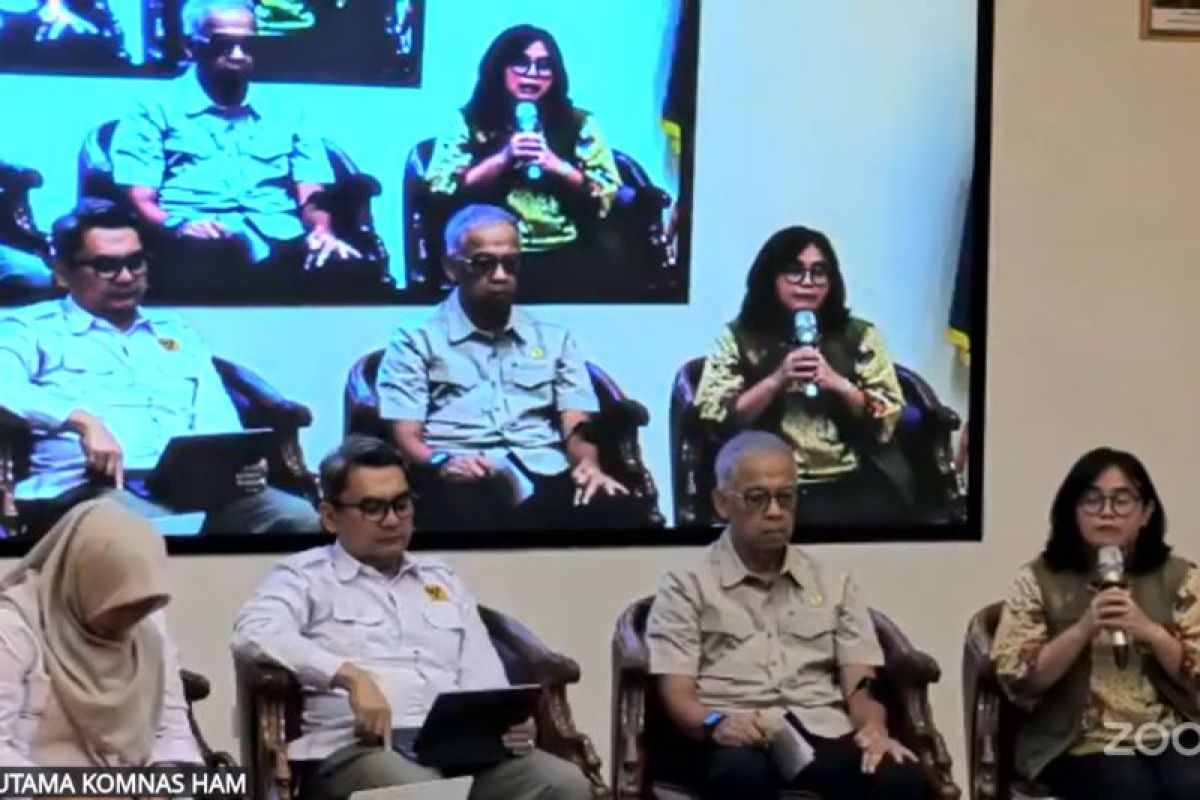
Jakarta — The National Commission on Human Rights has highlighted the risk of criminalising communities in handling agrarian disputes, which continue to occur frequently in various regions, particularly when land conflicts are directly brought into criminal proceedings.
Uli Parulian Sihombing, commissioner for assessment and research at the National Commission on Human Rights (Komnas HAM), stated that the use of criminal legal instruments in agrarian disputes should be positioned as ultimum remedium—a last resort—after resolution through civil and administrative channels.
“Criminal law enforcement must be ultimum remedium or a last resort, not the entry point for resolving agrarian disputes,” Uli said during a public discussion and launch of the National Police’s study on handling agrarian and natural resource conflicts held online in Jakarta on Monday.
According to the study, Komnas HAM recorded 3,264 agrarian dispute complaints from 2020 to 2025. Of these, some concerned the conduct of officials in the field, including approximately 160 complaints about agrarian or natural resource conflicts involving police during the 2020–2024 period.
Uli stated that the practice of bringing land disputes into criminal proceedings risked triggering the criminalisation of communities that are essentially protecting their living spaces.
“Criminalisation has shifted into becoming a repressive tool against communities defending their living spaces,” he said.
According to Uli, the problem often emerges because agrarian disputes that are substantively within the civil or administrative sphere are instead processed through criminal instruments.
“These disputes that are substantively within the civil and administrative sphere are often forced into the criminal sphere,” he said.
He explained that agrarian conflicts affect not only the civil and political rights of communities but also the fulfilment of their economic, social and cultural rights.
“Land degradation or expropriation can result in lost access to food, water and employment, and marginalise indigenous communities, women and children,” Uli said.
In its study, Komnas HAM also noted that an overly formalistic security approach in land disputes often creates public perception that authorities side with corporations, even though authorities are actually carrying out security functions.
Komnas HAM recommended that criminal law enforcement be suspended while disputes over ownership are still proceeding through courts or administrative mechanisms, such as the National Land Agency, and encouraged resolution through dialogue, mediation and human rights-based approaches.