
National Chinese New Year Festival breaks world record
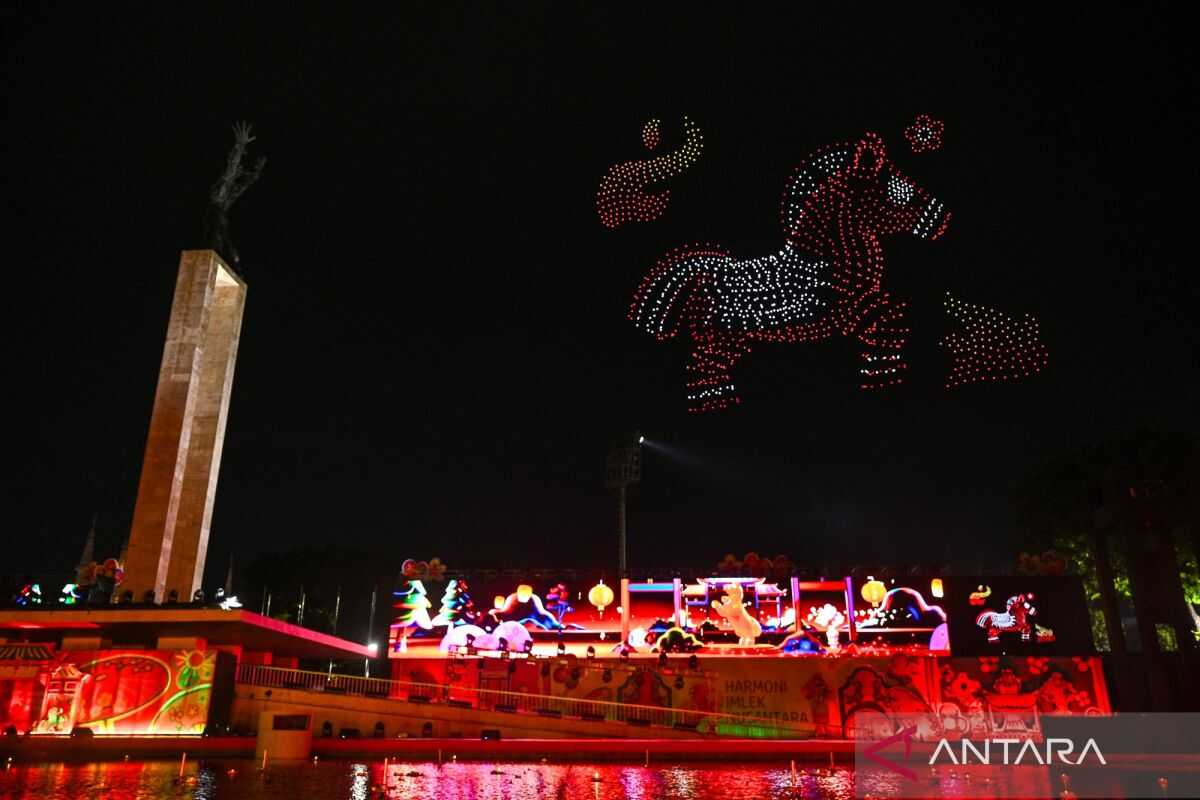
Jakarta — The culmination of the National Chinese New Year Festival 2026 marked a Guinness World Record achievement through the ‘Makan Besar Bersama Bobon Santoso’ communal dining event held at Banteng Field in Jakarta.
This positive milestone was welcomed by Irene Umar, Deputy Minister of Creative Economy and Deputy Head of the Creative Economy Agency, who stated that the Lontong Cap Go Meh served at the event symbolised both acculturation and culinary creativity alongside inclusivity.
“This large communal meal provides an opportunity for micro, small and medium enterprises, content creators, and local communities to showcase innovation whilst preserving culinary traditions that form part of Indonesia’s creative economy heritage,” said Deputy Minister Irene in an official statement received and confirmed in Jakarta on Sunday.
“Since the Chinese New Year celebration coincides with Ramadan, the Lontong Cap Go Meh dish symbolises the acculturation of Chinese culinary traditions and Indonesian Ramadan customs,” she added.
The event, which successfully broke the world record, served 5,054 portions of Lontong Cap Go Meh, officially setting a Guinness World Record in the category of Most Servings of Lontong Cap Go Meh Served in 8 Hours.
Thousands of people from various backgrounds attended the large communal meal to enjoy the traditional Lontong Cap Go Meh dish.
“This communal dining event is not merely about enjoying a meal, but also a moment for sharing, interaction, and celebrating the richness of culinary traditions and the Cap Go Meh festival,” said Irene.
The Makan Besar Bersama Bobon Santoso event demonstrated that traditional Indonesian cuisine is not only about taste, but also represents a symbol of unity, a platform for creativity, and a new engine of growth for the nation’s creative economy ecosystem.
The values of togetherness, mutual cooperation, and appreciation for culinary culture were evident in public participation, confirming that the creative economy grows from creativity, culture, and public participation, not solely from large-scale industry.