
National algorithms and agents of change in the digital era
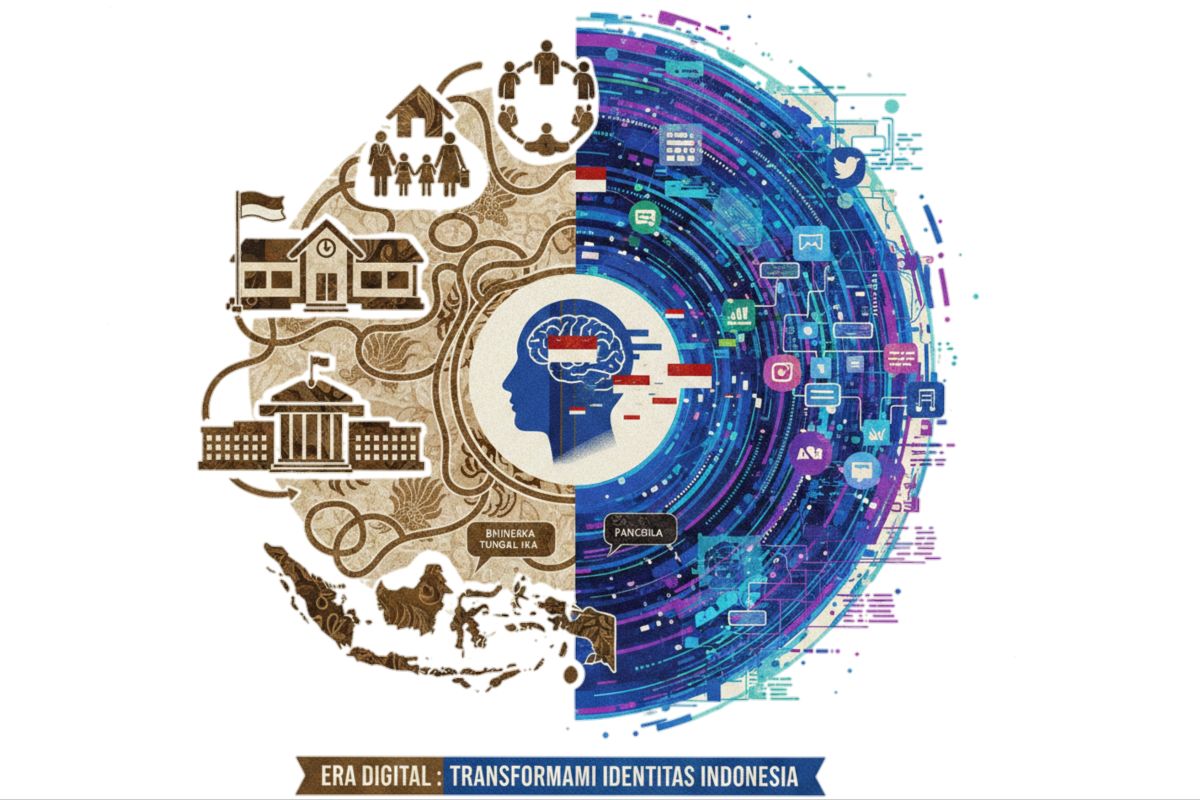
This is where the national algorithm becomes important. It is a mechanism to ensure that the narrative about Indonesia in digital spaces is one that strengthens rather than weakens, one that unites rather than divides.
Surabaya (ANTARA) - The digital era has transformed how a nation understands itself.
Nationalism was once shaped by physical spaces such as schools, families, organisations and the state. Today, however, national consciousness is produced, reproduced and even contested in digital spaces controlled by algorithms.
It is in this algorithmic space that identity, loyalty and even perceptions of the state are continuously contested.
In this context, participating in the National Values Consolidation Programme (PPNK) Cohort 224 at the National Resilience Institute (Lemhannas RI) became an important reflective experience.
The programme affirms that national resilience is a dynamic condition encompassing the nation’s capacity to develop its national strength in confronting various threats, both domestic and foreign.
What must be added in the contemporary context is that these threats increasingly originate from the digital realm — a space that knows no geographical boundaries yet has tangible impacts on social cohesion and national integration.
Algorithms are not merely technology. They represent a new structure of power. Digital platforms, such as social media, operate on engagement logic that prioritises content triggering emotion, controversy and polarisation.
Within Manuel Castells’ theoretical framework of the network society, power in the digital era is no longer entirely centralised in the state but is distributed across communication networks that shape public perception.
In the Indonesian context, this gives rise to a paradox. On one hand, digital spaces open opportunities for the democratisation of information. On the other, they also create space for disinformation, radicalism, identity polarisation and even the delegitimisation of the state. This phenomenon demonstrates that threats to national resilience are no longer solely military or economic in nature but also cognitive and psychological — threats to how citizens understand reality.
Lemhannas RI emphasises that national vigilance is the quality of a nation’s readiness to detect and anticipate threats to the Unitary State of the Republic of Indonesia (NKRI) at an early stage.
In the digital context, national vigilance means the nation’s capacity to understand how algorithms work, how narratives are produced and how public opinion can be manipulated.
In other words, today’s battleground for nationalism is not only in geographical territory but also in algorithmic territory.