
Nation on Alert for Homecoming: 1,560 Posts Opened, Government Monitors Eid Transport
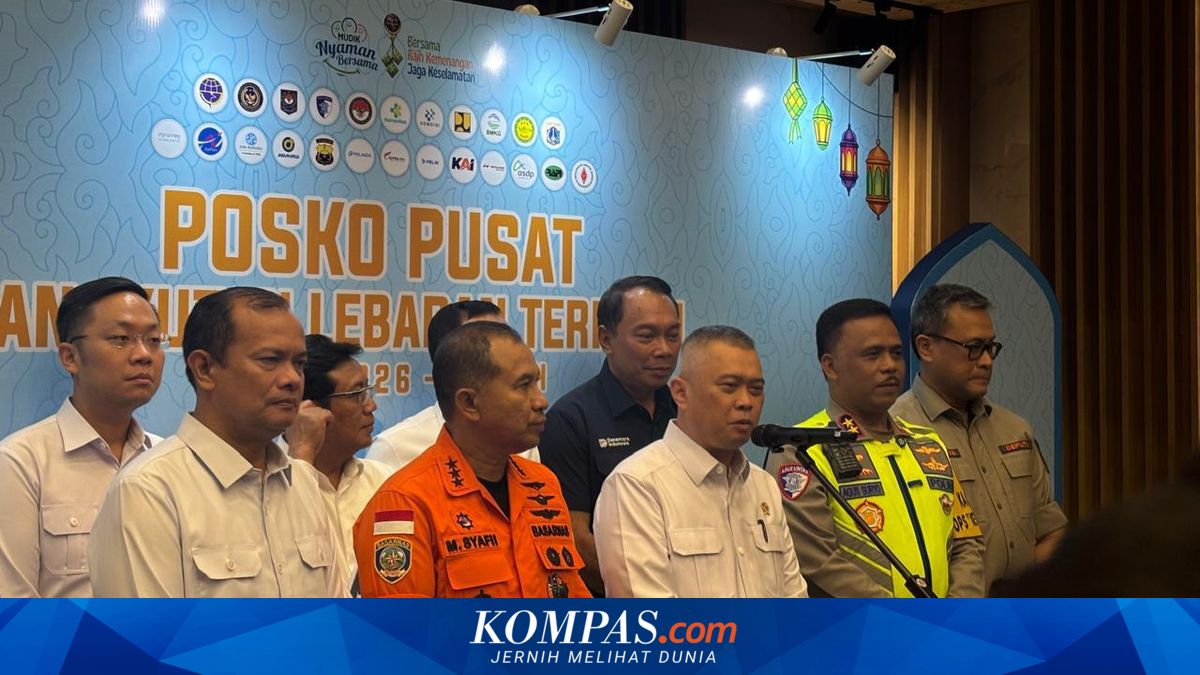
JAKARTA — The Government has begun activating national transport oversight ahead of the Eid homecoming rush in 2026. A total of 1,560 monitoring posts have been established to supervise passenger movements across various transport modes, whilst ensuring that travel during the homecoming and return journey periods runs smoothly.
This initiative commenced with the opening of the Central Unified Eid Transport Post 2026 by Transport Minister Dudy Purwagandhi at the Ministry of Transport headquarters in Jakarta on Friday (13 March 2026).
According to Dudy, the post will serve as the national coordination centre for monitoring transport operations and accelerating inter-agency coordination should any obstacles arise in the field.
“In line with President Prabowo Subianto’s directive, the Government ensures that all transport facilities and public services during the homecoming period run smoothly through strong coordination between ministries, regional governments, state-owned enterprises, the private sector, and all transport stakeholders,” Dudy said at his office.
He added that the post will also function as a supervision, monitoring, and evaluation centre for the Eid transport operations down to regional level.
The Government is ensuring the readiness of transport infrastructure and facilities across all modes. Additionally, restrictions on certain transport services will be implemented ahead of the peak homecoming and return journey periods to reduce queues and congestion.
The Ministry of Transport has also prepared transport vehicle reserves according to field requirements.
Various other measures have been prepared, including safety inspections to ensure vehicle operational standards, traffic management coordination with the Police, Armed Forces, and regional governments, as well as policies for reduced airfares and toll discounts.
“The Ministry of Transport is also providing a free travel programme to assist the public, conducting extensive public education for personnel and the public regarding transport service policies, transport safety and security aspects, as well as intensive coordination with relevant stakeholders,” Dudy added.
He therefore urged all stakeholders to have a shared understanding and perception when implementing mobility control policies in the field.
Moreover, oversight must be conducted firmly yet humanely, prioritising public service and transparent, easily understood public communication.
“In this way, the public can understand the policies adopted by the Government, and it also maintains consistency in communication to avoid contradictory information or sectoral ego concerns,” he explained.
He also reminded personnel at the posts and in the field to remain prepared for various transport dynamics during the homecoming period.