
NASA Space Probe Re-enters Earth's Atmosphere
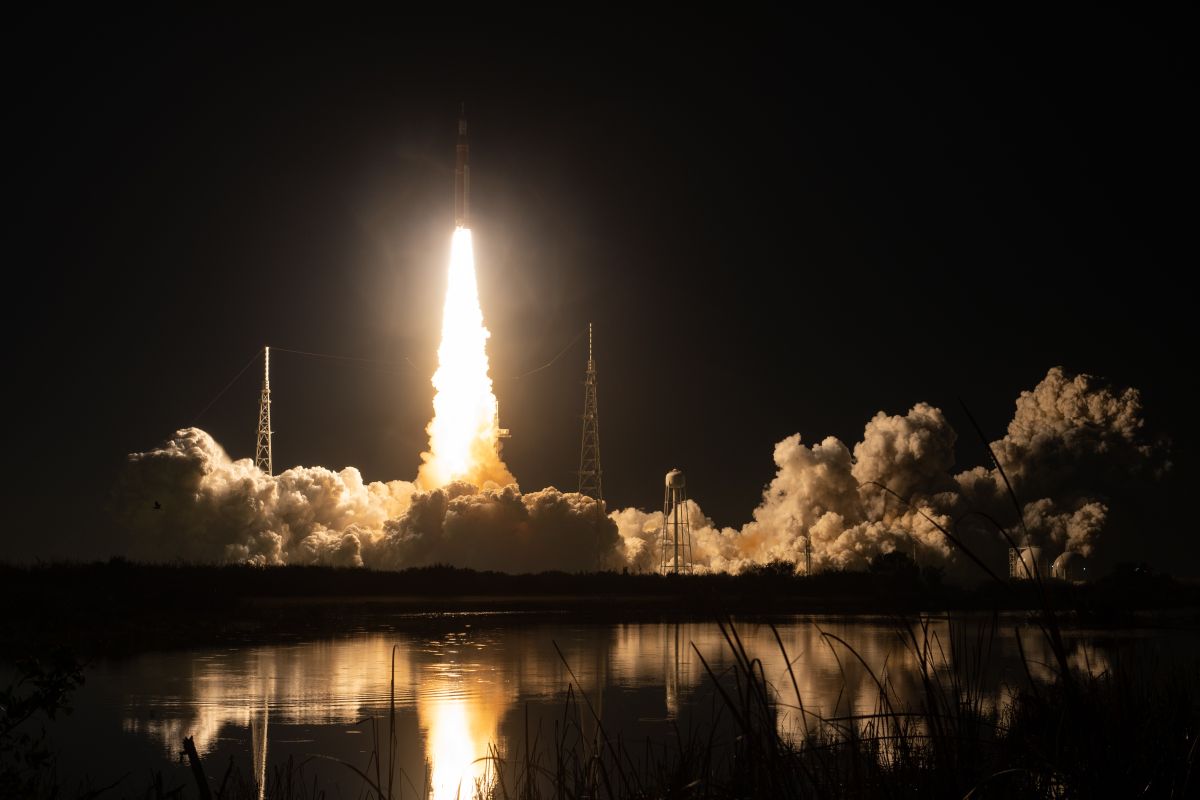
Los Angeles — The United States space agency has announced that a NASA space probe re-entered Earth’s atmosphere on Wednesday, 11 March at 06:37 Eastern Time (17:37 Western Indonesian Time), several years earlier than anticipated.
The Van Allen Probe A re-entered Earth’s atmosphere almost 14 years after its launch in August 2012. The probe, alongside its twin, Van Allen Probe B, was designed to study the Van Allen radiation belts, rings of charged particles trapped by Earth’s magnetic field that shield the planet from harmful cosmic radiation and solar storms.
The US Space Force confirmed that Van Allen Probe A re-entered the atmosphere over the eastern Pacific Ocean, at approximately 2 degrees south latitude and 255.3 degrees east longitude. According to NASA, most of the probe’s structure is expected to burn up during atmospheric re-entry, although some components may survive.
Both Van Allen probes operated from 2012 to 2019 and collected unprecedented data on Earth’s radiation belts. During the mission, scientists discovered that a third, transient radiation belt can form during periods of intense solar activity.
When the mission ended in 2019, following fuel depletion of both twin spacecraft, scientists initially estimated they would re-enter Earth’s atmosphere around 2034. However, stronger-than-expected solar activity during the current solar cycle has increased atmospheric drag, accelerating orbital decay and causing the spacecraft to return to the atmosphere ahead of schedule.
NASA states that data from the mission continues to help improve understanding of space weather and its effects on satellites, astronauts, and Earth-based technology systems including communications, navigation, and electrical grids.
NASA has indicated that Van Allen Probe B is not expected to re-enter the atmosphere before 2030.