
NASA Captures Mars from an Unexpected Angle, Appearing as a Crescent Moon in Space
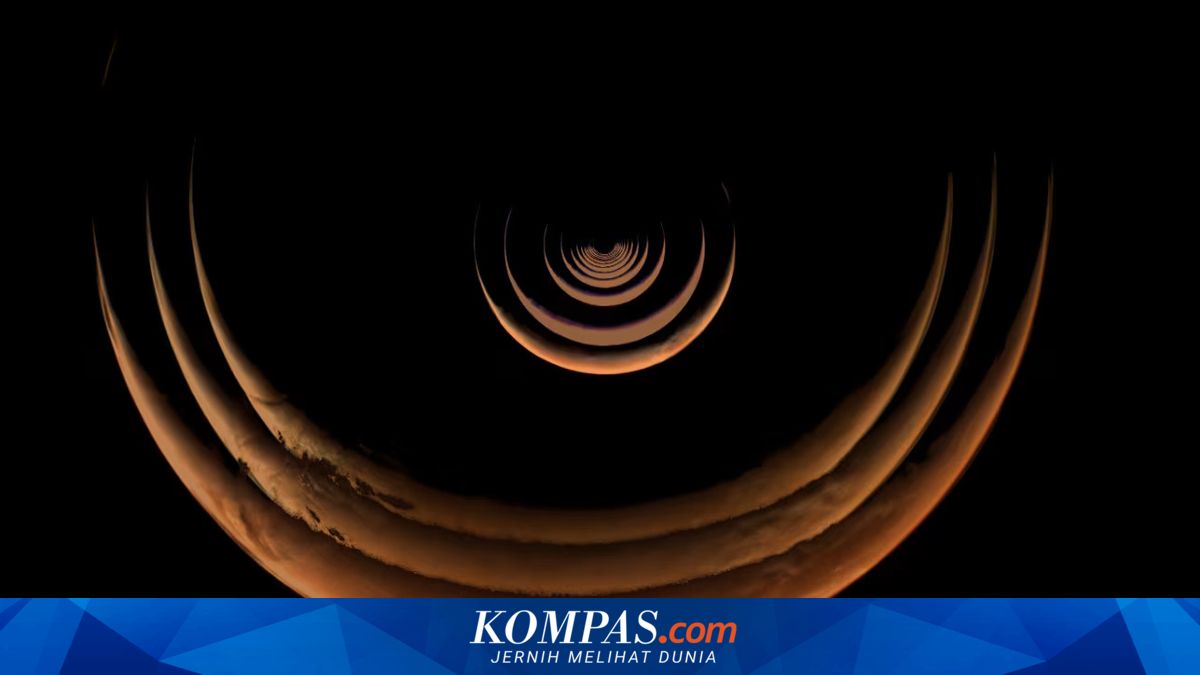
A NASA spacecraft has captured Mars from an unusual vantage point, not from the planet’s surface or orbit, but from a near-Mars flyby trajectory that produced a unique perspective: Mars appearing as a slender crescent of light in the distant outer space. The mission’s ultimate destination is asteroid 16 Psyche — a mysterious body in the asteroid belt between Mars and Jupiter, thought to have a surface rich in metal. During a long journey toward that asteroid, the Psyche spacecraft performed a flyby of Mars on 15 May. The result: thousands of Martian images never before taken from this angle, and a gravity assist that speeds the spacecraft on toward its target. The Psyche mission covers about 3.6 billion kilometres to reach the asteroid, a route not achievable in a straight line without substantial fuel. To save propellant while fine-tuning the flight path, NASA mission planners deliberately designed a route that passes by Mars. As the craft passed within about 4,609 kilometres of the Martian surface on 15 May, Mars’ gravity acted like a giant natural slingshot — bending and accelerating the spacecraft toward the right direction at speeds higher than before. This technique, known as a gravitational slingshot, has long been used by NASA to conserve fuel while increasing spacecraft speed. What was special this time was what Psyche’s camera captured during the manoeuvre. In the days leading up to the close approach, the spacecraft approached Mars from a high angle — a position that allowed its camera to record Mars as a slender crescent of light, similar to a crescent Moon in Earth’s night sky, but the object was Mars. “A thin crescent during approach and the full view of Mars after we fly past created an opportunity for the imaging team to calibrate and take truly beautiful photos,” said Jim Bell, lead instrument captain for the Psyche camera at Arizona State University. As it drew closer, Psyche’s camera recorded different regions of Mars — from the southern polar region to dust trails swept by winds across the planet’s surface, with thousands of images captured during the flyby.