
Narrow Trading Range: Analysts Predict Jakarta Composite Index to Return to 6,000s Level
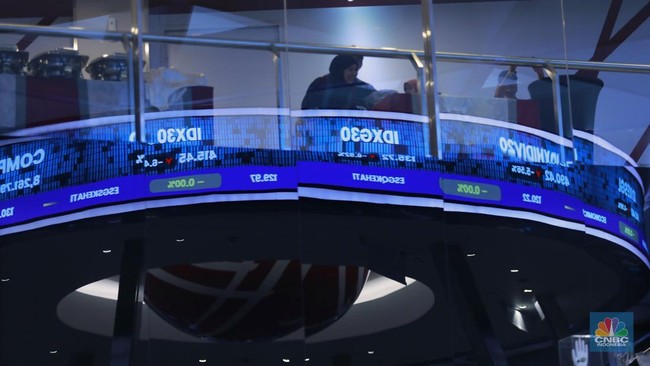
Jakarta — The Jakarta Composite Index (IHSG) declined sharply during trading on Monday, 9 March 2026. The IHSG touched a low of minus 5.2 per cent, reaching 7,156 during morning trading, though the correction subsequently narrowed to above minus 3 per cent by session end.
Analyst Lukman Leong of Doo Financial Futures attributed the weakness in Indonesia’s capital market to deteriorating global geopolitical sentiment, particularly concerns over major disruptions to oil production and supply from the Strait of Hormuz.
“The worsening global risk-off sentiment, driven by concerns about significant disruptions to oil production and supply from the Strait of Hormuz, will heavily burden the economies of many countries, particularly in Asia, including Indonesia. This trend will continue unless a solution emerges,” Leong stated in a telephone interview.
Leong cautioned that whilst the IHSG might experience a brief rebound driven by bargain hunting or improving sentiment, such recovery would be neither significant nor sustained. He predicted that if the conflict continues or escalates, the index could easily fall below 7,000 or return to the 6,000s level, given that domestic sentiment also remains on a negative trajectory.
Herditya Wicaksana, Head of Retail Research at MNC Sekuritas, offered similar views, noting that the IHSG correction aligns with declines across global and regional Asian markets. “We anticipate that the Middle East conflict escalation and the impact of Strait of Hormuz closure will continue driving sentiment,” he said.
Crude oil prices have strengthened above USD 100 per barrel, whilst the rupiah has breached its psychological level, trading at Rp 17,009 per US dollar.
For the immediate term, Wicaksana believes the IHSG has limited room for movement. “We expect the index to consolidate for now, as the correction level we anticipated has been reached,” he explained, noting that the predominance of negative sentiment and lack of other supportive factors leave little room for sustained strength. “Any near-term recovery would likely be driven by technical rebound,” he added.