
Naeka Overcomes Initial Scam to Break into Global Markets
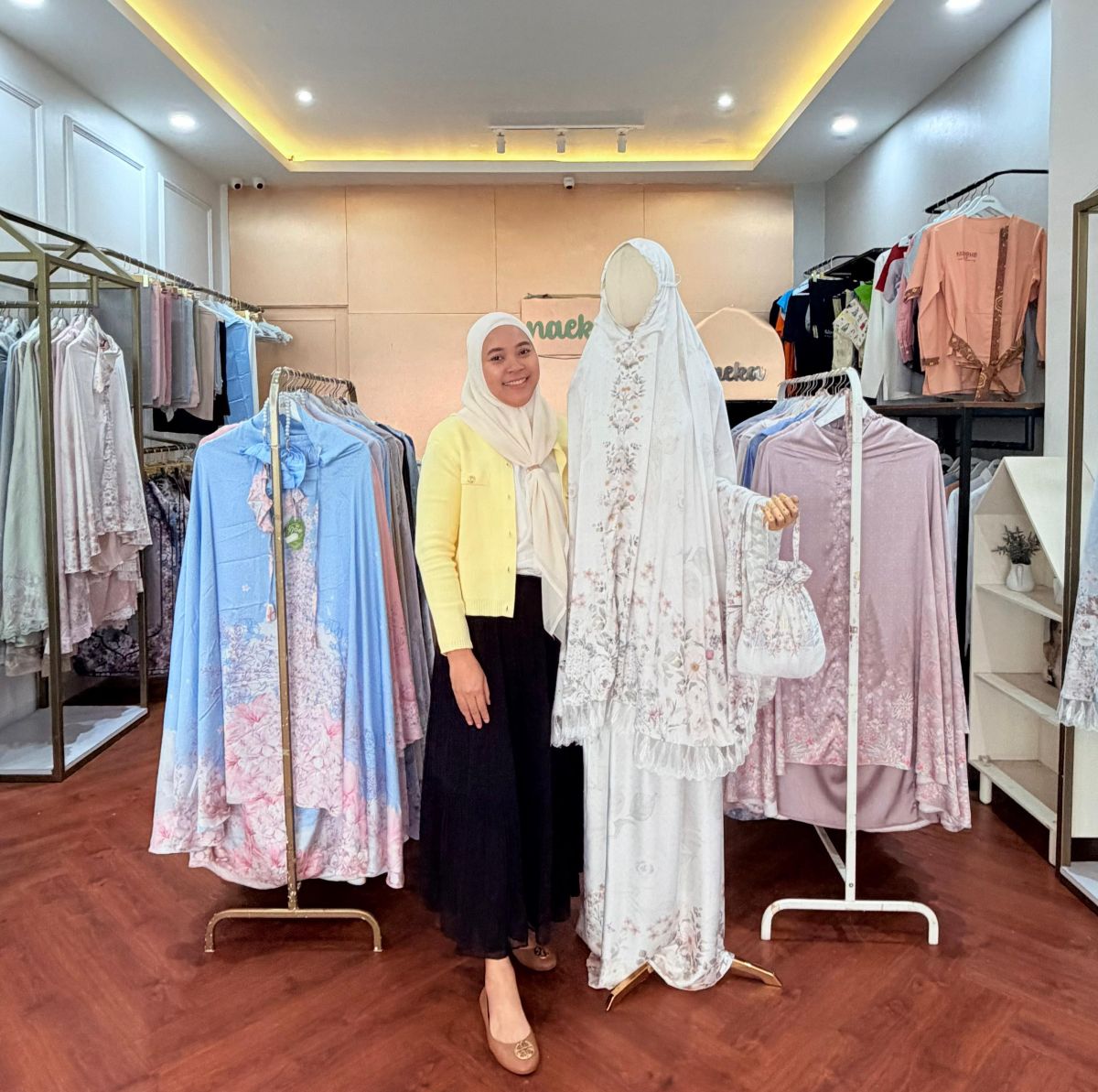
Amid the 2020 COVID-19 pandemic when many businesses had shut down, 39-year-old Eka Budi Utami chose to seize new opportunities. After deciding to stop working post-childbirth, the Purworejo native launched Naeka, a modest Muslim fashion brand. Starting from simple online sales, Naeka has since grown into a premium mukena brand that has successfully entered international markets including Singapore, Canada, and Senegal.
The business journey received support from PT Bank Rakyat Indonesia (Persero) Tbk. Through BRI’s Rumah BUMN Jakarta, Eka attended training sessions on financial management, product packaging, and market expansion strategies.
However, from the outset, Eka faced challenges. While setting up her own garment factory, she was scammed by a trusted production partner. Sewing machines had been purchased and tailors hired, but the individual disappeared with workers’ wages. Despite the setback and losses during the pandemic, Eka chose to persevere and continue her business.
Initially, Naeka was not a modest Muslim fashion brand. Eka and her team started with baby and children’s clothing, preparing production needs such as stock, certifications, and product standards. However, the business struggled to grow.
‘At the time, fresh from childbirth, I was idealistic about creating baby products. But we learned from that failure,’ she told Media Indonesia at Naeka’s headquarters in Jagakarsa, South Jakarta, recently.
During the business launch, Eka and her sister-in-law Rina established the Naeka brand, a combination of ‘Na’ from Rina and ‘Eka’.
They then ventured into Muslim women’s wear using a maklon (contract manufacturing) system for hijabs. Market response was positive, with products selling out quickly, leading them to focus on the broader modest fashion segment.
Naeka launched its first mukena during Ramadan 2020, sourcing printed fabrics from fabric stores as they lacked in-house design and printing capabilities.
Despite being new with no physical store or dedicated team, Naeka’s mukenas received strong market response. Sales during the first pandemic-era Eid reached Rp45 million.
Eka admitted she was surprised as Naeka was sold online with minimal promotional support. Positive consumer feedback gave her confidence to expand the mukena line.
She noted the pandemic became a catalyst for Naeka’s growth. By the second year of the pandemic, sales increased and the business had expanded beyond its initial scale.
‘The pandemic wasn’t a barrier for our business; in fact, revenue grew significantly in the second year of COVID-19,’ she said.
As market demand rose, Naeka strengthened production capacity by establishing its own garment factory in 2021 to ensure product quality and stable manufacturing. However, this growth was accompanied by another painful experience.
When setting up the factory, Eka admitted she had no garment production experience, so she entrusted operations to someone perceived as knowledgeable. The individual initially offered help in building the production system, from hiring tailors to workflow management.
However, after machinery and production supplies were purchased, the trusted individual disappeared, taking workers’ wages and abandoning factory operations.
‘Tailors went unpaid for weeks. It turned out this was a common scam, having occurred elsewhere,’ she said.
Despite the losses, Eka continued the business as production equipment was in place and workers still needed employment, especially during the 2021 pandemic.
Naeka focuses on printed silk premium mukenas featuring pastel floral patterns, supported by lightweight, soft, and cool materials for comfort and elegance.
Naeka strengthened its premium positioning, with mukenas priced between Rp255,000 and Rp685,000 for fully printed lace-detail products.
Eka maintains premium quality despite cheaper competitors, noting the premium market retains purchasing power if products consistently deliver value and quality.
‘We must have our own value,’ she stressed.
She also identified finding the right product DNA as a major challenge. After failing with baby products, she found modest Muslim fashion best suited her.
‘If I had given up on baby products, Naeka might not exist today,’ she said.
Naeka now operates its own factory with most workers from Garut, Cilacap, and Central Java. Production is fully internalised, from sewing to quality control (QC).
Eka stressed that owning the factory is crucial for consistent quality, having previously used external contractors whose stitching didn’t meet standards.
‘External tailors often produce uneven stitches. We decided to handle everything internally to maintain QC,’ she said.
Naeka is also obtaining various certifications and business licences, including TKDN and industrial permits,