
Nadiem's Wife Requests Audience, Formappi: DPR Must Be Cautious, Do Not Intervene in Law Enforcement
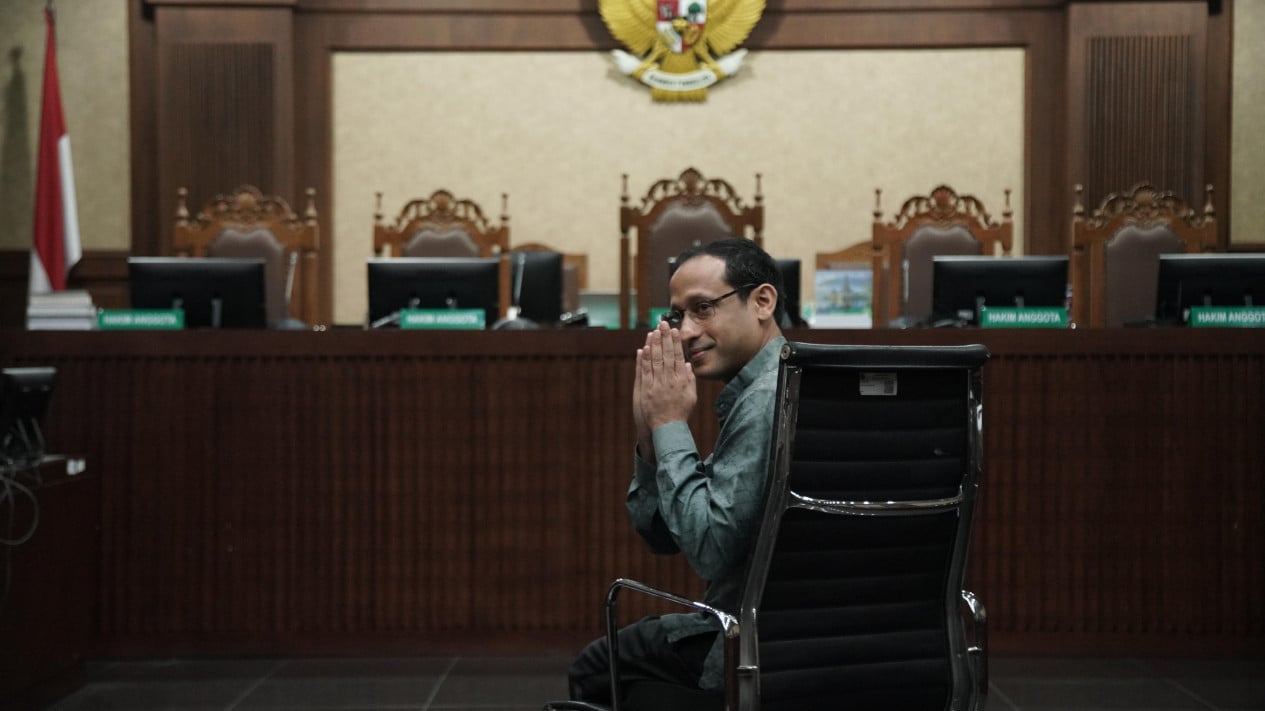
Franka Franklin Makarim, the wife of former Minister of Education, Culture, Research, and Technology Nadiem Makarim, submitted a letter requesting an audience and legal protection to the DPR’s Commission III and the Public Aspiration Agency in Jakarta on Tuesday, 21 April 2026. The family hopes that Commission III will examine alleged irregularities in the law enforcement process for the suspected corruption case involving Chromebook procurement at the Ministry of Education, Culture, Research, and Technology, which is currently underway at the Corruption Court in Central Jakarta. Researcher from the Forum for Concerned Parliament (Formappi), Lucius Karus, urged the DPR RI’s Commission III to exercise caution in receiving complaints related to ongoing legal proceedings in court. Lucius assessed that if the DPR approves the request by holding a General Opinion Hearing (RDPU) and even summoning the Prosecutor’s Office, it would be viewed as a form of intervention in the law enforcement process, especially in a corruption case. “It would be truly dangerous if the DPR, for example, invites prosecutors who are prosecuting Mr Nadiem Makarim’s case and discusses it in the DPR. This could easily be seen as a form of intervention,” said Lucius when contacted in Jakarta on Wednesday, 22 April 2026. According to him, if the request is accepted, more people undergoing legal processes would approach the DPR, seeing it as part of the law enforcement institutions that can intervene in the process. “Of course, this is very dangerous, and for the DPR itself, this would exceed its bounds. As a legislative body, it would be involving itself in matters that fall under the authority of the judiciary,” said Lucius. “Mixing functions and authorities like this is certainly dangerous, and if the DPR as a political institution is allowed to enter the realm of law enforcement being handled by the Prosecutor’s Office or the Court, this would be extremely hazardous,” he added. Lucius believes that if this is allowed to continue unchecked, the law would eventually be subject to political interests. He noted that this could happen given the powerful political institutions in Indonesia. “This would become an entry point for political institutions’ efforts to intervene in law enforcement processes. Law enforcement would no longer be independent, ultimately making justice even harder for those undergoing legal processes,” he continued.