
Nadiem Explains Instructions in "Mas Menteri WhatsApp Group" Before Becoming Education Minister
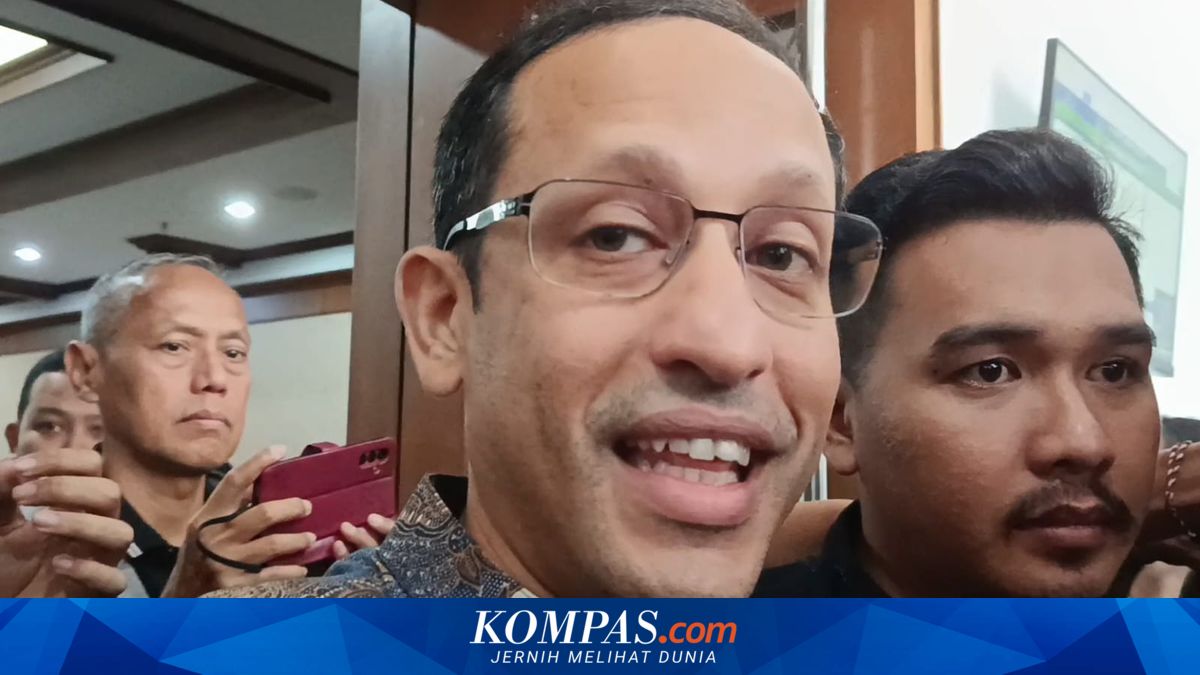
Jakarta – Former Education, Culture, Research and Technology Minister Nadiem Makarim clarified the contents of his instructions in the WhatsApp group Edu Org, or Mas Menteri Core Team, which was questioned by the Office of the Attorney General (AGO).
A photograph of a conversation dated 19 September 2019 was presented when Nadiem was examined as a witness in a resumed hearing of an alleged corruption case involving the procurement of Chromebook-based laptops for three defendants. They were Ibrahim Arief, a former Technology Consultant in the Education Ministry; Mulyatsyah, Director of Junior Secondary Education in the Education Ministry in 2020–2021 and Budget User Authority (KPA); and Sri Wahyuningsih, Director of Primary Education in the Education Ministry in 2020–2021 and Budget User Authority.
Nadiem’s four directives, as stated in English, were: “One: Remove humans and replace with software. Two: Find internal change agent and empower them. Three: Bring in fresh blood from outside. Four: Build new team within ministry to coordinate external allies.”
During the hearing at the Corruption Court in Jakarta on Tuesday, 10 March 2026, Nadiem explained each directive mentioned by the prosecutor.
Regarding the first point, removing humans and replacing them with software, Nadiem said the objective was efficiency, both in terms of budget and time. He gave the example of administrative correspondence work, which could be replaced with software so that tasks could be completed automatically through a system. Nadiem cited the example of an application or platform created by Ibrahim called Merdeka Belajar, now renamed Ruang GTK, which provided teacher training that previously cost trillions of rupiah because trainers had to be sent to regions. Now, every teacher could access the training for free and independently through the application.
According to Nadiem, software development allowed people to focus on work that truly required energy and attention.
For the second directive, to find the best people within the ministry, Nadiem stressed that for years many ministry officials had been neglected and had not been given opportunities for higher positions. He emphasised that many good people in the ministry had been sidelined because they were honest and hardworking but never promoted to important positions because they did not comply or were not corrupt.
The third directive involved bringing in external people with interest in education. Nadiem cited the first programme launched during his time as minister, the POP programme, in which civil organisations and various foundations contributed to transforming schools.
Finally, the fourth directive involved establishing teams within the ministry to coordinate with external partners. Nadiem stated: “The last directive is to build new teams within the ministry to coordinate all the external institutions that have been working on educational reform.”