
Nadiem Admits Bringing His Own Team Because Ministry of Education Lacks Experience in App Development
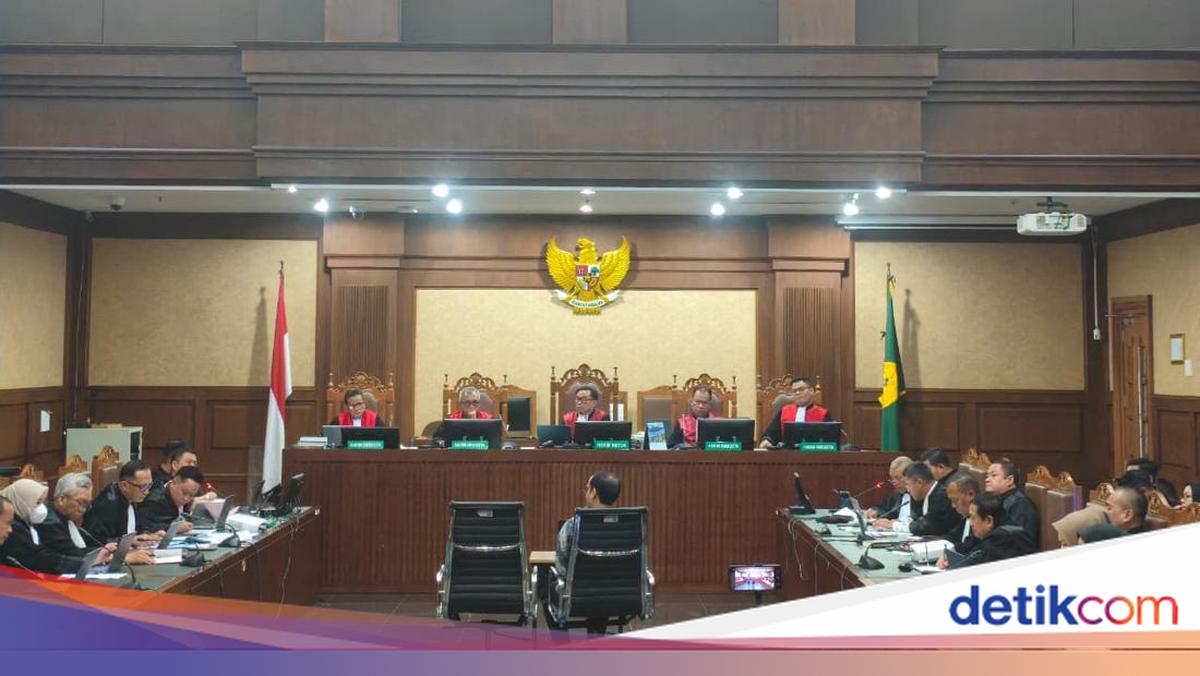
Public prosecutors questioned former Minister of Education, Culture, Research, and Technology Nadiem Makarim on the reasons for bringing in outsiders as special staff and a technology team. Nadiem stated that the special staff and technology team were brought in to develop applications for the digitalisation of education.
This was questioned by the prosecutor during Nadiem’s examination as a defendant in the alleged corruption case involving the procurement of Chromebook laptops and Chrome Device Management (CDM) at the Central Jakarta Corruption Court on Monday (11/5/2026). Nadiem described his staff as having integrity.
“You also brought in outsiders; there’s a term for it, ‘shadow’, ‘shadow’ what? Do you remember? ‘Shadow’ organisation or what? There were hundreds of them that you brought in from outside, right? Those people. Can you explain to the panel of judges?” asked the prosecutor.
“As a minister, I entered with several special staff who were specific in their respective fields because of their competence and integrity,” Nadiem replied.
Nadiem mentioned that several parties he brought from outside were appointed as ministerial special staff (SKM). He also noted that some of his staff later became Directors General.
“So they were selected by me and approved by the President, based on their track record in the ministry. That’s what is meant by appointing the best people in the ministry and giving them the opportunity to lead,” Nadiem explained.
The prosecutor then interrupted upon hearing Nadiem mention the ‘President’. Nadiem’s legal counsel immediately objected to the prosecutor’s interruption.
“Permission, Your Honour, apologies,” the prosecutor interrupted.
“Your Honour, I remind you,” the legal counsel responded.
“Please do not casually bring up the President’s name in the trial. I see no correlation between the answer,” clarified the prosecutor.
The judge asked everyone to listen to Nadiem’s explanation. The prosecutor asked Nadiem not to casually mention the President’s name.
“I’m just reminding you, don’t casually bring up the President’s name,” explained the prosecutor.
“What is being asked should be allowed; let the defendant have the opportunity to answer,” stated the judge.
Nadiem continued his response. Nadiem said the technology personnel he brought in were outside the structure of the Ministry of Education, Culture, Research, and Technology. He stated that the technology team worked through a contract with one of the state-owned enterprises.
“The prosecutor’s question is why I brought in people from the technology field to help the ministry. This is my answer. So my answer is very relevant to the prosecutor’s question. Allow me to complete my answer to the prosecutor. The mandate from the first plenary cabinet meeting, the specific directive from the President to the Ministry of Education, is to implement the role of technology in education,” he said.
He stated that at the time, he was tasked with building applications that could be used in the digitalisation of education. He mentioned that the people in the Ministry of Education had no experience in building large applications.
“There are many capabilities and competencies in my ministry with many good people. But one thing that was completely lacking in competence is building world-standard applications on a large scale,” he said.
This became one of the reasons Nadiem brought in people from outside the Ministry of Education to help with his duties. He said the technology team was tasked with building applications used in Indonesia’s education system.
“So that’s my answer to the prosecutor’s question, what is the rationale, what is the reason for bringing in talented, idealistic young people to create software applications where that competence did not exist in the ministry,” he said.
In this case, Nadiem is charged with corruption related to the procurement of Chromebook laptops during his tenure as Minister of Education, Culture, Research, and Technology. The project is said to have caused a state loss of Rp 2.1 trillion.
Besides Nadiem, there are three other defendants in this case. They are Sri Wahyuningsih, former Director of Primary Schools in the Directorate General of Early Childhood Education, Basic Education, and Secondary Education from 2020-2021; Mulyatsyah, former Director of Junior High Schools in the Ministry of Education, Culture, Research, and Technology in 2020; and Ibrahim Arief (Ibam), a consultant for the Ministry of Education, Culture, Research, and Technology during Nadiem’s era.
Sri and Mulyatsyah have been found guilty. Sri was sentenced to 4 years in prison and Mulyatsyah to 4.5 years in prison. Meanwhile, Nadiem’s former special staff member Jurist Tan remains a fugitive.