
Muted Takbirs Behind Bars
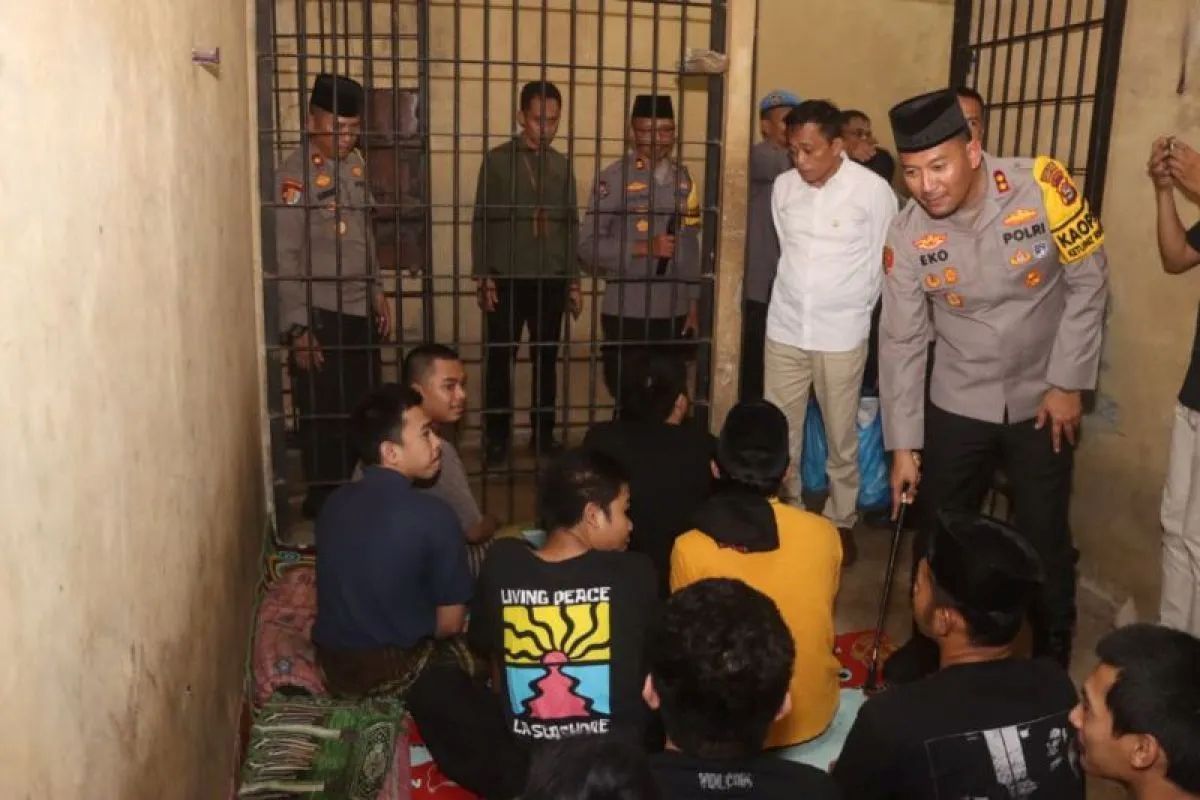
Mataram (ANTARA) - That morning, there was no sound of takbir echoing freely in the air. Only the echo of guards’ footsteps could be heard in the narrow corridor, occasionally interspersed with hushed conversations among the inmates.
Behind the high walls and locked iron doors, Idul Fitri still arrives. It comes in a different way, more silent, yet not devoid of meaning.
In West Nusa Tenggara (NTB), the Eid al-Fitr atmosphere in correctional institutions and detention centres presents another face of the day of victory. On one hand, there are unavoidable limitations. On the other, there are efforts to restore human values amid a firm legal system.
This moment is important to examine, not merely as an annual event, but as a mirror of how the state treats its citizens, even when they are serving their sentences.
Silence brings to life
Idul Fitri is synonymous with returning home, family, and freedom, but for thousands of inmates in NTB, Eid becomes the most tangible reminder of distance—the distance from home, from parents, from children who might only be seen through a screen.
Data shows that 3,019 prisoners in NTB received Idul Fitri remission this year. This figure is not just administrative statistics. It is a symbol that behind bars, the process of change continues.
Remission is given not as an empty reward, but as recognition of good behaviour during rehabilitation.
However, the reality is not that simple. The majority of remission recipients come from narcotics cases, reflecting deeper structural problems in society.
This means that correctional institutions are not just places to serve sentences, but also spaces where various unresolved social problems from outside converge.
In Central Lombok, a more humane approach is beginning to emerge. Detainees receive additional food, guidance, and emotional touches in the form of halal bihalal with officials and local government. This moment is used to re-instill hope.
At this point, Eid behind bars is no longer just about limitations, but about how that confined space still pulses with human values.
So, the question is, is this approach enough to change their future?