
Muslim Youth Formulate Action Plan for Just Energy Transition
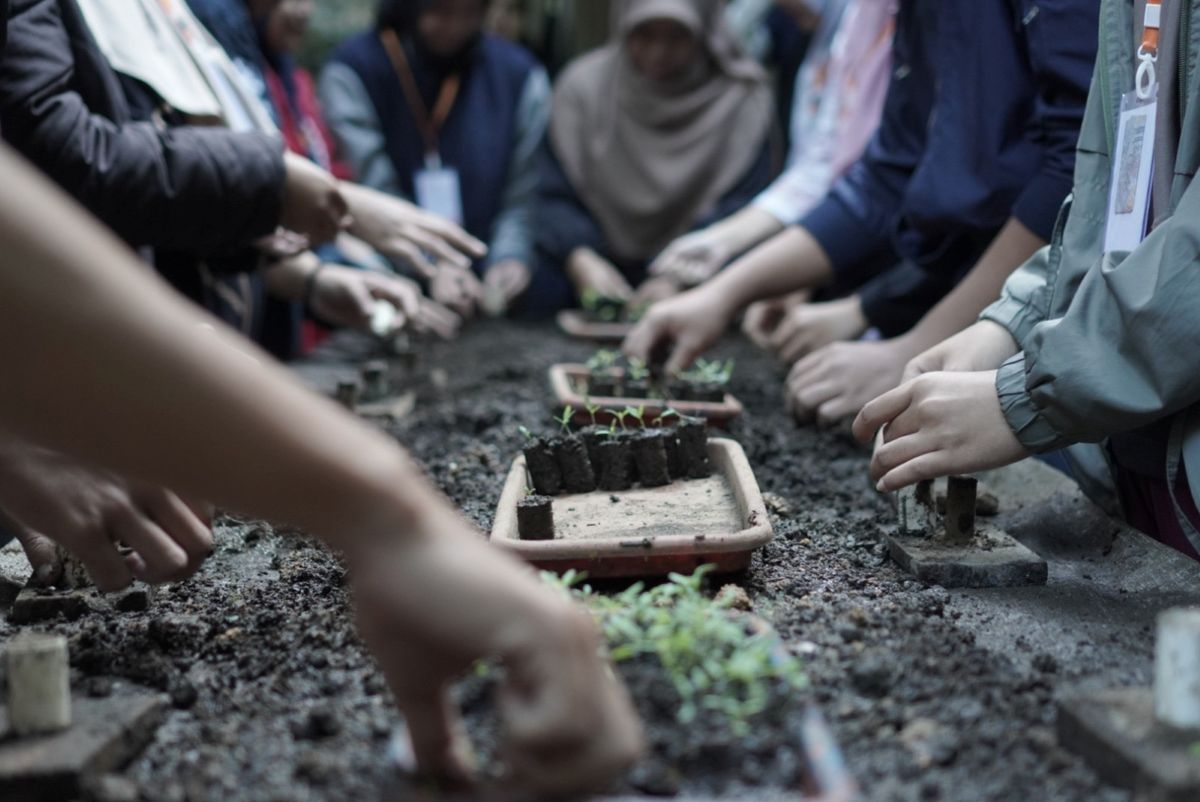
Seizing the momentum of the sacred month of Ramadan, the Ruang untuk Transisi Energi (RUTE) Berkeadilan Jabar, in collaboration with Muslims for Shared Action on Climate Impact (Mosaic) and Ruang Eskalasi dan Aktivasi, officially launched Pesantren Kilat: Bengkel Hijrah Iklim (a rapid boarding school climate transition workshop). The event, themed Just Energy Transition and Environmental Stewardship, brought together 30 carefully selected participants comprising young Muslim leaders, environmental and social activists, and representatives from community organisations. The primary goal of this initiative is to respond to the global climate crisis and its increasingly felt impacts in Indonesia through a moral, spiritual, and collective action approach grounded in Islamic values.
Unlike typical rapid Islamic boarding schools, the Climate Transition Workshop combines spiritual strengthening (worship practices such as Qiyamul Layl and Quranic reflection) with critical analysis of the climate crisis, formulation of social action based on Green Ziswaf (Zakat, Infaq, Wakaf and Energy), direct ecological practices such as gardening, and media literacy and campaign classes.
Project Lead of RUTE Berkeadilan Jabar, Erland Fabian, emphasised the urgency of the event amid massive environmental challenges. “In this sacred month, we invite young people to reflect on Islamic values to deepen environmental awareness and respond to pressing issues such as the climate crisis. We hope this activity can serve as a space to hone skills and leadership with an Islamic spiritual perspective as the foundation of a collective movement for ecological justice,” he stated on Wednesday, 11 March.
The importance of ecological awareness from an Islamic perspective was further explored through a book discussion session on Just Energy Transition Islamic Jurisprudence. Niki Alma Febriana Fauzi, board member of Muhammadiyah’s Tarjih Council, explained the close connection between Islamic theology and planetary sustainability. “The understanding of the relationship between humans and nature must be corrected. We rarely consider that our interaction with nature (earth) is part of worship. Yet nature is not merely a place to live. Our relationship with nature also carries consequences in this life and in the afterlife. Do not only see that humans play a role in managing nature, but also protecting and caring for it as part of worship and humanity’s stewardship on earth,” she stated.
The rapid boarding school programme extended beyond discussion and theory. Young participants were encouraged to widely and strategically disseminate this awareness. Didit Wicaksono, Indonesia Lead of AktivAsia, highlighted the importance of young environmental advocates understanding media literacy. “In this rapidly evolving digital era, where waves of information flow abundantly, it is important for young people to leverage this space as a medium for positive campaigns and build strong narratives, particularly on environmental issues and just energy transition. Therefore, this boarding school workshop serves as an appropriate venue to bridge this need,” he explained.
Meanwhile, Aldy Permana, Programme Director of Mosaic, revealed that this Bandung activity was the fourth iteration, following previous sessions in Bogor, Yogyakarta, and Semarang that brought together 60 participants from across Indonesia. A total of 26 projects related to sustainable energy transition have been undertaken by young Muslim leaders as a follow-up to this training.
The event series concluded with presentations of action plans from participant groups. “We hope that through this Climate Transition Workshop, more young Muslim cadres emerge who are not only intellectually knowledgeable and spiritually devout, but also resilient in championing earth conservation and energy justice in Indonesia,” Aldy concluded.
This energy transition also reflects the spirit of leadership in addressing increasingly demanding industry challenges that require sustainable business practices.