
MUI Calls on Muslims to Await Isbat Hearing Results Amid Potential Eid al-Fitr Date Disagreement
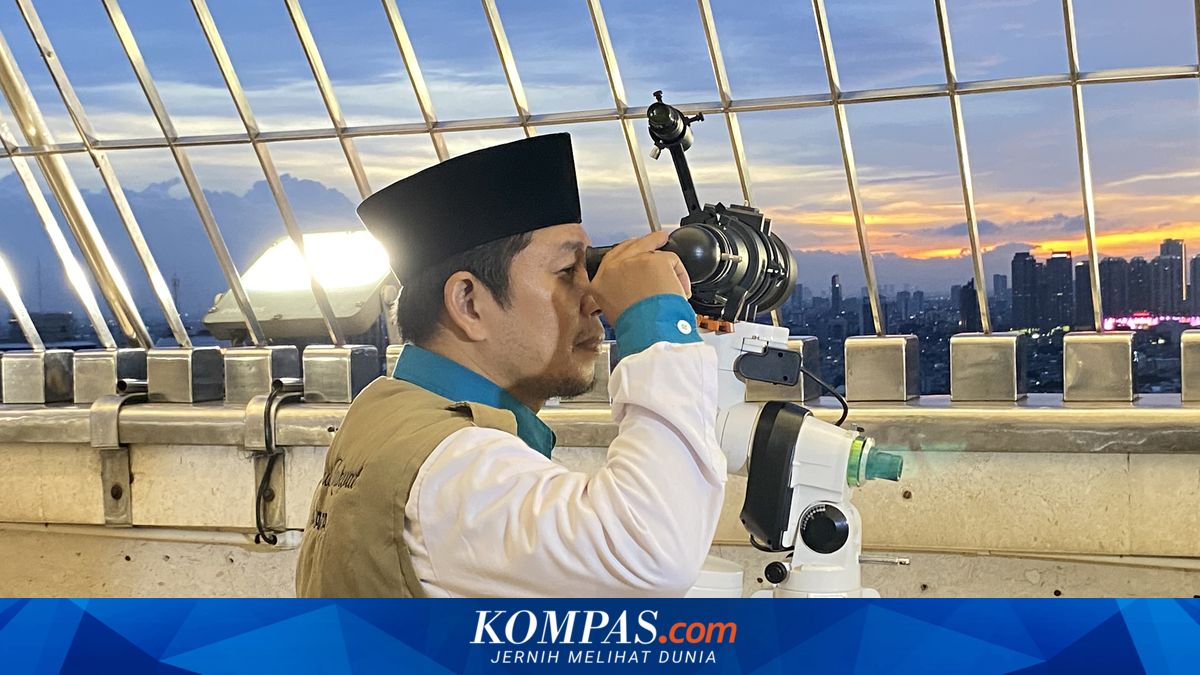
JAKARTA — The Indonesian Ulema Council (MUI) has urged Muslims to await the results of the government isbat hearing scheduled for Thursday, 19 March 2026, amid potential differences between the government’s determination and religious organisations regarding the start of Eid al-Fitr.
“The determination of the beginning of Syawal remains pending the results of field observation and the government’s isbat hearing decision,” said MUI Vice Chairman Cholil Nafis in Jakarta on Monday, 16 March 2026.
The government, through the Ministry of Religious Affairs (Kemenag), will hold the isbat hearing at the Kemenag office on Thamrin Street, Central Jakarta.
Kiai Cholil explained the general position of the crescent moon (hilal) across Indonesia based on astronomical calculations. On Thursday, 19 March 2026, or 29 Ramadhan, an ijtima’ (conjunction of the sun and moon) will occur at 08:25 Western Indonesian Standard Time (WIB).
In many Indonesian regions, the crescent moon’s elevation will be only around 1-2 degrees and will remain visible for approximately 10 minutes after sunset, making it generally extremely difficult to observe with the naked eye.
“The most favourable conditions are in Aceh, as the region with the best hilal position in Indonesia, with a crescent elevation of approximately 2°51’ and an elongation of approximately 6°09’,” said Kiai Cholil.
The caretaker of Cendekia Amanah Islamic Boarding School in Depok, West Java, explained that this indicated the moon had indeed risen above the horizon and its distance from the sun was beginning to widen.
Kiai Cholil further explained that Indonesia currently uses the MABIMS imkanur rukyat standard — a criterion for determining the beginning of new Islamic months agreed upon by the ministers of religious affairs of Brunei, Indonesia, Malaysia, and Singapore.
Under the MABIMS imkanur rukyat criterion, the minimum crescent elevation must be 3 degrees and the elongation 6.4 degrees for it to be scientifically considered possible to observe. However, in Aceh, astronomical calculations show an elevation of 2.51 degrees and an elongation of 6.09 degrees, still slightly below this criterion.
“Because the difference is very small, observers will still conduct observations, but the likelihood of sighting it remains very slim,” he said.
Consequently, based on astronomical calculations, Kiai Cholil noted that the hilal will have risen above the horizon, though it will remain low across nearly all of Indonesia. Even in Aceh, where conditions are most favourable, the crescent still falls slightly below the imkanur rukyat criterion threshold. In response to this potential disagreement, Muslims are also encouraged to show mutual respect for one another.