
MUI Calls for an End to the Controversy Surrounding Edited Statement by JK
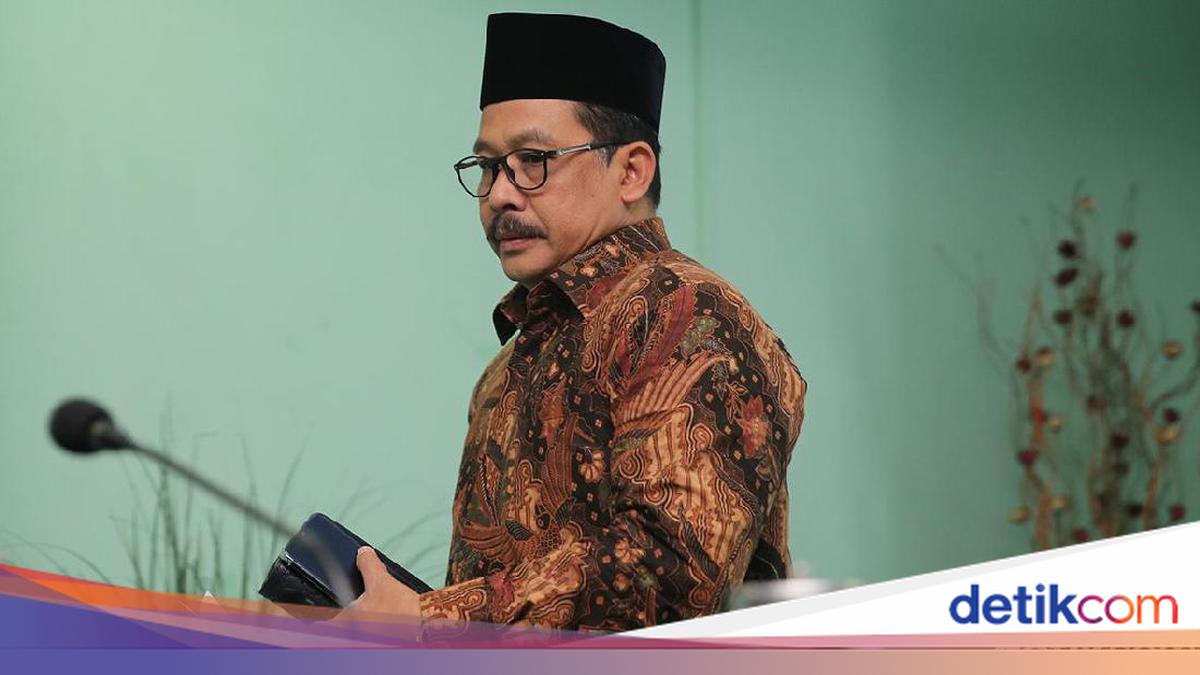
The Indonesian Ulema Council (MUI) has called on all parties to end the controversy surrounding the edited statement by the 10th and 12th Vice President, Jusuf Kalla (JK). MUI urged all parties to maintain unity.
“MUI believes that as a national figure with significant contributions to Indonesia’s history of peace, Mr Jusuf Kalla’s statement should be understood in its complete and comprehensive historical context, rather than as an attempt to revive negative sentiments. We view it as important to clarify the context so that society does not fall into interpretations that deviate from the original intent,” said the Secretary of the MUI Advisory Board, Zainut Tauhid Sa’adi, in a written statement to reporters on Monday (20/4/2026).
He stated that the nation’s historical journey should be placed as a source of wisdom. He said all parties must draw lessons from every past event.
“In maintaining a conducive national atmosphere, MUI calls on all elements of society to always prioritise soothing and unifying language. Our maturity as a nation is reflected in our ability to turn every dynamic into positive energy that strengthens national unity, so that every public utterance becomes a real contribution to peace.
He urged the public to prioritise good assumptions and clarification regarding circulating information. He asked citizens not to be easily provoked.
“MUI urges the wider public to prioritise husnuzan (good assumptions) and cultivate tabayun (clarification) towards every piece of information that circulates. Amid the strong flow of social media information, we should not be easily provoked by fragmented narratives. Let us view every statement through the lens of broader unity,” he said.
He asked the public to end the controversy over JK’s edited remarks. He said prolonged debate is unproductive.
“MUI urges all parties, especially community leaders, religious figures, and the wider public, to immediately halt this controversy. Prolonged debates in the public sphere are deemed unproductive and risk tearing apart the fabric of interfaith harmony that we have built together. Let us close the gaps for incitement and refocus on more strategic national agendas,” he stated.
Previously, the Indonesian Christian Youth Movement (GAMKI) reported JK to the Metro Jaya Regional Police regarding alleged religious blasphemy after a viral video of his lecture on ‘dying as a martyr’. GAMKI’s report was registered under number LP/B/2547/IV/2026/SPKT/POLDA METRO JAYA, dated 12 April 2026.
“We from the Indonesian Christian Youth Movement came today to report Mr Jusuf Kalla. Our presence also represents around 19 Christian institutions and community organisations,” said GAMKI General Chairman Sahat Martin Philip Sinurat to reporters, quoted on Monday (13/4).
Sahat conveyed that JK’s lecture on ‘dying as a martyr’ that went viral on social media hurt the feelings of Christians. He said it was not in line with Christian teachings.
JK’s Explanation
JK affirmed that he never intended to blaspheme religion regarding his statement in the lecture at Gadjah Mada University (UGM). JK said what he conveyed was actually aimed at promoting peace, not division.
This was stated by JK in a press conference on Jalan Brawijaya, Kebayoran Baru, South Jakarta, on Saturday (18/4). He explained that the lecture raised the theme of peace and discussed various conflicts, including those that occurred in Poso and Ambon.
“I explained what peace is. Peace is the end of conflict. What is conflict? The end of peace. Then for one or two minutes, I discussed religious conflicts. That includes Ambon-Poso,” said JK.
JK said the part questioned by the public was only a small excerpt from the overall material. He admitted to only touching on religion-based conflicts for one to two minutes in the lecture.
“I did not talk about religious dogma. I talked about conflict events, how people use religion to wage war,” he said.
According to JK, many parties felt their actions were justified by religion in the Poso and Ambon conflicts. He said such perceptions then exacerbated the conflicts, resulting in thousands of lives lost.
“No religious teaching justifies killing each other. That is what I conveyed,” he said.