
Muhammadiyah's Reasons for Setting 1 Ramadan 1447 H on 18 February
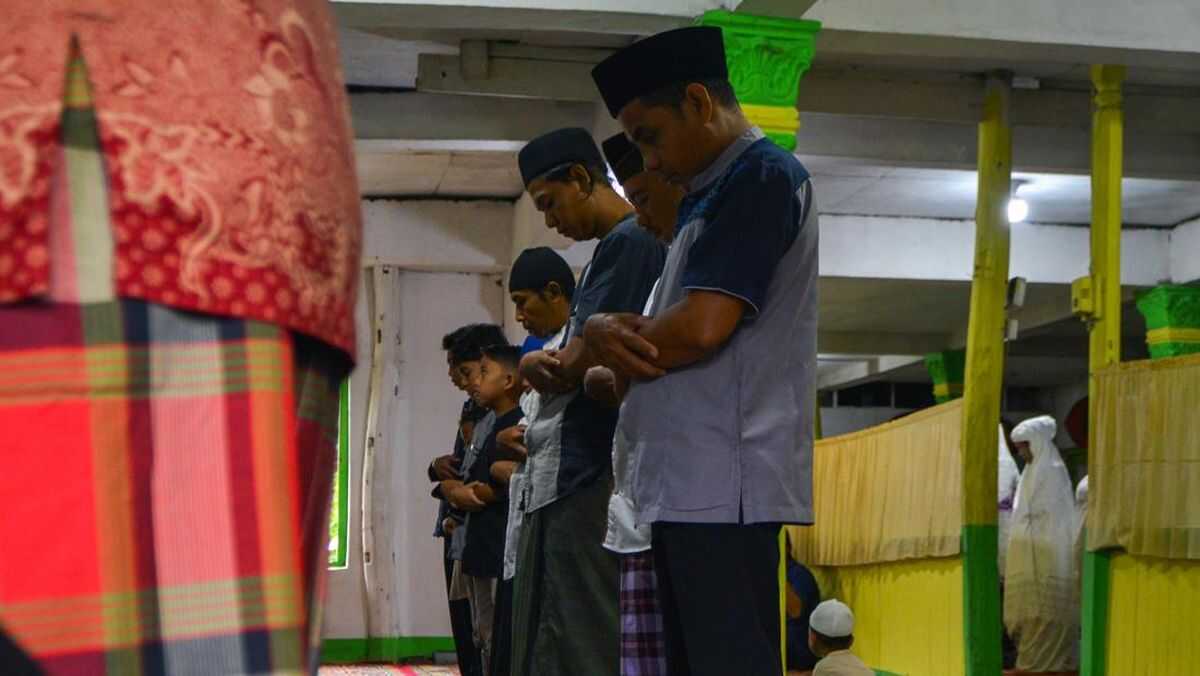
The Central Leadership of Muhammadiyah has determined that 1 Ramadan 1447 Hijriah will fall on Wednesday, 18 February 2026.
As quoted from its official website, Muhammadiyah’s astronomy expert Arwin Juli Rakhmadi Butar-Butar explained the reasons behind the organisation’s determination of the start of Ramadan.
First, Muhammadiyah has officially set 1 Ramadan 1447 H on 18 February, as stipulated in Central Leadership of Muhammadiyah Circular Number 2/MLM/I.0/E/2025 and the explanation from the Tarjih and Tajdid Council Number 01/MLM/I.1/B/2025.
This determination uses the Unified Global Hijri Calendar (KHGT) as a new method that has now become Muhammadiyah’s official reference, replacing the previously used wujudul hilal (existence of new moon) method.
“Second, the implementation of the KHGT requires the integration of three main elements known as Principles, Conditions, and Parameters (PSP). One important parameter is that the position of the new crescent moon after conjunction must reach a minimum altitude of 5 degrees and elongation of 8 degrees anywhere on the earth’s surface, not limited to a specific territory,” said Arwin, as quoted from Muhammadiyah’s official website on Tuesday (17 February).
“For the beginning of Ramadan 1447 H, these parameters have been met in Alaska, United States, with a crescent moon altitude of 05° 23’ 01” and elongation of 08° 00’ 06”,” he added.
The third reason is that the conjunction (ijtimak) for the beginning of Ramadan occurred on Tuesday, 17 February 2026 at 12:01 UTC or 19:01 Western Indonesian Time. The conjunction marks the end of the previous lunar cycle and serves as the astronomical marker for the entry of the new month.
After sunset on that day, the position of the crescent moon meeting the KHGT parameters was achieved in the Alaska region, leading Muhammadiyah to set the following day, Wednesday 18 February 2026, as the start of Ramadan.
Fourth, conditions differ in Indonesia. After sunset, the crescent moon’s position remained below the horizon (negative hilal), thus failing to meet the government’s criteria through the Ministry of Religious Affairs, namely a minimum crescent altitude of 3 degrees and elongation of 6.4 degrees within Indonesian territory.
Accordingly, the government is expected to set the start of Ramadan on Thursday, 19 February 2026. However, the official decision still awaits the process of rukyat (moon sighting), field reports, the isbat session, and the announcement by the Minister of Religious Affairs.
Fifth, the adoption of the KHGT is based on theological and jurisprudential arguments emphasising the principle of unity of the ummah (ummah wahidah), the universality of Islam as rahmatan lil ’alamin (a mercy to all creation), and the concept of a global Islamic time system in the social-muamalah domain.
Arwin explained that the hadith commanding fasting and celebrating Eid upon sighting the crescent moon is understood to be universal, addressed to all Muslims without specific geographical boundaries, as indicated by the use of plural pronouns in the hadith.
Sixth, this universal understanding gives rise to the jurisprudential concept of ittihad al-mathali’ (global matlak), meaning that when the crescent moon has been definitively proven in any region on earth — whether through rukyat or hisab (calculation) — that determination applies globally.
“Muhammadiyah bases its determination of the start of Ramadan 1447 H on this principle, as the crescent moon has definitively met the parameters in Alaska,” said Arwin.
Seventh, both Muhammadiyah and the government actually use the imkan rukyat (possibility of sighting) calculation approach, but differ in implementation.
Muhammadiyah’s KHGT treats the 5-8 parameters as definitive calculation results without awaiting rukyat verification, and applies them globally. Conversely, the MABIMS 3-6.4 criteria used by the government require rukyat confirmation and apply within Indonesian territorial boundaries.
Eighth, another difference lies in the aspect of certainty and practicality. The KHGT enables calendar determination well in advance, allowing the faithful to plan Ramadan activities with certainty.
“Meanwhile, the government’s method only produces a definitive decision after the series of rukyat and isbat sessions have been conducted, even though astronomically it can be estimated beforehand,” said Arwin.
Finally, the difference in the start of Ramadan that may occur between Muhammadiyah and the government is fundamentally not a difference in creed or principles of worship, but rather a technical difference in the implementation of criteria and the scope of their applicability.
“In terms of jurisprudence, both have their own argumentative foundations, scientific methodologies, and considerations of benefit. Assessment of both should be based on the strength of evidence, the scientific rigour of the concept, and its benefit to the ummah, not on considerations beyond that,” said Arwin.
“Various inputs, criticisms, and corrections regarding the implementation of the Unified Global Hijri Calendar are extremely important and constructively valuable. All such responses should not be viewed as opposition, but rather as part of the scientific process and ijtihad (independent reasoning),” he added.