
Muhammadiyah Reinforces Islamic Civilisation Effort through Global Unified Hijri Calendar
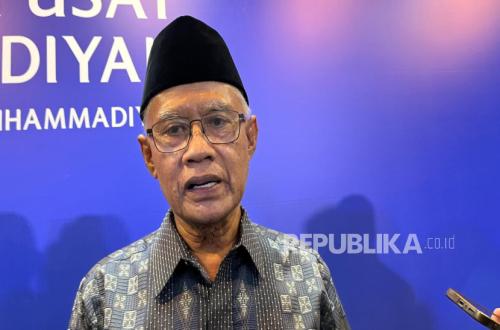
In the midst of an uncertain and unpredictable global environment, Muhammadiyah’s Central Leadership has reaffirmed its commitment to continue contributing to building Islamic civilisation. One of the major initiatives being promoted is the implementation of a Global Unified Hijri Calendar (KHGT) as an effort to realise Islamic unity in determining worship times.
Sayuti, Secretary of Muhammadiyah’s Central Leadership, emphasised the importance of synergy between Muhammadiyah and mass media in disseminating the organisation’s ideas and activities to the wider public. He stated that Muhammadiyah’s missionary work and intellectual dissemination would not reach its full potential without media support, particularly in socialising the concept of the Global Unified Hijri Calendar. For Muhammadiyah, this concept is not merely a technical matter of calendar reckoning, but rather part of a broader effort to build Islamic unity across the world.
“Media support is crucial so that this idea can be widely understood by society,” he said during a press conference at Muhammadiyah’s Central Leadership office on Monday (16 March 2026).
KHGT as Civilisational Ijtihad
Haedar Nashir, General Chairman of Muhammadiyah’s Central Leadership, also affirmed that Muhammadiyah continues to pursue various efforts to ensure the Global Unified Hijri Calendar concept can be widely implemented, both in Indonesia and across the Islamic world.
Haedar acknowledged that this effort represents an important ijtihad (independent reasoning) in Islamic history. He assessed that a uniform Islamic calendar is an urgent necessity for Muslims currently dispersed across different regions of the world.
“It is time for Muslims to have one shared calendar at the global level. Through this calendar, we can start one Ramadan, one Shawwal, and one Dhul-Hijjah together without the layered differences we have experienced until now,” he said.
Haedar stated that through the KHGT, Muslims worldwide would have one uniform calendar system. This means that one Islamic date would apply simultaneously across the world, although the actual time of worship observance in each region may differ due to timezone variations.
As an example, Haedar referenced the practice of Friday prayer currently conducted by Muslims in various countries. Whilst performed at different times according to each region, Muslims still observe it on the same day—Friday.
“Across the world, Muslims perform Friday prayer on the same day, with only the time differing. The same principle can be applied to the global Islamic calendar,” Haedar said.
Furthermore, Haedar referred to the realisation of a global Islamic calendar as a ‘civilisational debt’ of the Islamic community that needs to be resolved collectively. According to him, a globally integrated calendar system represents part of modern civilisational advancement that Muslims should also possess.
Haedar emphasised that this concept is not solely for Muhammadiyah’s benefit, but for all Muslims worldwide.
“The global calendar does not belong to Muhammadiyah. In fact, if needed, Muhammadiyah’s name does not need to be mentioned. What matters is that Muslims have one shared calendar,” he said.
Besides being grounded in Islamic law and divine revelation, according to Haedar, building Islamic civilisation also requires support from developments in science and technology. In this context, determining the Islamic calendar based on scientific calculation becomes very important.
Ramadan and Eid al-Fitr as Moments for Change
On this occasion, Haedar also reminded audiences that the momentum of Ramadan and Eid al-Fitr should not be understood merely as formal religious rituals. Beyond that, the holy month of Ramadan should become a source of inspiration for improving the thinking patterns and action orientations of the Islamic community.
Muhammadiyah’s General Chairman hoped that worship conducted during Ramadan would bring about real changes in the lives of Muslims, both individually and socially. Islamic values should become the centre of ethics, morality, and an intellectual source that drives national progress.
“Ramadan and Eid al-Fitr should be sources of value inspiration, not mere formality. From there, we are expected to become a community that is better, more ethical, and more civilised,” he said.
Haedar also noted that should differences in Eid al-Fitr observance times occur in future, this should be handled with mutual respect. Muslims across Indonesia are urged to maintain a conducive environment and provide space for one another in worship, and to make Eid al-Fitr a moment to strengthen Islamic values in life.
“When there are differences in Eid al-Fitr observance, we respect them and we ask that all parties mutually respect each other, and all public spaces be made available for Eid prayers, whether for Muhammadiyah or for Muslims of different groups observing Eid prayers,” he said.