
Muhammadiyah: Face-to-Face Learning Must Be Prioritised
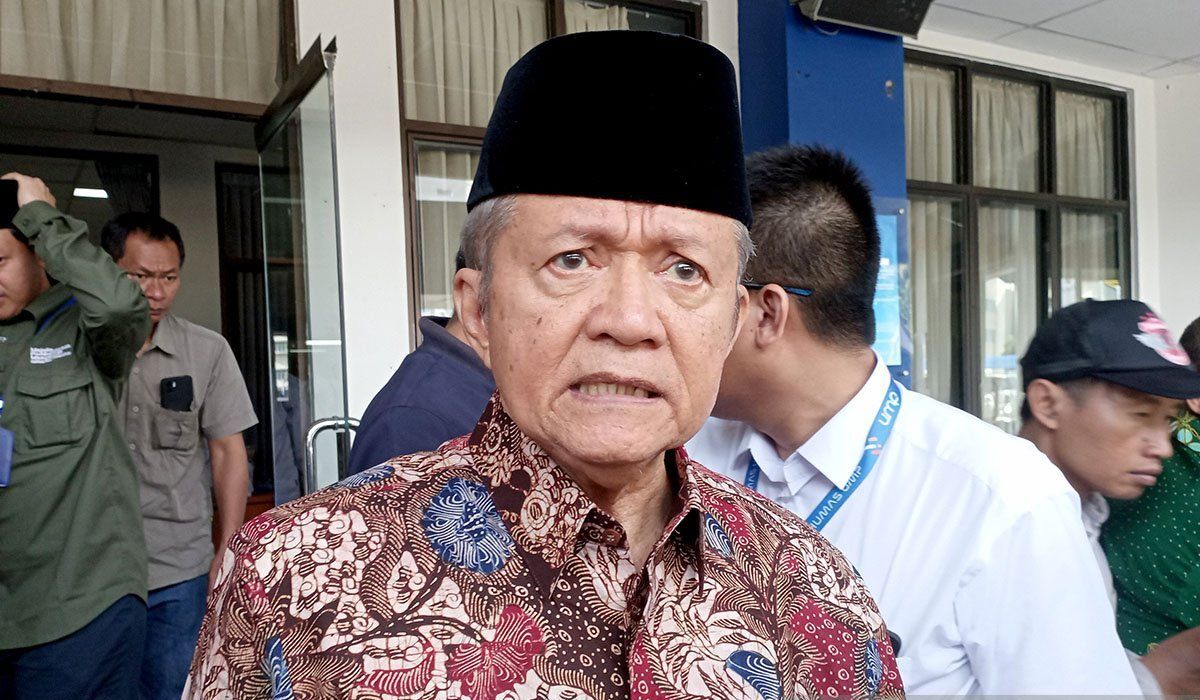
Chairman of the Muhammadiyah Central Board and education and social observer, Anwar Abbas, stated that the teaching and learning process should ideally be conducted face-to-face. With face-to-face learning, teachers know exactly what their students are facing, and students similarly understand what the teacher is conveying.
“So if the teaching-learning process can be carried out face-to-face without going through online means, we can certainly build intimacy or closeness between teacher and student, so that the teacher will no longer only function as a party to transfer knowledge to the students, but can also be expected to play a role in instilling noble values, as well as morals and good character to the learners,” he told Media Indonesia on Wednesday (25/3).
Furthermore, in this way, he emphasised that students are expected not only to have intellectual intelligence, but also to possess al-akhlakul karimah or praiseworthy character.
“Because the goal of national education that we carry out, as contained in the objectives of the national education system according to Article 3 of Law No. 20 of 2003, is to develop the potential of students to become people who are faithful, pious, of noble character, healthy, knowledgeable, capable, creative, independent, and democratic citizens who are responsible,” he asserted.
The Secretary General of the Indonesian Teachers’ Union (PGRI), Dudung Abdul Qodir, appreciated the government’s decision to continue implementing face-to-face learning.
The government’s decision to cancel the plan for distance learning (PJJ) in April 2026 is seen as the right step amid concerns over the decline in education quality.
Chairman of the Teacher Advocacy Division of P2G, Iman Zanatul Haeri, said that the government’s decision to maintain face-to-face schooling is already correct. However, its implementation must be of high quality.
Observer and education practitioner Indra Charismiadji views the discourse on distance learning or PJJ as well as work from home or WFH as unrelated to education quality.
The DKI Jakarta Provincial Government has again extended the recommendation for distance learning (PJJ) and work-from-home (WFH) policies until 1 February 2026.