
Muhammadiyah Chairman Urges Wise Response to Ramadan Start Date Differences
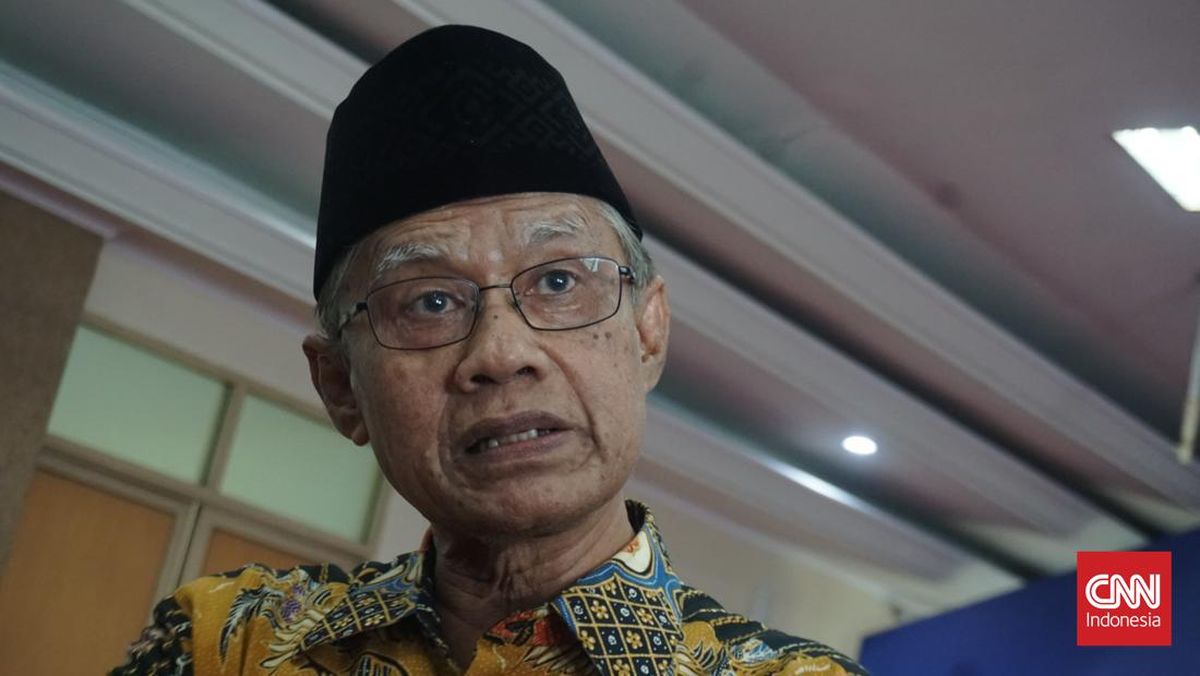
The Chairman of Muhammadiyah’s Central Executive Board (PP), Haedar Nashir, has urged Muslims to respond wisely and with tolerance should differences arise over the start of fasting for 1 Ramadan 1447 Hijriah, or 2026.
PP Muhammadiyah has determined that 1 Ramadan falls on Wednesday 18 February. Meanwhile, experts from the National Research and Innovation Agency (BRIN) have predicted that 1 Ramadan will only commence on Thursday 19 February.
“This is a space for ijtihad [independent reasoning], so there is no need to blame one another, and no one should feel that they alone are right,” said Haedar on Tuesday (17 February).
Haedar stressed that such differences must be approached with wisdom and prudence, particularly given that the primary objective is to enhance piety, both individually and collectively.
He therefore called on Muslims to focus on substantive matters — on how fasting can become a genuine path for every Muslim to attain piety, thereby improving social relations and spreading goodness to fellow human beings and the wider environment.
Haedar cautioned that various issues should not be allowed to disrupt the primary goal of achieving piety. He added that Muslims would attain piety and elevate their standing through intelligence and faith.
He also urged that Ramadan fasting for 1447 Hijriah be carried out calmly, peacefully, and with maturity, undisturbed by the clamour of life, including differences over the start of Ramadan.
“In the broader context, we hope that Ramadan will make us the best community — both in spiritual terms, maintaining faith and piety before God, and in terms of knowledge that continues to grow and goodness that spreads ever wider,” said Haedar.
Haedar further expressed hope that Ramadan fasting would serve as a means to safeguard and improve the daily and public morals of Muslims, with fasting ultimately serving as a vehicle for character improvement and the capacity of Muslims to become the best community.
Haedar argued that if Muslims remain stagnant and fail to advance towards becoming the best community, then glory, dignity, and the race to create an advanced civilisation would be difficult to win.
He said Muslims must not become fatalistic, merely surrendering to fate, particularly in the economic context, which he noted still requires struggle and hard work to achieve parity with other civilisations.
“Achieving quality of life for Muslims, especially in the economic sphere, truly requires dedication. Fasting actually trains us to live efficiently, to live modestly, to be frugal, and so on. And that becomes the foundation for our economic advancement,” he said.
“In the broader social context, Muslims must serve as social glue. Fasting trains us to exercise restraint, even when others invite us into conflict or quarrels,” he continued.
For Haedar, fasting is more than merely enduring hunger and thirst; it is also about restraining desires and urges that damage social cohesion, including teaching Muslims patience. This is especially pertinent given social media, which frequently provokes the desire to vent anger, hatred, and discord.
“With the various kinds of information and posts that create a heated atmosphere in our national social life, fasting must become our social canopy,” he said.
Finally, Haedar urged that Ramadan fasting become a time for achieving progress in life, in line with the substance of piety that every fasting Muslim seeks in order to attain all the virtues of life upon the foundation of tawhid [monotheism].
“Piety at its peak is the improvement of the highest dignity of life, and therefore Muslims must become a community that advances in all aspects of life — spiritual, moral, social, economic, political, and various other aspects — towards a supreme civilisation,” he said.
The government, through the Ministry of Religious Affairs (Kemenag), was set to hold its isbat session for hilal observation for 1 Ramadan on Tuesday afternoon. Minister of Religious Affairs Nasaruddin Umar was to announce the results of the session.
BRIN researcher Thomas Djamaluddin predicted that the start of fasting, or 1 Ramadan 1447 Hijriah, would differ between the government and Muhammadiyah.
Muhammadiyah had determined well in advance that 1 Ramadan falls on Wednesday 18 February 2026. Meanwhile, the government, which held its isbat session on Tuesday afternoon, was expected by Thomas to set the start of Ramadan on Thursday 19 February 2026.
According to Thomas, the difference in determining the start of Ramadan this time is due to two types of hilal being used — global hilal versus local hilal.
“This time the difference is unlike previous occasions, which were due to different methods (hisab [calculation] versus rukyat [observation]) or different criteria (Wujudul Hilal versus Imkan Rukyat). This time the difference is over global hilal versus local hilal,” said Thomas on Tuesday.