
Mudik Traffic on H-7 Lebaran: Vehicles on Cirebon Pantura Route Begin to Increase
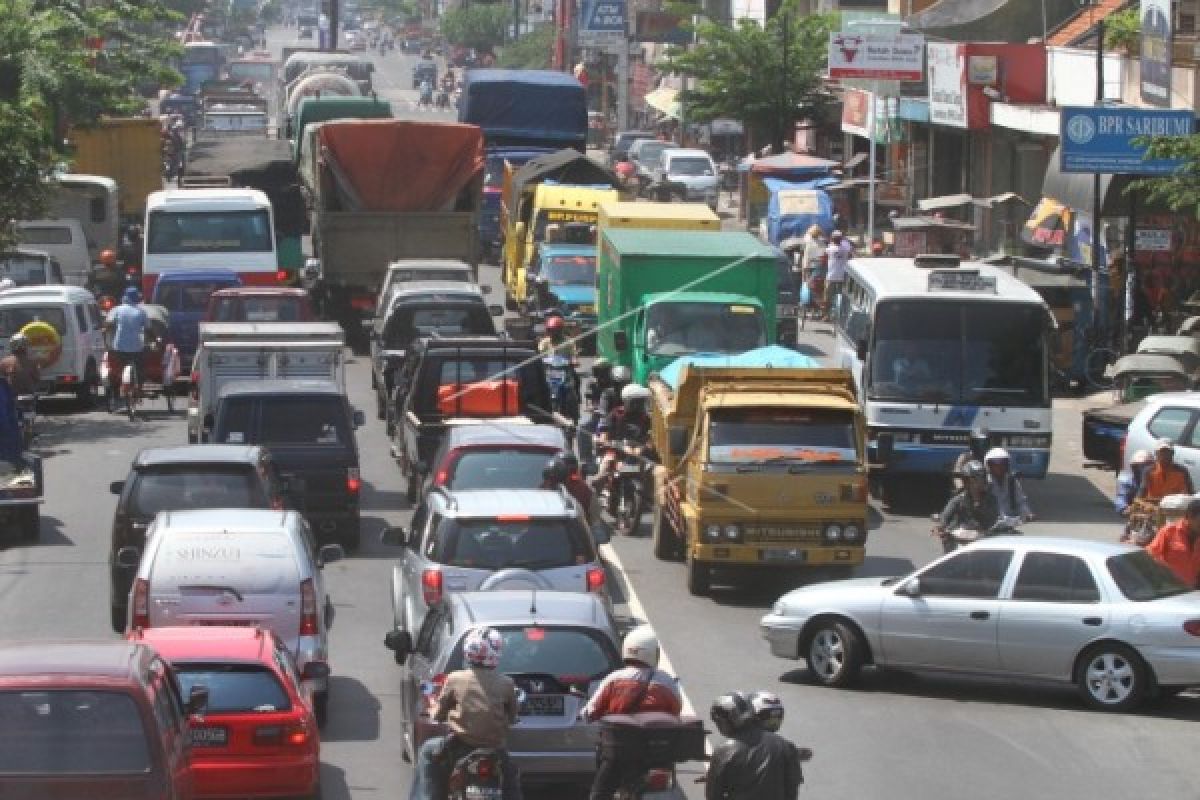
Traffic volume on the Pantura (North Coast) route in Cirebon City, West Java, began increasing on H-7 Lebaran (seven days before Lebaran) on 14 March 2026, although vehicles travelling from Jakarta to Central Java remained relatively unobstructed.
Juntar Hutasoit, Head of the Kanggraksan Security Post of Cirebon City Police, stated that increases in vehicle volume began appearing from Friday evening (13 March). According to him, compared to normal days, the number of vehicles passing through the route started rising, although it had not yet caused congestion.
“Since Friday evening compared to normal days there has already been an increase. However, traffic flow from Jakarta to Central Java remains relatively smooth,” Juntar said in Cirebon on Saturday.
He explained that the current vehicle increase was not yet highly significant because most activity was still dominated by local residents’ movements within Cirebon and its surroundings. He observed that resident mobility was quite high in the evening, particularly because many joint breaking-of-fast activities were occurring during Ramadan.
“From what we observe of company activities in this area, many local residents are holding breaking-of-fast gatherings, both from the Kuningan direction towards Cirebon City and vice versa,” he said.
Although vehicle flow remained relatively smooth, police continued intensive monitoring because the Cirebon Pantura route is one of the main routes for vehicles heading towards Central Java. Traffic management in the Kanggraksan Intersection area was conducted continuously during Operation Ketupat Lodaya 2026.
“Traffic management is carried out continuously for 24 hours with a personnel rotation system,” Juntar said.
Officers were also stationed at several congestion-prone points, particularly at major road intersections. Additionally, the Kanggraksan Security Post was used to monitor vehicle flows from four traffic light intersections in the area.
Based on data from Cirebon City Transportation Office, approximately 4,000 to 5,000 two-wheeled vehicles had passed through the main arterial road in Cirebon City between 00.00 and 06.00 WIB.
A traveller from Tegal, Central Java, named Endin, who was returning home, said that his journey from Jakarta to his hometown remained relatively smooth despite the increasing number of vehicles. He stated that he deliberately departed earlier to avoid congestion that typically occurs before Eid al-Fitr 1447 AH.
Handling of landslide points on the Tarutung-Sibolga national road section in North Sumatra was being accelerated to ensure that public access remained safe and smooth ahead of the Lebaran mudik in 2026. Travellers were transported using buses, whilst their motorcycles were transported using trucks.
Fuel supply to the area was being sourced from the Maos Fuel Terminal in Cilacap Regency. During the Rafi Taskforce period, Pertamina increased fuel stock by approximately 4 to 5 per cent.
Vehicles that had managed to operate and had entered the Tasikmalaya area were directed into parking zones prepared in Rajapolah, Jamanis and Ciawi.
A total of 14 per cent of vehicles, or approximately 285,000 units, had been recorded as having left Jakarta on the first day of Operation Ketupat 2026, according to data provided by PT Jasa Marga.
Entering H-7 Lebaran, travellers using two-wheeled vehicles began passing through the Pantura route.
The Ministry of Public Works (PU) targeted that the Pantura (North Coast) route in the western region would be pothole-free before the Lebaran mudik in 2026. Workers were conducting road patching on the Pantura route in Widasari, Indramayu, West Java.
The government was accelerating road infrastructure improvements on the strategic Pantura (North Coast) route and the Trans-Java Toll to ensure smooth mudik traffic flow in 2026. Compensation for becak (pedicab) drivers operating on the Pantura route would be prepared.