
Mudik Surge: Vehicle Influx Triggers Severe Congestion at Gilimanuk
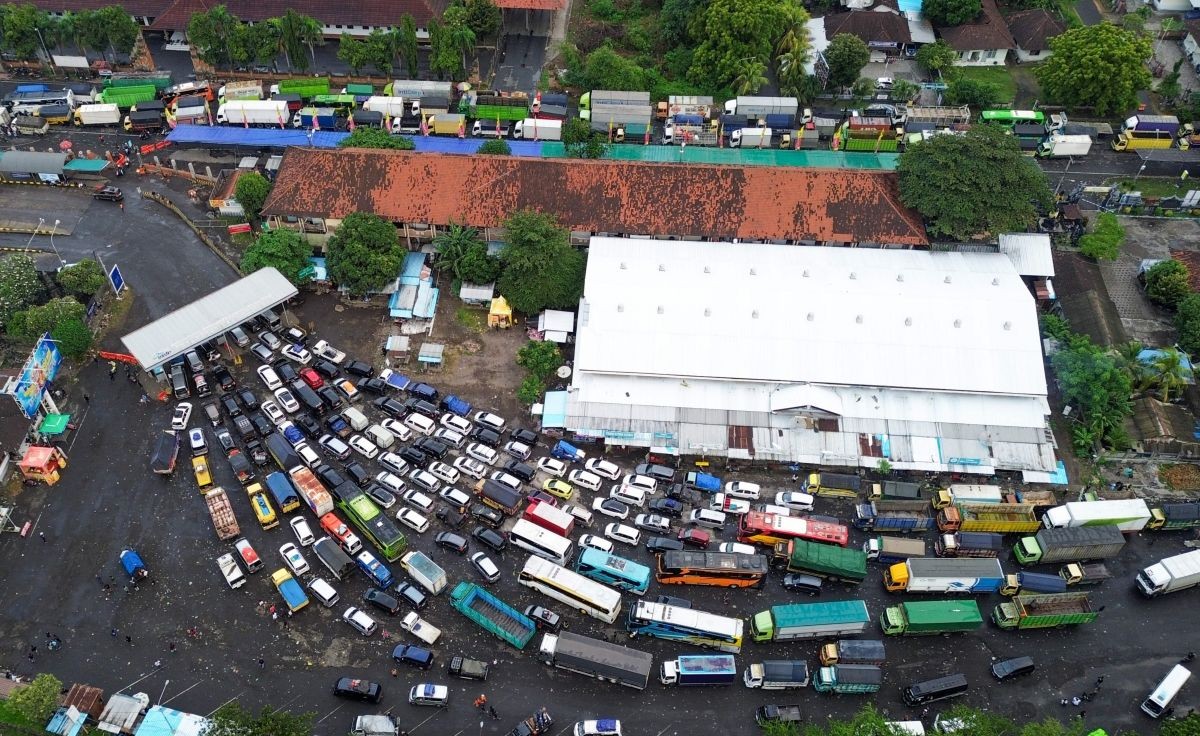
A surge in vehicles occurring ahead of Nyepi celebrations and the Lebaran homecoming exodus has triggered severe congestion on routes leading to Gilimanuk Port. Vehicle queues extended dozens of kilometres as public mobility increased during the extended holiday period, with travellers crossing between Bali and Java.
Khoiri Soetomo, Chairman of the National Association of River, Lake and Ferry Operators (Gapasdap), explained that the conditions resulted not only from the vehicle surge but also revealed structural problems within the ferry transport system.
According to him, the period witnessed two major traffic flows simultaneously: the Lebaran homecoming exodus and Balinese residents departing ahead of Nyepi celebrations, causing vehicle volumes to increase significantly within almost the same timeframe.
However, the extensive congestion also demonstrated that the vehicle arrival system at the port remained suboptimally organised.
“The main issue is not merely the vehicle surge, but also the uncoordinated system for vehicle arrivals at the port,” he stated in an official statement on Monday, 16 March.
Another problem, he continued, was the imbalance between fleet expansion and berth development, regarding quantity, quality and capacity. Khoiri explained that the ferry transport mode remained far more open compared to other transport modes. Vehicles could proceed directly to the port even without possessing a ticket or booking code.
This situation caused vehicles to arrive simultaneously in large numbers without clear scheduling, meaning the port lacked sufficient mechanisms to control vehicle flow from upstream.
Furthermore, improved road infrastructure development, including toll roads, accelerated vehicle flows towards the port. However, berth capacity expansion as a continuation of the transport system had not developed proportionally. Consequently, when berth capacity became the bottleneck, vehicle queues became inevitable and eventually extended to national roads.
“Toll roads accelerate vehicles towards the port, but berth capacity has not increased proportionally. When the port becomes a chokepoint, vehicle queues are unavoidable and the approach road transforms into a car park,” he explained.
Khoiri emphasised this condition required collective attention to prevent annual recurrence. Without berth expansion, roads to the port would perpetually become car parks.
His organisation considered systematic measures necessary to improve ferry transport, including increased berth capacity, improved vehicle arrival systems at the port, mandatory requirements for tickets or booking codes before vehicles proceed to the port, and provision of buffer zones or vehicle staging areas before entering port facilities.
Furthermore, integration between road infrastructure development and port capacity expansion was also critical to ensure the ferry transport system operated more balanced and efficiently.
“Through comprehensive system improvements, we hope future ferry transport will become increasingly reliable, safe, and better able to serve public mobility,” concluded Khoiri.