
Mudik Season Underway as Hundreds of Thousands Take to the Roads
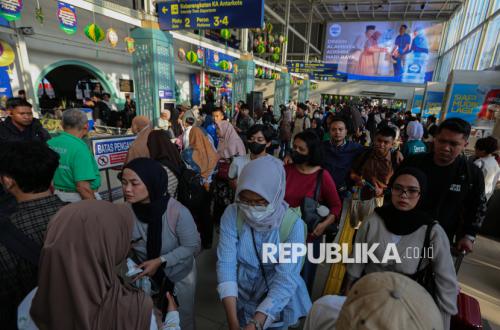
JAKARTA — Hundreds of thousands of people have flooded the roads heading towards their hometowns, marking the beginning of the mudik (homecoming) exodus. On Saturday, 14 March 2026 at night, vehicles carrying mudik travellers began filling the rest area at kilometre 57 of the Jakarta-Cikampek tollway in Karawang, West Java.
Monitoring by ANTARA at the location at 18:30 Western Indonesia Time (WIB) showed vehicles continuously arriving from the direction of Jakarta. The majority of mudik travellers came in family groups.
Although the rest area had numerous food establishments, many travellers chose to break their fast in the car park. Some spread out mats to sit on, whilst others sat directly beside their vehicles without any seating.
After breaking their fast, the travellers crowded At-Taubah Mosque to perform the Isya (night) prayer.
Others were seen moving about the rest area whilst waiting for the right time to continue their journey. One mudik traveller from Kranggan, Bekasi named Heria (53) stated he was heading to his hometown in Indramayu.
“Our family travels in one car. I have three children and one grandchild,” said Heria at the car park rest area whilst eating nasi padang (Indonesian rice plate meal) for breaking fast with his family.
Heria’s family departed from Kranggan at 16:00 WIB and arrived at the kilometre 57 rest area at approximately 18:30 WIB.
“The tollway wasn’t too congested earlier, but entering the toll from Kranggan, we came to a complete standstill. But praise be to God, we’ve made it here,” he said.
After eating his breaking-fast meal and performing Isya prayers, he planned to continue his journey to Indramayu.
“Right after Isya, we’ll head to Indramayu,” he said.
Transport Minister Dudy Purwagandhi, together with West Java Governor Dedi Mulyadi, inspected transport conditions and mudik-related sites across West Java during the 2026 Lebaran transport season.
The inspection was conducted to directly monitor traffic conditions on one of the main homecoming routes during the early mudik period. The first monitoring point was Cirebon.
During the visit, the Transport Minister reported that vehicle movement during the early mudik period was showing an increase. Based on reports from Jasa Marga (the toll road operator), vehicle volume has increased by approximately 14 per cent compared to normal conditions.
“So far there has indeed been an increase, though not particularly high. Based on reports from Jasa Marga, there has been an increase of approximately 14 per cent to date,” said Dudy in a written statement in Jakarta on Saturday, 14 March 2026.
Based on a survey conducted by the Transport Ministry, the peak mudik traffic is estimated to occur on 18 March 2026. Therefore, the government has appealed to the public to stagger their travel times by taking advantage of the work-from-anywhere (WFA) policy so that mudik travel can be distributed more evenly and potential congestion can be reduced.
Additionally, the government is also concerned about potential traffic disruptions stemming from community activities along mudik routes. The Transport Minister specifically urged that activities posing safety risks, such as residents collecting coins from road users on the Pantura route in the Kalisewo area, Indramayu, should be stopped.
“We hope this activity will not continue. During the mudik period, the number of vehicles will be very high, so it has the potential to disrupt traffic flow. Most importantly, we are also concerned about the safety of our people in the Kalisewo area,” said Dudy.
After conducting inspections in Cirebon, Dudy continued his journey to Subang via the overland route. This was to ensure infrastructure readiness and smooth traffic flow on the main route used by mudik travellers. Dudy also directly monitored high-congestion risk points and the readiness of travel safety support facilities. The inspection concluded with a return to Jakarta via the Pantura route.
“This overland inspection is important so that we can directly see the real conditions on the ground, ranging from traffic flow smoothness, readiness of signs and safety facilities, to potential congestion points. In this way, preventive measures can be better prepared to ensure that people’s mudik journeys are safe, smooth, and comfortable,” said Dudy.
Returning to Jakarta, Dudy and his entourage also traversed the Pantura route to monitor the arterial non-toll roads used by mudik travellers.