
Mudik, Data, and Predictive Polri
Although the number of mudik travellers this year has increased, the accident figures, which often capture public attention, show positive results. Korlantas Polri data records a 6.31 per cent decrease compared to the previous year. This is a good note for government performance, especially Polri, which has intensively overseen operations on the ground.
This is evident from the public’s response to Polri’s performance in handling the 2026 mudik. The KedaiKOPI survey records that 88.8 per cent of respondents expressed satisfaction with this year’s mudik organisation. Similar findings come from the Indikator Politik Indonesia survey, which states that 85.3 per cent of the public are satisfied with services during the 2026 mudik edition. So, what is the key that drove the success of this year’s mudik implementation?
Of course, this success cannot be separated from the advances made by Polri in building a modern and integrated risk mitigation system. The Polri Presisi jargon has been effectively applied, from the preparation stage, implementation, and consolidated evaluation.
Dissecting Polri’s Strategy
There is one common thread that is the key to Polri’s success in overseeing the 2026 mudik, namely the predictive approach carried out by all levels of Polri. Decision-making is executed through a scientific and accurate data approach.
The application of predictive traffic policing and data-driven management represents a leap in traffic governance. This approach is technology-based through traffic counting and vehicle volume ratio calculations. With this approach, potential congestion, driver fatigue points that trigger accidents, and security disruptions can be mitigated from the start. Everything is mapped beforehand based on historical patterns, current vehicle flow data, and in-depth risk analysis.
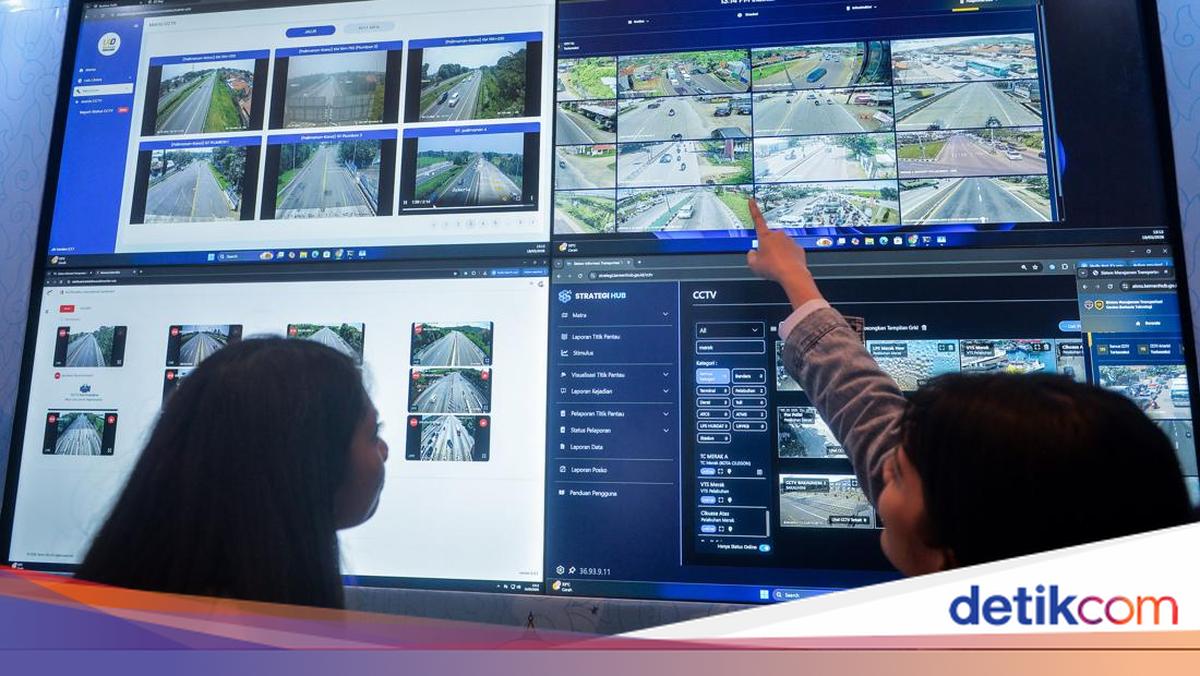
In addition, the presence of Electronic Traffic Law Enforcement (ETLE), the use of drones, effective one-way and contra-flow strategies, and the utilisation of body cams by personnel in the field create an integrated information ecosystem. Information that was previously partial is now processed in one command centre to serve as the basis for precise actions.
These strategies are then implemented across various transportation nodes such as toll roads, arterial roads, ports, terminals, airports, stations, as well as worship areas and tourist destinations. Supported by 2,746 security and service posts, this system works like a interconnected network to minimise potential hazards.
The strategy carried out by Polri in overseeing the 2026 mudik is truly rooted in a paradigm shift within Polri. The predictive approach, which has long been the Polri Presisi jargon, has been carefully translated and actualised. This also reflects a risk management approach that can be well managed.
Polri’s risk management is a systematic process in mitigating threats and dangers that could potentially hinder objectives (OECD, 2024). Progressively, Polri has successfully mapped vulnerable points and potential failures in data-based mudik governance with accurate data. Predictive steps are not based on assumptions, but in real time and scientifically as the basis for decision-making in the field.
Mudik as a Model
This success deserves appreciation as part of the improvement in the Polri institution, which has long been a public demand. Therefore, the public also needs to open their eyes that the Polri organisation is increasingly showing positive and encouraging changes.
However, this positive note should not make us complacent. The success of this year’s mudik should not stop as a passing success story without improvements in other sectors. The real challenge is how this progressive and data-based security can be replicated in various other lines of Polri’s work?
It must be realised together that Polri’s future challenges will be increasingly complex and dynamic. Especially in the crimes of the current era that are invisible but have systemic impacts on society and the state. We face cyber threats, disinformation attacks that could damage social cohesion, to potential conflicts triggered by economic inequality and political polarisation. In this situation, the approach taken by Polri cannot rely solely on reactive and short-term approaches. Moving when the fire is raging is no longer relevant. Therefore, predictive steps need to be the key point that drives Polri in carrying out its duties.
The success of the 2026 Mudik must become a model to be developed as the main stream in our policing work system as a whole. Polri needs to make data and scientific approaches the breath that drives every decision-making.
Every policy from the centre to services at the police station level must be based on measurable data analysis based on risk mitigation. Therefore, the work of all Polri members is no longer just based on intuition, as usual, and formalities. Replicating the mudik management model into other policing tasks will create a more modern, accountable, and transparent institution, thereby continuously fostering public trust.
As expressed by W. Edwards Deming, ‘In God we trust. All others must bring data,’ that every decision with broad impact must be supported by strong data. This principle is a key for Polri to maintain public trust while ensuring that every step taken is quick and precise. If this direction is maintained, Polri’s presence will feel profound, even when problems are still in the shadows. Congratulations to Polri Presisi!