
Muara Angke Residents Live Amid Tidal Flooding, Sleep Is Hard
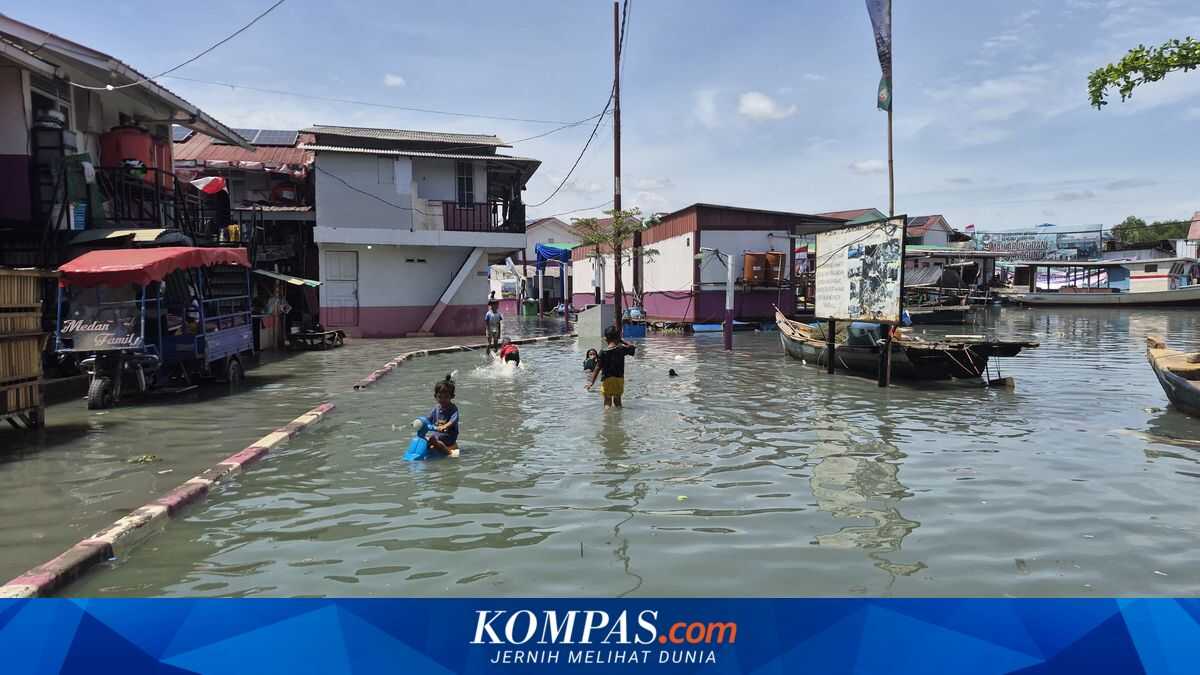
The roar of waves and strong sea winds is no longer merely a natural sound, but a warning alarm for residents living on the tidal flood line in Muara Angke, North Jakarta. With each high tide, anxiety grips residents as seawater can surge into homes without warning. RW 22 in Muara Angke is the worst-hit point whenever the sea is high, and tidal flooding in this area also swamps five other RWs in Muara Angke. The head of RT 06, RW 22, Warya, says tidal floods in Muara Angke have worsened over the past nine years. “I’ve noticed that since 2017 floods occur almost daily; before 2017 the flood days were at most three days in a full moon month,” Warya told Kompas.com on Wednesday 4 March 2025. From 2017 to the present, RT 06 has almost daily inundation due to its proximity to the sea. In a month, Warya explains, RT 06 can be completely dry for only a few days; the rest is waterlogged as seawater spills inland every morning. He believes the worsening floods are triggered by several factors, including extreme weather, land subsidence, and global warming. Rokiyah, 60, who has lived in Muara Angke for 40 years, says her sleep is always disturbed whenever tidal floods arrive. “People struggle to sleep when tidal floods hit, because almost every day there’s a flood. If the water comes at night, after work during the day you can’t sleep; you might sleep around 01:00–02:00 WIB once it has subsided,” she said when speaking to Kompas.com at the site on Wednesday 4 March 2026. In addition to being unable to sleep, Rokiyah is always anxious because tidal floods often bring animals such as snakes and monitor lizards. Consequently, she always wears boots when tidal floods swamp her house to prevent bites from snakes or other creatures not easily seen in the water. Rokiyah says the floodwater can arrive in the morning or in the middle of the night, depending on the season. Yet she is most saddened when floods arrive while she is fast asleep. Stifling sleepiness, she is forced to rise from her comfortable mattress and move to the hard wooden hall in front of her house to await the water’s retreat. One way residents adapt to tidal floods is by raising their houses higher using shells, in the hope seawater cannot enter the home. However, this method is often not effective in preventing floodwater from entering houses.