
MTI Urges Government to Strengthen Port Management and Toll Road Safety
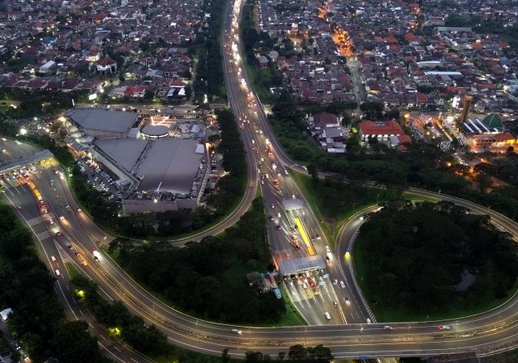
The General Secretary of the Indonesian Transport Society (MTI), Aditya Dwi Laksana, has stressed the importance of a thorough evaluation in handling the 2026 Lebaran return flow, drawing lessons from previous mudik dynamics.
According to Aditya, several crucial notes that need attention include the density on the Ketapang Port to Gilimanuk Port crossing route and the increasing risk of accidents on toll road sections, particularly during the implementation of one-way traffic engineering.
“Regulators and transport operators must ensure that ferry fleets operate optimally, considering the limited number of docks. The arrive-unload-depart (TBB) scheme should also be reimplemented if needed,” Aditya said when contacted on Tuesday (24/3).
In addition, he emphasised the importance of strengthening traffic management in port areas, including adding traffic control officers to ease vehicle queues that could pile up during the return flow.
In the land transportation sector, Aditya urged bus company operators (PO) to ensure that all drivers have undergone health checks before duty and possess adequate competence. Compliance with safety standards, he said, is key to reducing accident risks, including those involving public transport buses on toll roads.
Furthermore, toll road operators are asked to increase education for road users regarding emergency procedures, especially during the one-way system implementation. This step is considered important to minimise accident potential amid a surge in vehicle volume.
Aditya also encouraged the optimisation of rest area utilisation on arterial roads around toll gates. Massive socialisation is needed so that road users do not only focus on rest areas inside the toll, which often experience high density.
“The use of alternative rest areas on arterial roads can be a solution to reduce vehicle build-up and provide drivers with a safer opportunity to rest,” he explained.
From the user side, the public is advised not to force travel during the peak return flow period if the return schedule is still flexible. Utilising the work from anywhere (WFA) policy is seen as able to help distribute vehicle movements more evenly.
In addition, Aditya assessed that the free return programme and free motorcycle return transport need to be continuously intensified as part of mobility control strategies. These programmes are expected to curb the use of private vehicles that contribute to traffic congestion.
MTI also requests that the government not focus solely on toll roads during the 2026 Lebaran mudik flow. Improvements to feasible arterial roads can serve as alternatives.