
MTI Proposes Free Public Transport to Save Fuel
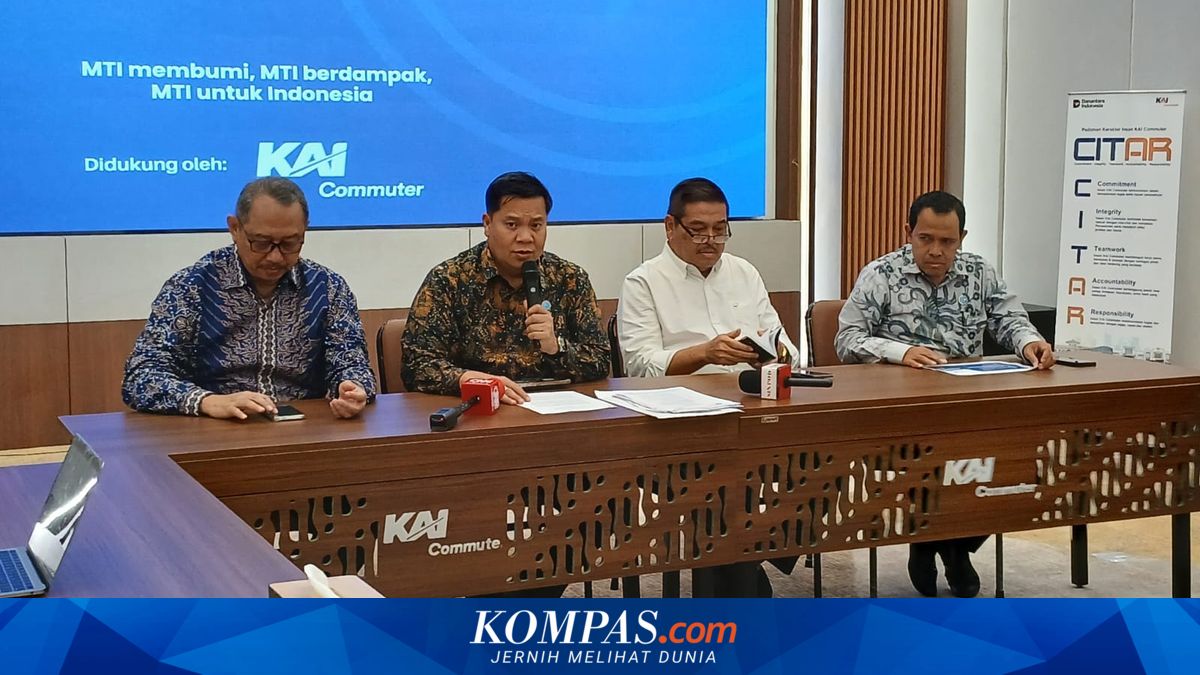
JAKARTA, KOMPAS.com - The Indonesian Transport Society (MTI) has proposed a policy of free public transport as one of the quick steps to save fuel consumption (BBM) amid the global energy crisis.
MTI General Chairman Haris Muhammadun stated that the global energy crisis should be used as a momentum to carry out fundamental changes to the national transport system.
MTI assesses that mobility restriction policies alone are not sufficient to address energy issues in the long term.
As a quick step, MTI proposes the implementation of zero or free fares for mass public transport in major cities for a certain period.
“We need a policy, for example, making public transport free for a month,” said Haris during a press conference in Central Jakarta on Wednesday (15/4/2026).
This policy is expected to encourage the public to switch from private vehicles to public transport, thereby significantly reducing BBM consumption.
The government has implemented a Work From Home (WFH) scheme every Friday for several weeks now.
However, MTI sees that this policy triggers non-productive activities, such as tourist trips or even returning to hometowns.
“There is potential for side effects that need to be anticipated, including the shift of travel to non-productive activities that potentially consume BBM because the WFH scheme is carried out on the last working day of the week, a decline in economic productivity in certain sectors, and ineffectiveness if without support for alternative public transport,” explained Haris.
Therefore, Haris encourages the government to evaluate the implementation of WFH to save BBM, whether it is appropriate or there are things that need to be fixed.
In the long term, MTI encourages the transformation of the national transport system based on integrated and sustainable public transport.
These steps include shifting modes from private vehicles to public transport, developing public transport in medium-sized cities and rural areas, as well as reorienting energy subsidies from BBM to the public transport sector.
MTI also emphasises the importance of integrating the transport system with national logistics and accelerating the use of low-emission vehicles.
“The energy crisis should not be answered only by limiting mobility. We must ensure that citizens can still access schools, health services, and jobs,” he explained.
MTI urges the government to provide stimulus in expanding the coverage of public transport services, especially when BBM runs out.
“MTI believes that with the right approach, the current energy crisis can become a turning point towards a more efficient, sustainable, and equitable Indonesian transport system,” he concluded.