
MTI: Empowering local public transport as an effective solution
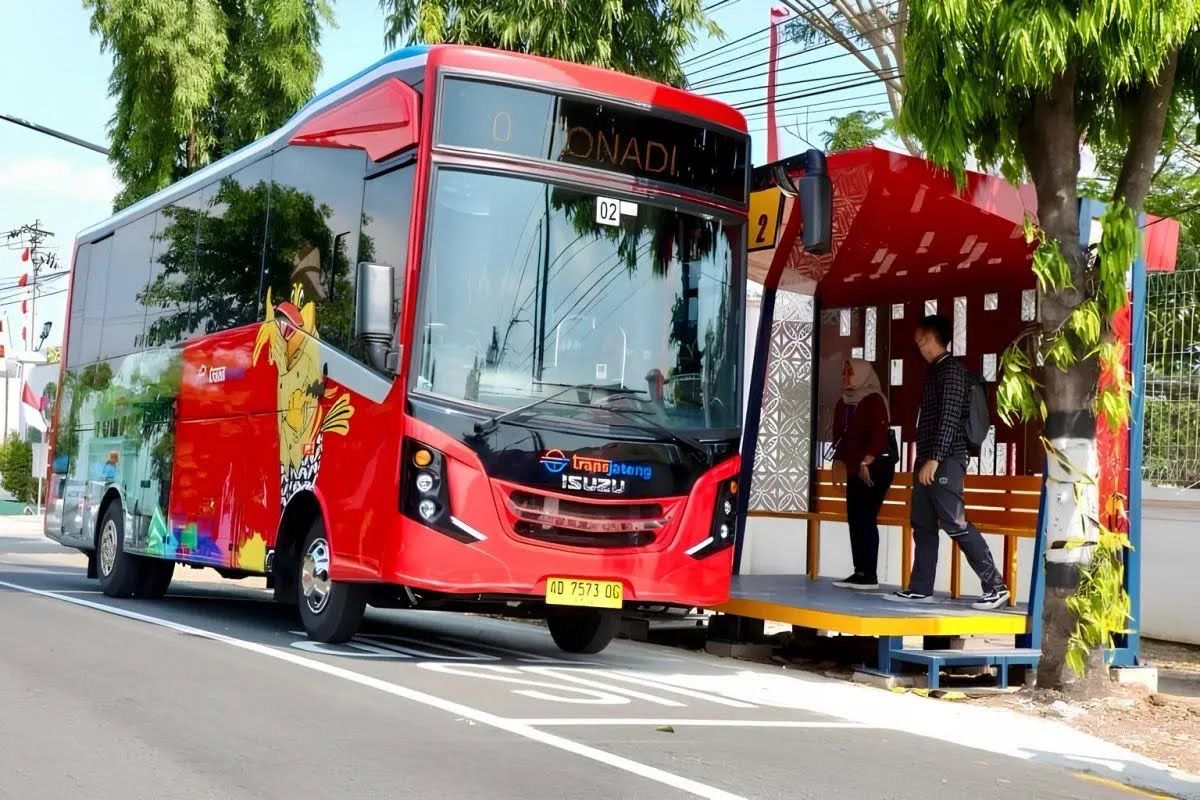
Jakarta (ANTARA) - Djoko Setijowarno, Advisor to the Indonesian Transport Society (MTI), assesses that empowering local public transport through the utilisation of existing systems offers an effective solution to improve public transportation services.
“Empowering local public transport at the regional level can serve as an effective solution without starting from scratch, as has been implemented in Magelang Regency and Semarang Regency,” said Djoko in his statement in Jakarta on Monday.
According to him, the government needs to allocate Rp10 trillion to initiate the procurement of modern public transport in 200 cities through a presidential instruction (inpres).
“At the very least, people in small to large cities can already enjoy adequate public transport,” he stated.
As an illustration, he said, the 2023 budget allocation for the buy the service (BTS) programme under the Directorate General of Land Transportation of the Ministry of Transportation amounted to Rp582 billion, which has ensured the operation of public transport in 10 metropolitan and large cities.
“This figure proves that with measured allocation, the government can provide extensive and quality public mobility services for urban communities,” he explained.
With an allocation of Rp10 trillion, the service could even be made free for students, pupils, and workers to dampen social unrest.
According to the academic from the Civil Engineering Study Programme at Soegijapranata Catholic University in Semarang, this policy is far more efficient and has broader impact compared to the Rp30 trillion electric motorcycle subsidy plan.
By utilising 10 percent of the motor vehicle tax (PKB) revenue sharing amounting to Rp6.1 billion, Magelang Regency has allocated Rp2.5 billion specifically as incentives for rural transport (angkudes).
Through incentives of Rp135,000 per day for school operations, 78 angkudes fleets in 2026 will be able to serve around 900 pupils for free every day.
This step not only ensures educational accessibility but also sustains the livelihood of local transport operators.
In terms of benefits and budget efficiency, strengthening public transport is clearly a more rational choice.
He further stated that an allocation of Rp10 trillion for improving local public transport through inpres schemes or BTS subsidies would provide multiplicative impacts, both economically, socially, and in terms of safety.
He mentioned the strategic benefits that can be obtained from this scheme: first, as an economic safety net for the community. Increases in energy costs such as fuel often trigger inflation and reduce purchasing power.
Cheap or free public transport for pupils, workers, and low-income communities functions as a “direct subsidy” that is well-targeted.
Second, fiscal and budget efficiency. In figures, Rp10 trillion is far more efficient compared to plans for subsidising personal electric vehicles, such as electric motorcycles, which require larger funds of around Rp30 trillion, but the benefits are individual.
Third, mitigation of social risks and protests.
Public transport is a sensitive issue that touches the grassroots. Providing decent public transport before fuel price adjustment policies can serve as a tool to dampen social unrest.
“Communities tend to be more cooperative towards government energy policies if affordable and quality mobility alternatives are available,” he explained.
Fourth, improvement in transportation safety. According to him, many traffic accidents in regions involve pupils using motorcycles due to lack of alternatives.
With the availability of integrated school transport that has succeeded like in Magelang Regency, accidents in productive ages can be drastically reduced.
Fifth, equitable development and regional connectivity. The funds can be used for fleet modernisation, replacing unworthy transport with new, comfortable, air-conditioned, and safe units.
Then, empowerment of local operators; without killing existing transport, the government can integrate them into a formal system with service standards set by the government.
As well as digitalisation, namely the implementation of non-cash payment systems and real-time fleet position tracking at the small/medium city level.
Sixth, environmental and spatial planning impacts. Providing public transport in 200 cities will reduce vehicle density on roads, which directly impacts reduced congestion in regional city centres and collective reduction in carbon emissions.