
MSI Story: Indonesian Textile Company Survives 36 Years Through Crises
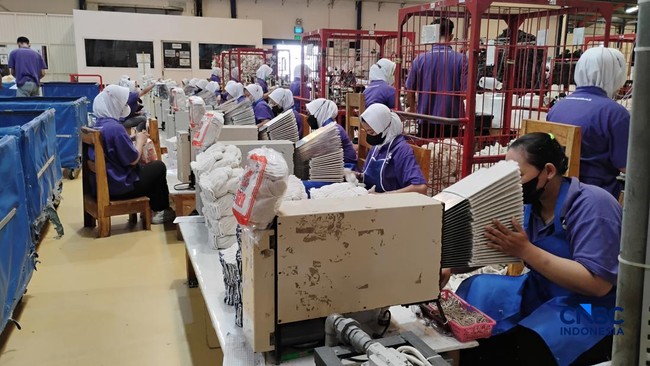
PT Mitra Saruta Indonesia (MSI) has endured as an exporter of textile products for 36 years since its establishment in 1989. This labour-intensive industry in Nganjuk, East Java, processes up to 3,500 tonnes of textile waste per month and employs 1,700 workers. Its products include various textile derivatives, with key exports comprising yarn and an array of gloves destined for multiple markets. “After two to three years of operation, we achieved our first export to Japan, and we have continued exporting there to this day. Japan remains the primary destination for our glove products, followed by the United States,” stated President Director of PT Mitra Saruta Indonesia, Yanto Andrian Hoo, at the MSI factory, as quoted on Friday (16/4/2026). The MSI factory now boasts a production capacity of 1.5 million dozen pairs of gloves per month, alongside spinning machines producing 3,250 tonnes of coloured yarn monthly from processed textile waste. For yarn, the company exports to 29 countries, including Armenia, Bangladesh, Belarus, Belgium, Bosnia, Brazil, Chile, Egypt, India, Italy, Japan, Korea, Lithuania, Malaysia, Mexico, Pakistan, Peru, Philippines, Poland, Russia, South Africa, Spain, Taiwan, Thailand, Turkey, United Arab Emirates, Ukraine, United States, and Vietnam. Meanwhile, various types of gloves are exported to 21 countries, comprising Australia, Bahrain, Brazil, Canada, Chile, Italy, Japan, Kuwait, Malaysia, New Zealand, Philippines, Portugal, Saudi Arabia, Singapore, Spain, Sri Lanka, Thailand, Tunisia, Ukraine, United Arab Emirates, and the United States. This diversification of export destinations has enabled the company to survive for 36 years as a labour-intensive textile waste processor, navigating various global crises, including the current global trade crisis triggered by the US and Israel conflict with Iran. “We’ve grown accustomed to such situations. Why doesn’t the current scenario impact us significantly? Because our market is sufficiently diverse,” Yanto emphasised. Beyond aggressive marketing-driven export market diversification, the industry’s resilience, as claimed by Yanto, lies in never laying off or reducing factory workers or labourers, owing to production raw materials that do not rely on imports. The processed textile products are sourced entirely from local textile waste supplied by collectors or small and medium enterprises (SMEs). This is complemented by maximising raw material stock capacity to ensure production never falters, including dedicated storage warehouses. “Our raw materials must be adequate, and our finances must be sound. Our stock buffers guarantee the price stability we offer to customers. Customers appreciate that. It’s not about passing on every increase to them constantly,” he explained. According to Yanto, this business model has proven effective in steering the company through various crises. He cited the COVID-19 pandemic, which caused sales to plummet by 50% for the first two to three months, but recovery ensued from the fourth month with increases of 40% to 90%. “During COVID-19, our recovery was quite significant. The market dropped substantially by about 50% for around two to three months. But from the fourth month, we climbed back by 40-80% and up to 90% within less than a year. Our recovery rate against such risks is quite strong,” Yanto remarked. In conducting its business, PT MSI also receives funding support from the Indonesia Export Financing Agency (LPEI), known as Indonesia Eximbank, a public service agency under the Ministry of Finance. Head of the National Interest Account (NIA) and Strategic Assignment Division at LPEI, Berlianto Wibowo, stated that this support ranges from investment financing for machinery to working capital for expanding business capacity and overseas markets. LPEI has been assisting MSI’s business for the past decade. “One programme that directly impacts exporters is helping them diversify markets. When market conditions are unfavourable, we have a special export assignment programme,” Berlianto said. PT Mitra Saruta Indonesia is a client managed by the Surabaya Regional Office of LPEI, utilising Export Working Capital Credit Financing (KMKE) and Export Investment Credit (KIE) facilities. The provision of these two facilities aligns with LPEI’s mandate as stipulated in Law No. 2 of 2009 on the Indonesia Export Financing Agency. Article 3 states that National Export Financing aims to support government policies in promoting the national export programme. Furthermore, Articles 5 and 6 regulate that financing can be provided in the form of facilities, including working capital and/or investment financing. Through the KMKE and KIE facilities, export-oriented businesses can obtain financing support to strengthen operations and enhance business capacity. Utilisation of these facilities includes, among others, purchasing raw materials, factory construction or renovation, and refinancing for capital goods needs. “This is where the role of the Indonesia Export Financing Agency comes in as an extension of the government in providing support for national export financing. We offer this to export actors who are ready to grow,” Berlianto affirmed.