
MRT Jakarta's 2025 Financial Performance: Revenue Reaches IDR 1.5 Trillion
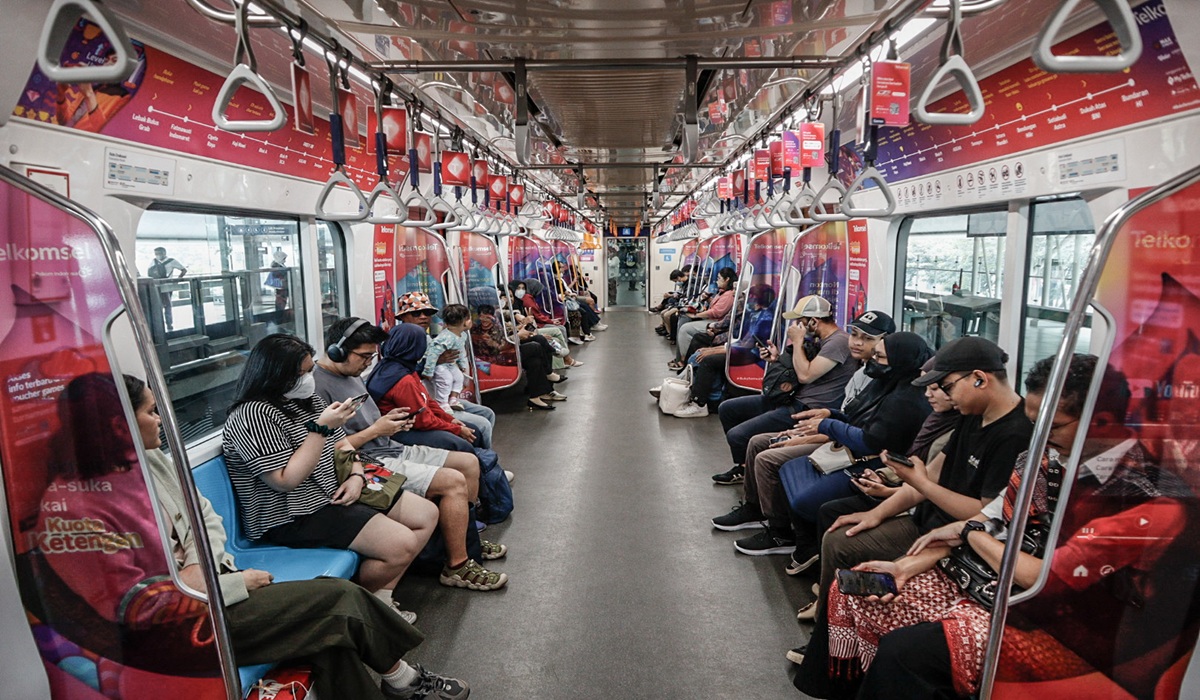
PT MRT Jakarta (Perseroda) recorded solid financial performance throughout 2025. The rail-based transportation company successfully booked revenue of IDR 1.5 trillion, or an increase of around 7% compared to the previous year’s achievement.
Director of Finance and Management of PT MRT Jakarta (Perseroda), Risa Olivia, explained that this positive growth was driven by two main factors, namely the increase in the volume of service users and the stronger contribution from the non-ticket (non-farebox) business sector.
“Revenue in 2025 reached IDR 1.5 trillion with a growth of around 7% compared to the previous year,” said Risa when giving a statement in Jakarta, Thursday (June 4, 2026).
Risa added that revenue from tickets or farebox continues to show a significant upward trend since 2021. This reflects the high public interest in switching to integrated public transportation. Cumulatively, the average annual growth rate (CAGR) of farebox revenue reached 50.4% in the 2021-2025 period.
Overall, the diversification of revenue sources, including tickets, government subsidies, and non-ticket revenue, has maintained the company’s stability with a total CAGR of 2.3% in the same period.
The company’s financial health is also reflected in the EBITDA margin, which is maintained in the range of 35% to 51%. According to Risa, this figure shows that MRT Jakarta is able to maintain efficiency and stable operational performance in the face of external challenges. As of the end of 2025, the company’s total assets were recorded at IDR 32 trillion, which is dominated by rail and station infrastructure.
On the other hand, Director of Business Development of MRT Jakarta, Farchad Mahfud, emphasized the importance of optimizing transit areas (Transit-Oriented Development/TOD) to strengthen non-ticket revenue. One of the successful pilot projects is the management of Blok M Hub.
“We continue to optimize commercial areas and transit area development to strengthen non-ticket revenue. Currently, Blok M Hub itself has accommodated around 375 tenants,” said Farchad.
Through this diversification strategy, MRT Jakarta aims to gradually reduce its dependence on government subsidies, while ensuring the sustainability of high-quality public transportation services for the residents of Jakarta. (Z-1)