
MRP Urges Central Papua Executive and Legislative Branches to Cease Public Confrontations
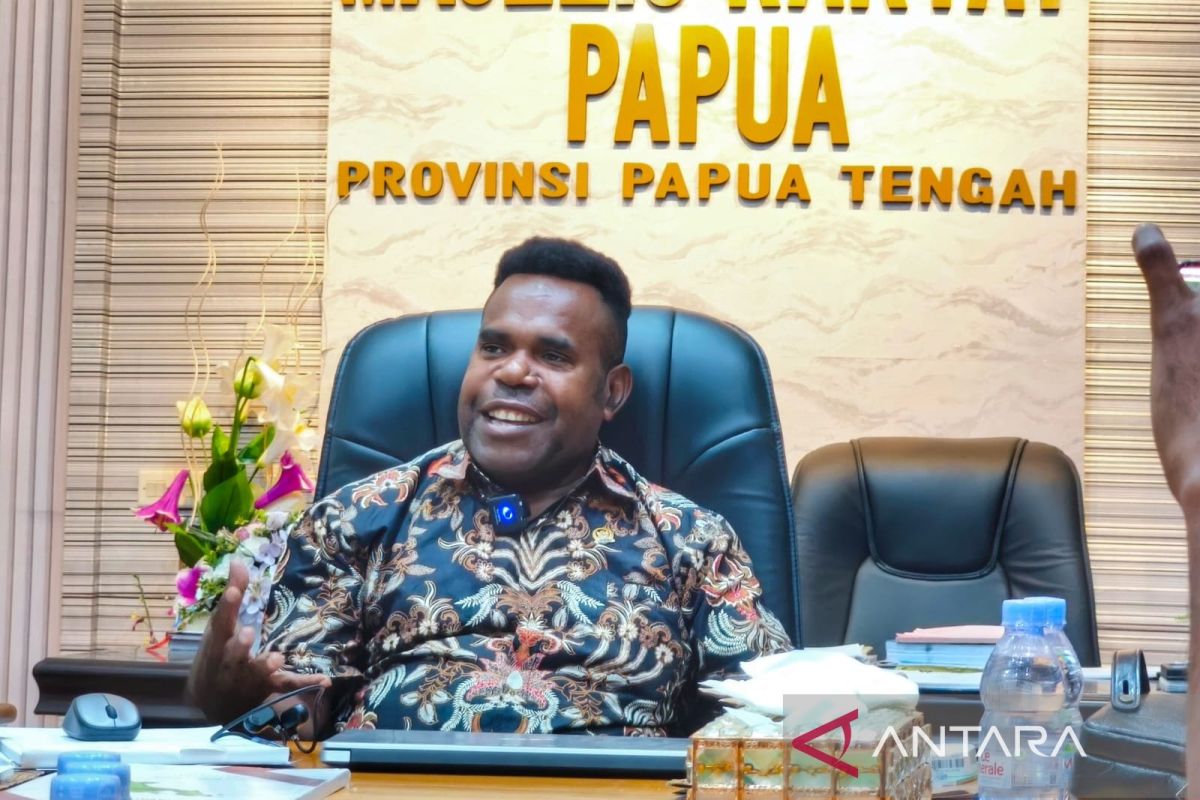
Nabire (ANTARA) - The Papua Peoples’ Assembly (MRP) of Central Papua has requested that the executive and legislative institutions cease attacking one another in the public arena and prioritise communication to resolve differing viewpoints.
The Chairman of MRP Central Papua, Agustinus Anggaibak, stated in Nabode on Tuesday that differences in perspective between the executive and legislative branches should be settled through communication and joint discussions.
“It is better that we coordinate and discuss negative issues so that the future is better. Rather than criticising without producing results, which only leads to hostility,” he said.
He noted that Central Papua, as a new autonomous region, requires a strong governmental foundation, meaning all leaders must avoid personal, group, or factional interests that could obstruct development.
According to him, criticism of government policy remains necessary, but it must be delivered constructively by first discussing identified issues between the executive and legislative institutions.
Agustinus stated that the Central Papua Regional House of Representatives (DPR) holds the authority to establish budget policies, while the local government executes programmes based on the jointly established budget.
“If we have already determined the budget, and then we proceed to blame one another, who is at fault? If we keep blaming each other, the people will ultimately be the ones left confused,” he remarked.
He also urged members of the Central Papua DPR not to merely debate policies within the legislative building, but to be present among the community, particularly in areas facing social or armed conflict.
Agustinus stated that the MRP, as the cultural representative institution for the Indigenous Papuans (OAP), has an interest in encouraging all political elites to prioritise development and the protection of the interests of the Central Papua people.
He added that differences and errors in governance can be addressed together through inter-institutional communication.
“If I see something wrong, and I immediately call the journalists to attack them, that is not the correct way. The correct way is to discuss it with them because we are all leaders,” he said.
He emphasised that communication between the local government, the Central Papua DPR, and the MRP is essential so that governance issues can be resolved without escalating disputes that could potentially disrupt development and public services.
“The goal is that we want to build. We want to establish something good for our region, our land, and our people,” he said.
Agustinian’s statement comes amidst emerging differences in perspective within the Central Papua DPR regarding the performance of the Central Papua Provincial Government and regional budget management.
The First Deputy Chairman of the Central Papua DPR, Diben Elaby, previously highlighted issues including the large amount of the 2025 Regional Budget’s remaining budget surplus (SILPA) and several problems in budget management.
Diben’s statements subsequently received responses from several members of the Central Papua DPR who held differing views, suggesting that budget issues should be discussed through institutional mechanisms.