
Mpu Purwa Museum: Preserving the Silent Legacy of Kanjuruhan and Majapahit in Malang
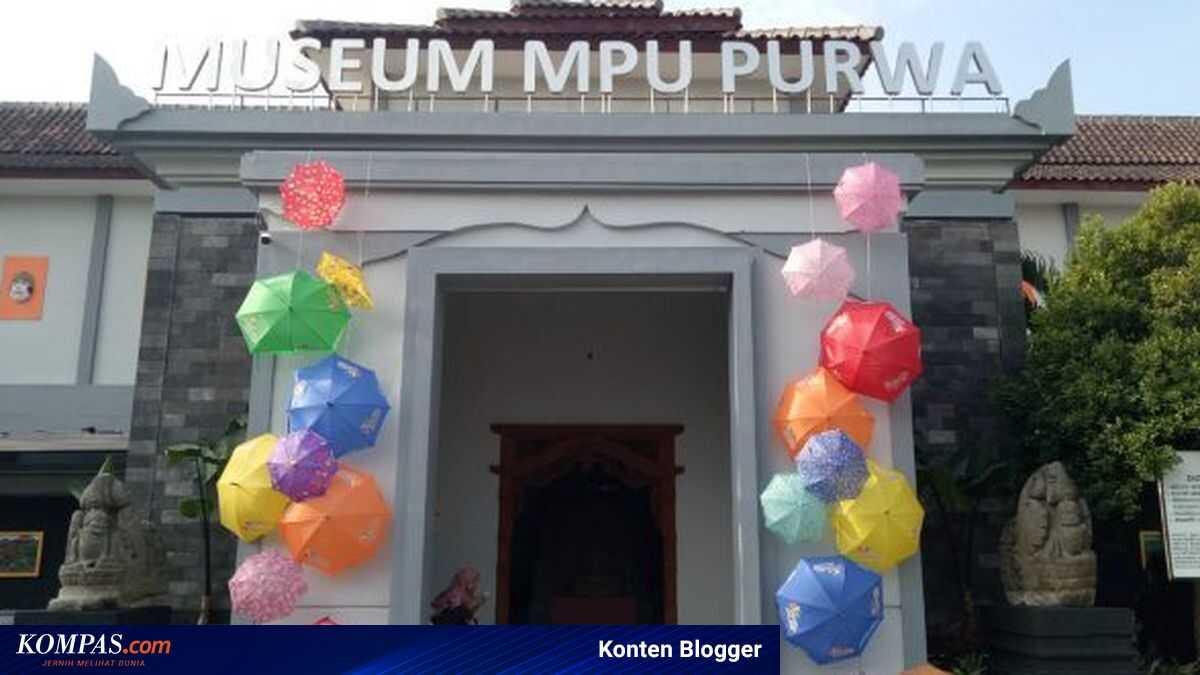
Amidst the tranquility of the Griya Santa residential area in Lowokwaru, stands a building that seems to foster a long conversation between the past and the present, namely the Mpu Purwa Museum.
From the outside, it appears simple, not located on the main tourist route, nor does it have a monumental design like national museums.
However, inside it holds the long traces of the civilization of Malang Raya, especially from the Hindu-Buddhist era, which slowly reveals the narrative of the historical continuity of East Java from Kanjuruhan to Majapahit.
According to the curator, Manuel Da Silva, the number of collections has exceeded one thousand items, a significant increase that reflects the increasing number of archaeological findings and the collection of artefacts from various sites in Malang Raya.
Statues, inscriptions, fragments of buildings, to stone artefacts are now arranged more systematically and equipped with information panels and digital codes that can be scanned by visitors. The museum is slowly moving from being just a storage space for antiquities to a space for interpreting history.
This uniqueness makes the statue not only a religious art object, but also evidence of the diversity of local expressions in the Hindu-Javanese tradition. This statue was donated by a resident of Rampal Celaket, indicating that history often survives not in the centers of power, but in the yards of residents who have preserved it for generations.
Another collection of statues shows the religious spectrum of classical East Java: Siwa, Nandiswara, Resi Guru, Durga Mahisasuramardini, to Suramardini. Most of them come from the Singasari-Majapahit context, a period when the syncretism of Siwa-Buddha reached a mature form in East Java.
A Bodhisattva statue from the Majapahit period, for example, displays a meditative characteristic with a prabhamandala behind the head, a circle of light that signifies spiritual sanctity. It is not just a statue, but a representation of a cosmology about humans who transcend the profane world towards transcendent consciousness.
Similar statues are found in Petirtaan Belahan and Goa Gajah, confirming that Malang Raya is within a broad network of sacred water in the classical archipelago. Water in Hindu cosmology is not just a natural element, but a medium of spiritual purification and a symbol of fertility. Thus, the Lakshmi statue at Mpu Purwa not only tells about local religiosity, but also the relationship of the Javanese people with the sacred landscape.
However, the most crucial artefact for the reconstruction of the history of Malang Raya is not the statues, but the Widodaren, Muncang and Dinoyo inscriptions. In the historiography of ancient Indonesia, inscriptions are a primary source for understanding the chronology, power structure and political cosmology of the kingdom.
The Dinoyo inscription is particularly important because it mentions King Gajayana from the Kanjuruhan Kingdom in the 8th century - one of the oldest pieces of evidence of the existence of an organized state in Malang. The Dinoyo inscription in the museum is the second; the original inscription is still in its original location because it is difficult to move without the risk of damage.
Unfortunately, to date, the three main inscriptions have not been equipped with adequate detailed explanations in the museum. In fact, they most likely contain the key to linking the historical line of Kanjuruhan with Tumapel-Singasari-Majapahit.