
MPR Urges Acceleration of Pesantren Directorate General Establishment at Religious Ministry
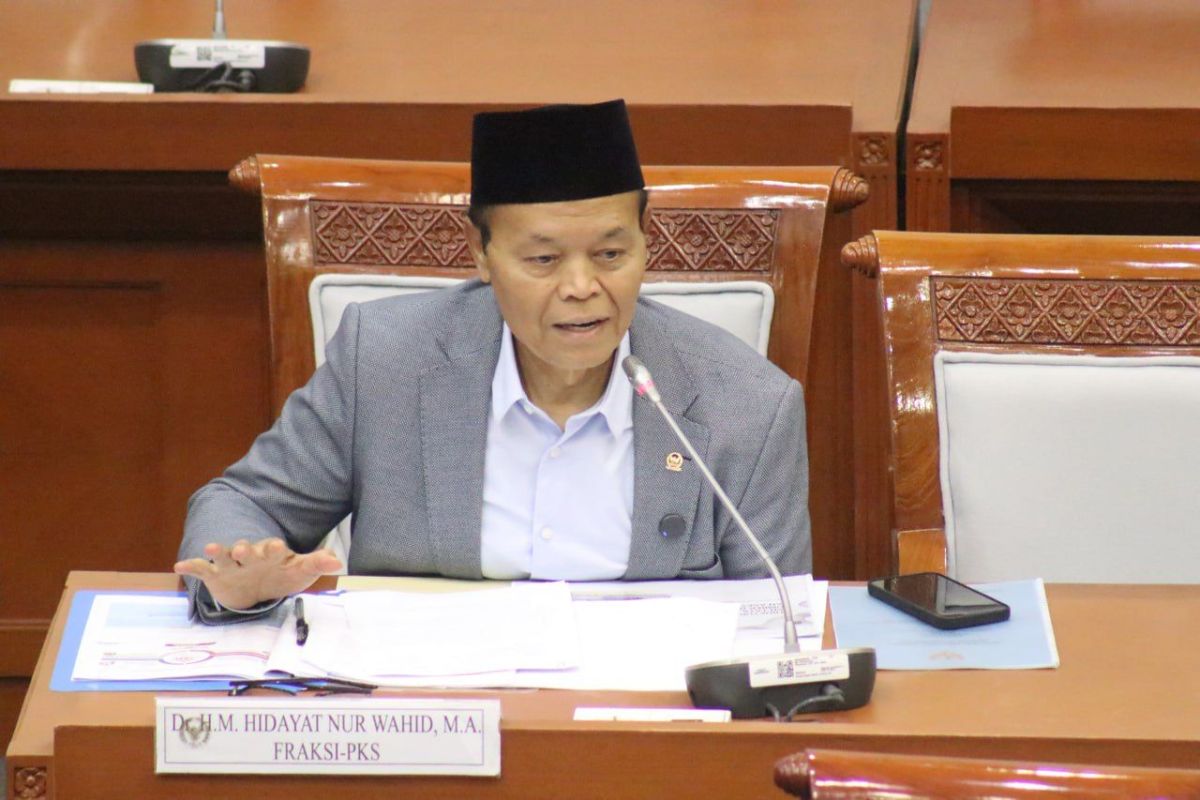
Jakarta — Vice Chairman of the People’s Consultative Assembly (MPR) Hidayat Nur Wahid has urged acceleration of the establishment of a Directorate General for Pesantren within the Ministry of Religion to strengthen institutional transformation and improve the quality of pesantren education in Indonesia.
He assessed that realisation of the Pesantren Directorate General formation should be implemented immediately, given that President Prabowo previously stated his approval for the establishment of the institution.
“Nearly five months have passed since President Prabowo announced his approval for the establishment of the Pesantren Directorate General. Although there has been progress, to date there is no clear sign of formal approval for its realisation,” said Nur Wahid in a statement in Jakarta on Friday.
Nur Wahid, who is also a member of Commission VIII of the House of Representatives, made this statement during a working meeting of Commission VIII with the Ministry of Religion and the Ministry of State Apparatus Empowerment and Bureaucratic Reform (MenPAN-RB) regarding the organisational structure and work procedures of the Ministry of Religion.
According to Nur Wahid, establishment of the Pesantren Directorate General is important for institutional transformation within the Ministry of Religion and for strengthening management of pesantren education, which has a large ecosystem in Indonesia.
“In the context of the Ministry of Religion’s internal operations, the establishment of the Pesantren Directorate General is highly important for institutional transformation and improving the quality of religious education, particularly pesantren,” he said.
Beyond the institutional aspect, according to Nur Wahid, establishment of the Pesantren Directorate General is also related to efforts to improve the quality of pesantren and optimise utilisation of the Pesantren Permanent Fund.
He explained that under Presidential Regulation Number 111 of 2021 on the Permanent Education Fund, the Pesantren Permanent Fund is currently still part of the Permanent Education Fund and its management has not been separated.
Yet pesantren already has its own legal basis through Law Number 18 of 2019 on Pesantren.
“As a result, of approximately Rp10 trillion in revenue from the development of the permanent education fund, pesantren has only received about Rp500 billion, an amount considered unjust and insufficient to assist pesantren, whose numbers are increasing in Indonesia,” he said.
Nur Wahid noted that the pesantren ecosystem in Indonesia is very large. Based on data from the Ministry of Religion, there are 42,369 pesantren, 104,204 takmiliyah Islamic schools, 194,901 Quran education institutions, and 91 Ma’had Aly institutions, totalling 341,565 institutions.
Additionally, this ecosystem also involves approximately 12.6 million students and more than two million Islamic teachers and educators.
“Naturally, when it has transformed from a directorate to a directorate general, its budget must also be increased and strengthened,” he said.
He added that budget reinforcement could come from optimising the separation of the Pesantren Permanent Fund or direct support from the State Budget (APBN) as a form of the state’s commitment to pesantren development.
According to Nur Wahid, pesantren have long contributed to human resource development and have an important role in enlightening the nation’s life.