
MPR: Accelerate Climate Action Amid Extreme Heat Sweeping Indonesia
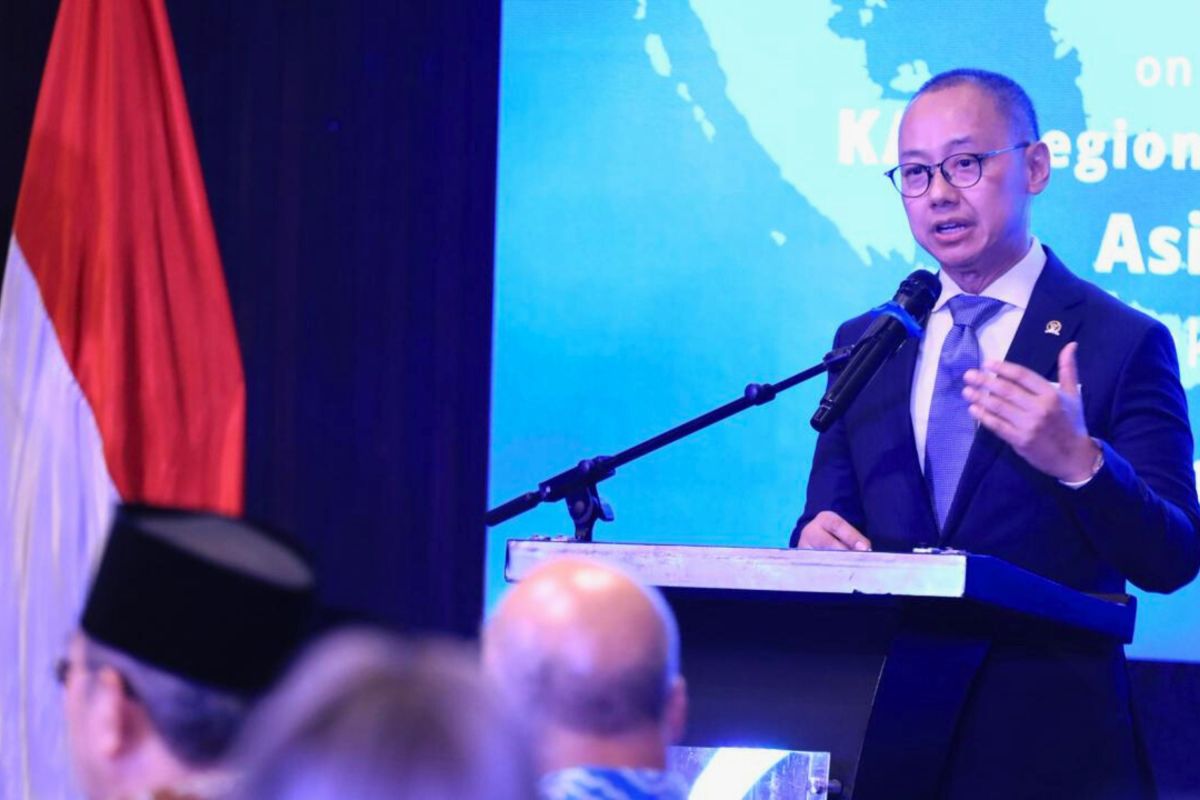
Deputy Chairman of the People’s Consultative Assembly (MPR) of the Republic of Indonesia, Eddy Soeparno, has emphasised the need for responsive policies and actions to confront the extreme heat conditions currently sweeping across Indonesia.
According to him, the current climate situation has entered a worrying phase, where the Meteorology, Climatology, and Geophysics Agency (BMKG) recorded the highest air temperature in Indonesia on 18 March 2026.
“Five years after COVID-19, I have called for the importance of addressing climate issues that cause rising earth temperatures due to carbon emissions, surging pollution, and high deforestation rates,” Eddy stated in a press release received in Jakarta on Monday.
He revealed that BMKG recently recorded extreme temperatures in Jakarta at the top position, reaching 35.6 degrees Celsius, followed by Ciputat at 35.5 degrees Celsius and Tangerang at 35.4 degrees Celsius.
Eddy stressed that he no longer wishes to refer to the current situation as climate change, but as a climate crisis.
He noted that unprecedented temperature rises, increasing air pollution, and the slow pace of reforestation programmes lagging behind deforestation rates are among the climate problems being faced.
Therefore, he stated the importance of political commitment and the implementation of various mitigation, adaptation, and education programmes in climate management so that all elements of society can participate in addressing the current climate problems.
He conveyed that strong political support has been demonstrated by President Prabowo Subianto, as expressed in various domestic and international forums.
“It is only fitting that all government and non-government elements work together to accelerate climate action because the climate crisis knows no tribe, race, gender, age, or other backgrounds,” he said.
He opined that forms of climate action, both downstream and upstream, constitute a unified whole that must proceed in harmony.
In that way, he said, providing education to the public on the importance of waste management, tree planting, and the use of electric public transport will be far more economical than bearing the costs of reconstruction due to natural disasters caused by forest degradation.
In relation to this, he also encouraged discussions on legislation regarding climate management, which serves as a “guideline” for handling the climate crisis, so that Indonesia’s climate action programmes are supported by strong legal products.
It was mentioned that Indonesia already has a Draft Law (RUU) on Climate Change Management that has been included in the Priority National Legislation Programme (Prolegnas) for 2026.
“I hope we can discuss and ratify it soon because addressing the climate crisis will not be effective without strong legislation,” Eddy said.
He also assessed that such legislative regulations will in the future save Indonesia from various subsequent natural disasters because the climate crisis is truly a civilisational crisis.