
MP: Patient Safety Must Be the Top Priority
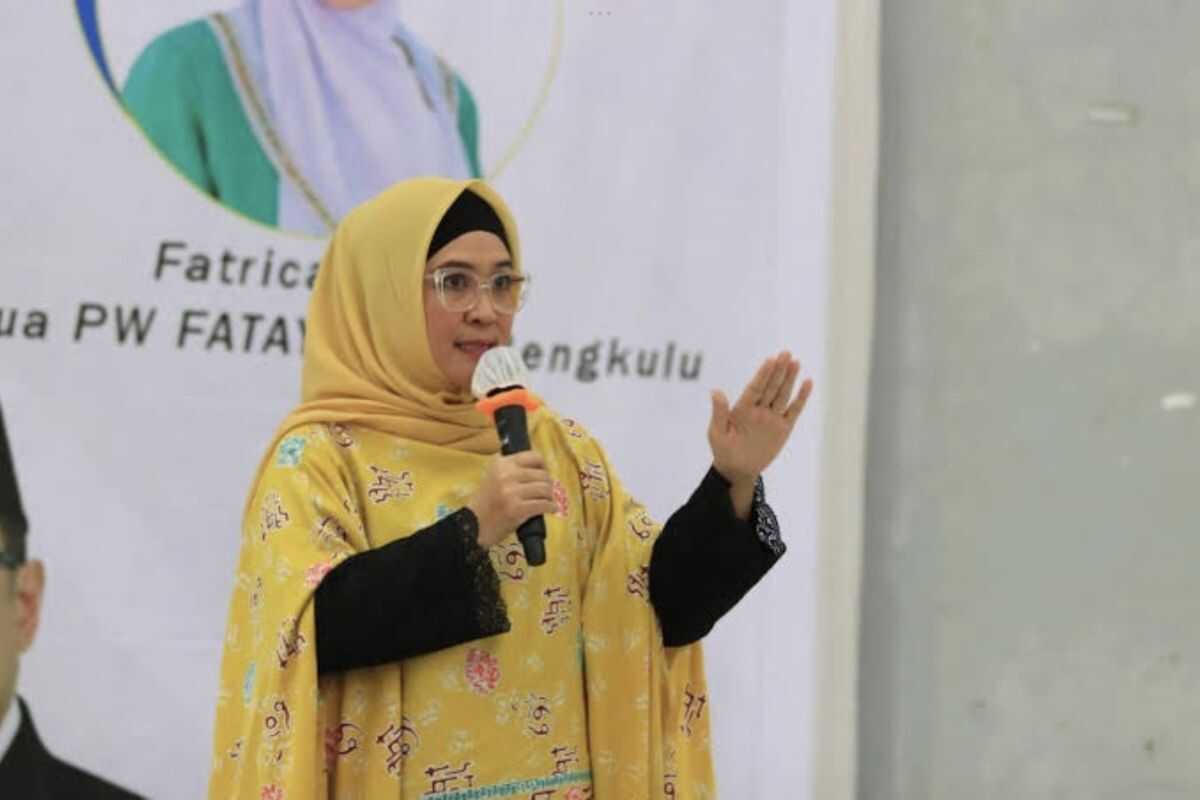
Jakarta (ANTARA) - Member of Commission VIII of the Indonesian House of Representatives, Derta Rohidin, has affirmed that patient safety must be the top priority, and the policy of updating the National Socio-Economic Data (DTSEN) should not cause ordinary people to lose access to health insurance.
This statement was made in response to the DTSEN update, which has impacted the deactivation of approximately 11 million recipients of the Health Insurance Assistance (PBI) program under the National Health Insurance (JKN) scheme.
“Data updates are necessary to ensure that social assistance is targeted effectively. However, this process should not be implemented in a way that surprises the public, especially if it compromises the right to life of chronic patients who require routine and continuous care,” said Derta in a statement in Jakarta, Thursday.
Commission VIII of the Indonesian House of Representatives, which oversees social, religious, and women’s empowerment affairs, has noted that the policy, which refers to Social Minister Decree No. 3/HUK/2026, has caused unrest on the ground.
Patients with kidney failure who require routine dialysis are among the most affected groups. Many of them only found out about their inactive participant status when they arrived at health facilities, forcing them to postpone or even lose access to life-saving services.
Derta Rohidin specifically highlighted the impact of this policy in his electoral district. Based on the results of a recent field visit and feedback received, the deactivation of PBI JKN participants on January 1, 2026, has affected approximately 15,000 people in the city of Bengkulu.
“In Bengkulu, I received direct reports from the community. Many residents were unaware that their BPJS (Health Insurance) was inactive. When they wanted to seek routine treatment or suddenly fell ill, they only found out that their card could not be used. This is certainly a serious obstacle, especially for poor and vulnerable families who rely heavily on government assistance,” he said.
He added that concerns also arose due to inconsistencies in administrative population data, which often became the root of the problem.
“On several occasions, I found cases of errors in writing names or addresses that affected the synchronization of data with the DTSEN. This is a technical issue that has a significant impact on ordinary people,” said Derta.
In response to this issue, the Social Minister, Saifullah Yusuf, had acknowledged the lack of socialization regarding the termination of PBI JKN the previous day. The government has provided a grace period for participants who object or want to reactivate their coverage (February 25, 2026).
However, according to Derta Rohidin, it is not just a matter of insufficient socialization. Derta believes that this data update mechanism is not effective enough if it is not accompanied by proactive outreach.
“The Ministry of Social Affairs and BPS (Statistics Indonesia) are currently conducting ground checks or field verification. The first phase focuses on 106,153 patients with catastrophic/chronic diseases and is targeted to be completed on March 14, 2026. The second phase will target the 11 million deactivated participants after Eid. This is a good step, but for patients who need dialysis twice a week, waiting for verification is not an option. They could die,” he said.
As a member of Commission VIII, Derta Rohidin has provided recommendations and constructive suggestions to the government, especially the Ministry of Social Affairs and BPJS Kesehatan, to not stop the PBI JKN program for chronic patients such as kidney failure, heart disease, cancer, and other emergency conditions.
“Even though the administrative status is in the process of verification, hospitals should still provide maximum service, and the central/regional government must guarantee the financing for the time being,” said Derta.
Derta also suggested that mass deactivations without prior notification should be stopped. The government should announce the list of prospective recipients who will be deactivated at the RT/RW (neighborhood association) or village/sub-district level, and provide a clear transition or grace period. Data validation should also involve social support staff and community leaders such as RT, RW, and Karang Taruna (youth organization) to conduct on-site checks to match data with the actual economic conditions of residents.
At the regional level, city/district governments are encouraged to immediately prepare emergency schemes, for example, by allocating APBD (regional budget) to temporarily cover affected residents who are in the process of reactivation, as is being done by the Bengkulu City Government.
“Let’s not let residents who are sick have to go back and forth to take care of complicated administrative matters. The Social Service and health facilities must work together to facilitate the reactivation process, which can even be facilitated from the hospital where the patient is being treated,” said Derta.
Derta Rohidin affirmed that the data update through DTSEN is a mandate of Presidential Instruction No. 4 of 2025 to create a single, accurate data source. However, data accuracy should not be used as a tool to neglect people in need.
“We invite all parties, including the central government, regional governments, the DPR, and BPJS Kesehatan, to sit together to find a permanent solution. Let’s not let any Indonesian citizen die just because their status is ‘inactive’ on paper, while in reality, they are still living in poverty. The safety of the people must be the highest law,” said Derta.