
MP Calls for Deep Review of Plan to Make Electoral Commission Fourth Branch of State
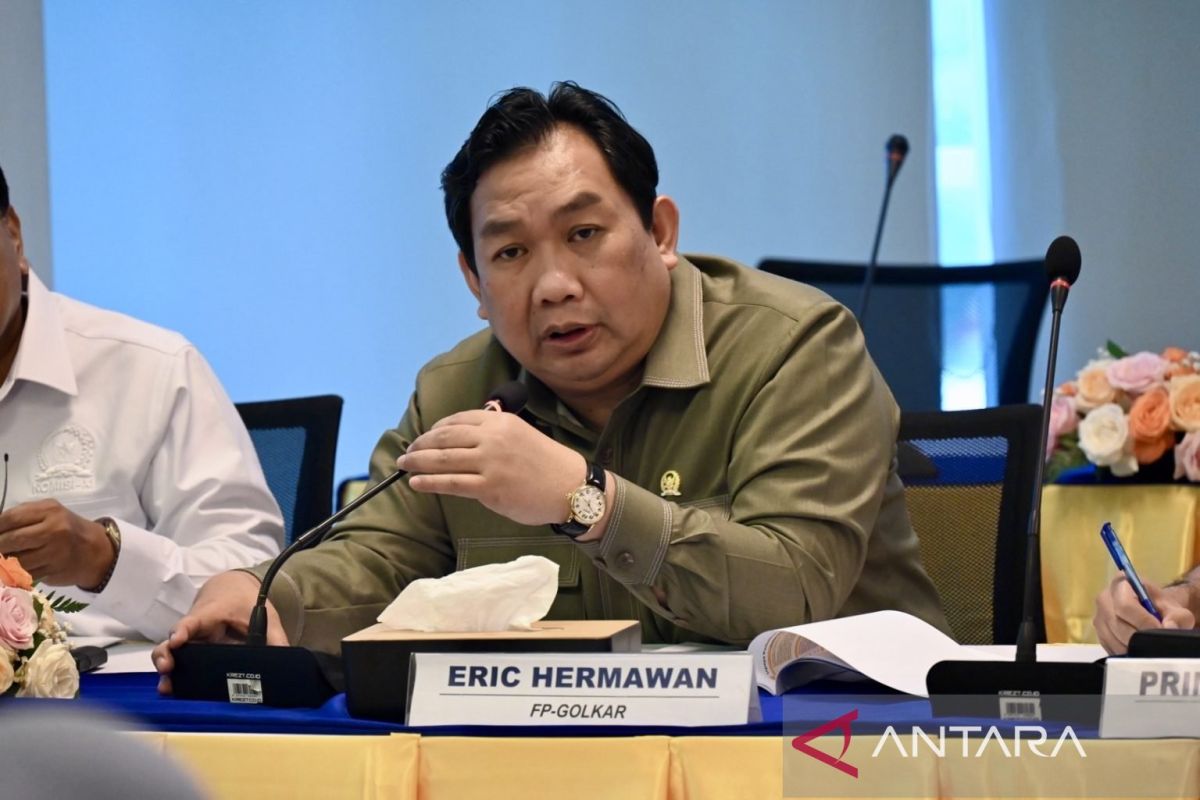
Jakarta — A member of the Indonesian House of Representatives Commission XI, Eric Hermawan, has assessed that the proposal to establish the General Election Commission (KPU) as a fourth branch of state power, as put forward by former Constitutional Court chairman Jimly Asshiddiqie, requires careful and comprehensive study.
The review should be conducted comprehensively from academic, scientific, and practical perspectives on election administration in the field.
According to Eric in a press statement received in Jakarta on Monday, the position of the KPU is already regulated in Article 22E paragraph (5) of the 1945 Indonesian Constitution, which states that the KPU is an institution that is national in character, permanent, and independent in administering elections.
Therefore, if the KPU is to be positioned as a fourth branch of state power, it would require constitutional amendment of the 1945 Constitution.
Eric assessed that in the current challenging political and economic situation, constitutional amendment discussions are unlikely to be a priority for political elites.
In global practice, Eric explained that election administrators themselves adopt several models: the independent model, the government model, and the mixed model, whilst Indonesia has thus far followed the independent institutional model.
Beyond constitutional considerations, Eric also believes it is important to examine the mechanisms for recruiting KPU members to ensure they are genuinely individuals of integrity and independence.
Based on reports from the Electoral Administration Ethics Council (DKPP), which Eric oversees, the number of complaints alleging ethics violations received during the period from 2024 to 31 January 2025 reached 881 complaints involving election administrators, including KPU members, Bawaslu, and PPLN officials.
This, Eric continued, indicates that strengthening institutional integrity remains an important task.
He also emphasised the importance of deploying secure technology, ensuring voter list accuracy, and implementing continuous voter education. According to him, election administration practices in developed nations do not only position the election commission as an administrative institution, but as part of a democratic ecosystem that guarantees the quality and integrity of elections.
With these various considerations, Eric is confident that Indonesia can make the KPU a stronger and more integrity-driven institution in safeguarding Indonesian democracy.