
Mounting Rubbish Piles at Kramat Jati Market, Traders Complain of Foul Odour
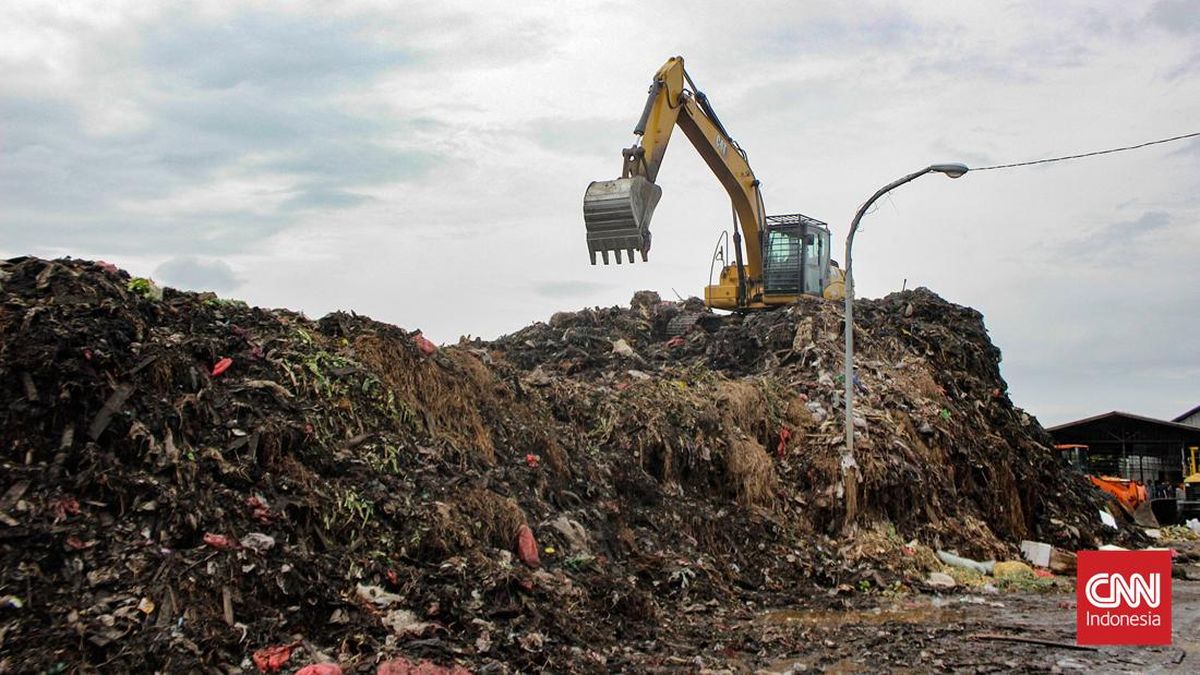
Traders at Pasar Induk Kramat Jati in East Jakarta are complaining about towering piles of rubbish that have not been collected, disrupting buying and selling activities.
“Now the roads are getting narrower because the rubbish is piling up like that. It used to be spacious, now vehicles have trouble passing,” said one trader at Pasar Induk Kramat Jati, Suratno (52), in East Jakarta on Monday.
He complained that the situation is disrupting buying and selling activities, especially due to the pungent smell and increasingly narrow road access.
Moreover, the complaints come from several traders who operate daily around the Temporary Waste Collection Point (TPS).
They claim to have faced similar issues for quite some time, but to date, there has been no maximum handling.
Not only does it hinder access, the foul odour from rotting fruit and vegetable rubbish is also the main complaint. The smell even enters the traders’ stalls.
“We’re trading, but the air keeps smelling and enters inside. It’s very disturbing,” said Suratno.
In addition, he said the condition greatly affects the smooth distribution of goods in the market.
In fact, loading and unloading activities are a vital part of the operations of the main market that supplies food to various regions.
Similar complaints were also voiced by another trader, Susanti (49). She assessed that waste handling at the market has not improved, especially since traders continue to fulfil their obligation to pay cleanliness levies.
According to her, traders are charged levies of around Rp600,000-Rp900,000 per month, depending on the stall size. However, the market’s environmental conditions are deemed not commensurate with the costs incurred.
“There is no relief, even though the rubbish keeps piling up. We are still billed every month, and if we’re even a little late, we’re immediately warned,” said Susanti.
She also mentioned that traders feel disadvantaged because they have to bear the direct impact of poor waste management in the area.
Therefore, she hopes for quick action from the market managers or the government to address the ongoing rubbish problem.
“If left unchecked, this situation will not only disrupt economic activities but also potentially cause health problems in the market environment,” said Susanti.
The rubbish piles in the TPS area were seen towering up to about six metres on Sunday (29/3).
In fact, the height has already exceeded the street lighting lamps around the location. No rubbish collection activities were observed that day.
Additionally, puddles of water around the rubbish piles make the roads muddy and slippery, adding risks for traders and workers passing through the area.
Traders suspect the rubbish accumulation is due to limited transport fleets heading to the Bantargebang Integrated Waste Processing Site (TPST). As a result, rubbish is not collected routinely and continues to pile up day by day.