
Mount Tambora Alert Status Raised by Indonesian Geology Agency
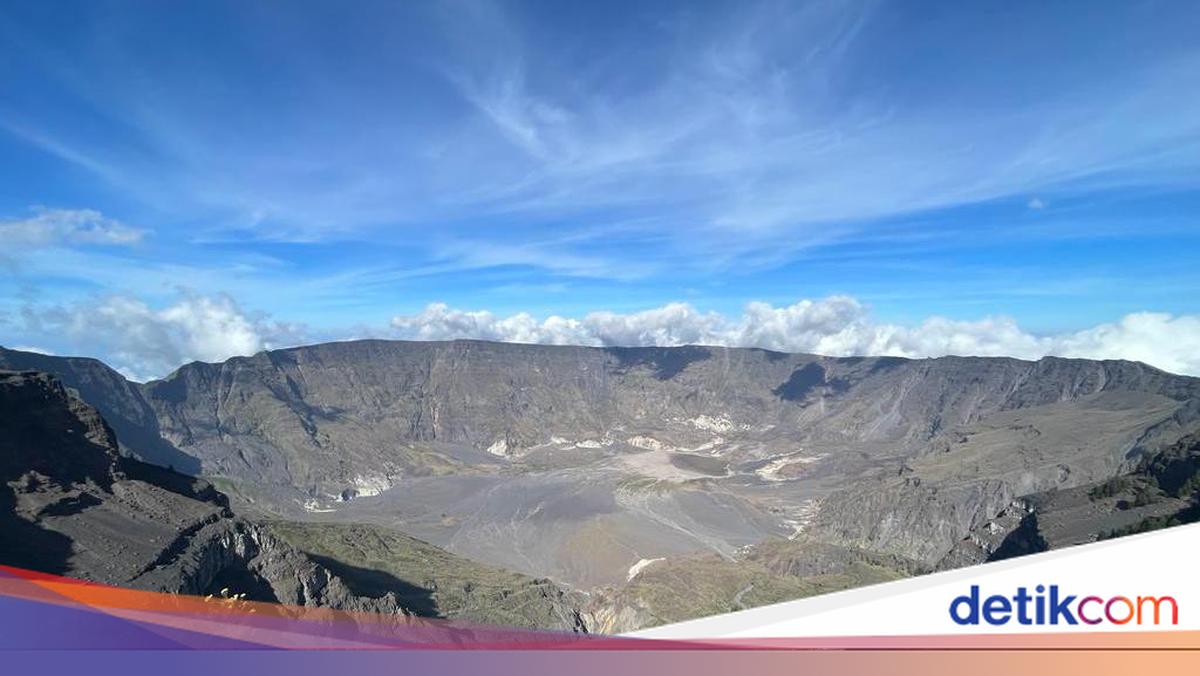
Indonesia’s Geology Agency, under the Ministry of Energy and Mineral Resources (ESDM), has raised the alert status of Mount Tambora in West Nusa Tenggara (NTB) from Level I (normal) to Level II (alert). Residents have been instructed to avoid all activity within a 3-kilometre radius of the volcano’s centre.
The elevation in Mount Tambora’s status, from normal to alert, is based on a special report issued by the Geology Agency. “Mount Tambora, which is administratively located within Dompu Regency and Bima Regency in NTB, is showing an increase in volcanic activity,” said Lana Saria, Head of the Geology Agency.
Saria explained that the increased activity is primarily indicated by a rise in the number of earthquake events associated with the movement of magma from deeper levels toward the magma chamber beneath the volcano. Based on seismic monitoring data, January 2026 recorded 267 volcanic earthquake events.
“In February 2026, the number of volcanic earthquakes increased significantly to 453 events,” Saria stated.
The rise in volcanic earthquakes indicates an increase in magmatic fluid pressure and magma supply from deeper levels toward the shallower magma system beneath Mount Tambora. Seismic data from 1-9 March 2026 also shows continued intense seismic activity. “During this period, 9 rockfall earthquakes, 88 volcanic earthquakes, 40 local tectonic earthquakes, and 24 distant tectonic earthquakes were recorded,” Saria reported.
According to Saria, the dominance of volcanic earthquakes indicates that magmatic dynamics beneath the volcano remain active and have the potential to trigger increased activity in the coming period. Visually, the summit of Mount Tambora has generally been observed clearly or obscured by fog, with no crater smoke observed during the monitoring period.
“Weather conditions around the volcano vary from clear to rainy, with winds ranging from light to strong, blowing in various directions. Air temperature around the volcano ranges from 23 to 33 degrees Celsius,” Saria added.
Based on the evaluation of visual and instrumental data, particularly seismic data showing a significant increase in volcanic earthquakes, Mount Tambora’s activity level was elevated from Level I (normal) to Level II (alert) effective 10 March 2026.
“Following the elevation in activity level, residents around Mount Tambora as well as visitors and tourists are advised not to enter or conduct activities within a 3-kilometre radius of the volcano’s centre,” Saria explained. Communities are also prohibited from descending to the caldera floor, approaching the parasitic cones of Doro Afi Toi or Doro Afi Bou, or approaching gas vents on the caldera floor.
“Residents are also urged to be alert to the potential danger of rockfalls or landslides on the caldera cliffs and walls, which can occur at any time due to slope instability,” Saria added.