
Motorcycles, Cars, and Trucks to Gilimanuk Port Routed into Separate Lanes
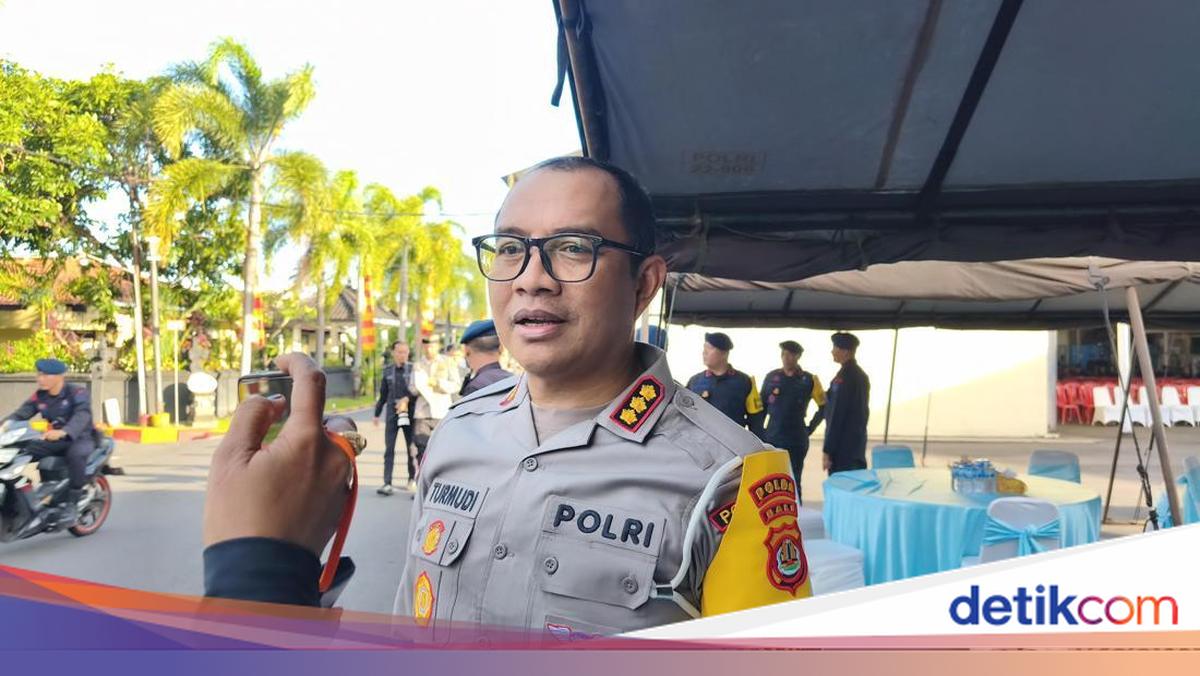
The Bali Police Traffic Directorate (Ditlantas) is preparing several traffic flow management strategies in Jembrana Regency ahead of the 2026 Lebaran exodus. This area is a critical junction as it serves as the main route for vehicles heading to Gilimanuk Port.
Kombes Turmudi, Director of Traffic at the Bali Police, stated that vehicle flow would be regulated by dividing queues based on vehicle type. “In Jembrana, we will divide the queue into three categories: small vehicles, motorcycles, and trucks,” said Turmudi following the Operation Ketupat Agung 2026 roll call at Brimob headquarters in Bali, Thursday (12 March 2026).
According to him, this categorisation is designed to facilitate vehicle flow management towards the port. Additionally, police have prepared a system of traffic control indicators in case of vehicle congestion. “These will be separated into distinct categories, then we divide them into several indicators—indicators one through three. When congestion occurs, we already have plans for where to direct traffic and which routes take priority,” he explained.
Under this scheme, motorcycles and small vehicles heading to Gilimanuk Port will be directed into the Gilimanuk Cargo Terminal area. After passing through the route and parking areas within the terminal, vehicles will be released in rotation towards the port.
For motorcycles, vehicles will exit via Lane I or the main Denpasar-Gilimanuk route to the port. Small vehicles will exit in rotation through Lanes I, II, and III before continuing their journey to Gilimanuk Port. Trucks and buses, meanwhile, will be directed straight to the Landing Craft Machine (LCM) dock area at Gilimanuk Port.
Beyond vehicle routing, the Traffic Directorate has also established five parking pockets along the Denpasar-Gilimanuk route to hold vehicle queues and prevent congestion on the main road. These five parking areas are located at Pengeragoan Rest Area, Kaliakah Terminal, Suzuki Main Warehouse, Agung Citra Trans, and the Cekik Weighing Station area.
This measure is intended to delay vehicle queues before entering the port area so that traffic congestion can be better controlled.
Beyond traffic engineering, police will also conduct public outreach through social media to encourage travellers to depart earlier. This is hoped to avoid vehicle accumulation approaching Nyepi Day closure. “The government has now implemented work-from-anywhere (WFA), so leave entitlements are more flexible. Hopefully, people won’t leave it so close to Nyepi,” said Turmudi.
The Traffic Directorate has also mapped several accident-prone spots or blackspots along the mudik routes in Bali. There are 18 accident-prone points in the Denpasar Metropolitan Police area, two points in Buleleng Police area, two points in Tabanan Police area, two points in Jembrana Police area, two points in Badung Police area, and one point in Klungkung Police area.
As a precautionary measure, police also encourage residents planning to travel for mudik to deposit their vehicles at the nearest police station. Residents can visit their nearest Police Sector (Polsek) or Police Resort (Polres) to deposit vehicles, which will be recorded and explained technically by local officers. “If you wish to deposit your vehicle at a police station, please contact your nearest police station. We will record it,” he concluded.