
Mossad Misses the Mark: Netanyahu's Dream of Victory in the Iran War Backfires
Jakarta, CNBC Indonesia - More than 40 days since the war against Iran broke out, the hopes of some Israeli security elites that the conflict would topple the Tehran government have yet to materialise. Assessments that were once strongly believed in intelligence circles are now considered too optimistic and far from the realities on the ground.
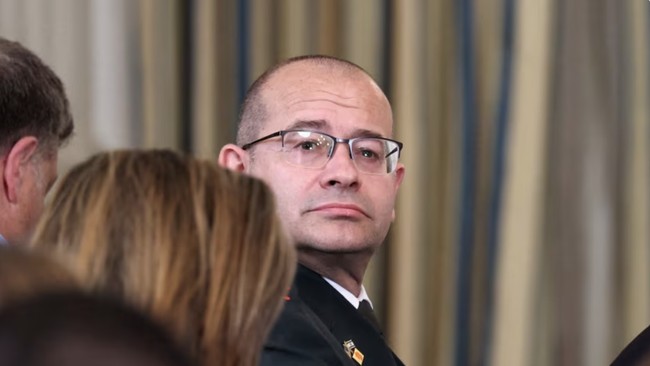
Israeli sources familiar with internal discussions state that Roman Gofman, the prospective head of the Mossad foreign intelligence agency, previously believed that the war could trigger the rapid collapse of the Iranian government. This view was conveyed to Prime Minister Benjamin Netanyahu in various planning discussions.
Gofman, who currently serves as Netanyahu’s military secretary, will officially lead Mossad starting in June for a five-year term, replacing David Barnea. Barnea himself, who has headed Mossad since 2021, held a similar view that the war could topple the Islamic Republic of Iran.
According to two Israeli security sources, Barnea played a key role in providing input ahead of the joint Israel-US attack on Iran on 28 February, which marked the beginning of the conflict. Reports even indicate that he once proposed to Netanyahu and US President Donald Trump that assassinations of Iranian leaders, followed by a series of intelligence operations, could spark domestic opposition mobilisation, protests, riots, and ultimately overthrow the regime.
“Mossad’s position is that regime change is a strong possibility and they can make it happen,” one Israeli security source said, as reported by CNN International on Wednesday (15/4/2026).
However, this approach was not entirely agreed upon by the Israeli military. The source noted that the Israel Defense Forces (IDF) held a more cautious view, focusing on weakening the regime and creating conditions for public rebellion, rather than guaranteeing a swift downfall.
“Mossad made a series of promises that were not kept,” the source said.
Although the initial wave of attacks succeeded in killing Iran’s Supreme Leader Ali Khamenei and destroying several military and government infrastructure sites, no significant changes have occurred in Iran’s power structure. The new supreme leader, Khamenei’s son, is even seen as tougher and has stronger ties to the Iranian Revolutionary Guard Corps.
In his first public statement since the war began, Barnea acknowledged that Israel’s mission in Iran is far from complete.
“We certainly plan for our campaign to continue and be realised even in the period after the attacks on Tehran,” he said during Israel’s Holocaust Remembrance Day commemoration. “Our commitment will only be fulfilled when that extremist regime is replaced.”
The Figure of Gofman and His Controversies
Gofman, 49, was born in Belarus and moved to Israel at the age of 14. He spent more than three decades in the IDF Armoured Corps in various combat and command positions.
His appointment as Mossad chief was announced by Netanyahu in December, outranking other internal candidates from the agency. Although not entirely unprecedented, appointing an intelligence head from the military rather than from within Mossad is considered unusual.
When announcing the appointment, Netanyahu praised Gofman as an exceptionally capable figure. He described him as an “outstanding, brave, and creative officer who has demonstrated out-of-the-box thinking and impressive intelligence throughout the war.”
However, several analysts have questioned Gofman’s suitability. Senior defence analyst Amir Oren assessed that Gofman lacks experience in key intelligence areas such as information gathering, special operations, and inter-agency cooperation.
He described those skills as expertise “where one must truly master the field for years, perhaps decades, before daring to command others.”
Oren even viewed the appointment as driven more by loyalty to Netanyahu than by the needs of national security.
“There is a unanimous assessment from active and veteran military and security professionals that these appointments are not intended to benefit Israel’s security, but rather to help Netanyahu personally and politically,” he said.
The appointment process for Gofman was delayed due to controversy over a 2022 case in which he was alleged to have involved a teenager in disseminating classified information in an online influence operation. The teenager was detained for a long time by security authorities before charges were dropped after it was discovered that his activities were authorised.
Israeli media reported that Gofman denied knowing the teenager’s age and stated that he only ordered the provision of non-classified information.
The teenager, now 21, has become one of Gofman’s most vocal critics and has even appealed to Israel’s Supreme Court against the appointment.
Security Restructuring After the 7 October Attack
Gofman’s appointment also reflects Netanyahu’s broader efforts to overhaul Israel’s security structure following the 7 October 2023 attack, regarded as the country’s greatest security failure in its history.
Since then, nearly the entire top echelon of Israel’s security apparatus has resigned, been dismissed, or completed their terms, including the defence minister, military chief of staff, and heads of military intelligence and the domestic security agency Shin Bet.
With Barnea’s planned departure and Gofman’s appointment, Netanyahu is practically the only senior official still in position since the day of the deadliest attack in Israel’s history.
Amid this dynamic, the war that was initially believed to reshape the power map in Iran has now become a major test, not only for Israel’s military strategy but also for Netanyahu’s leadership.