
More Than Price Control: Production Cuts to Safeguard Mining Reserves
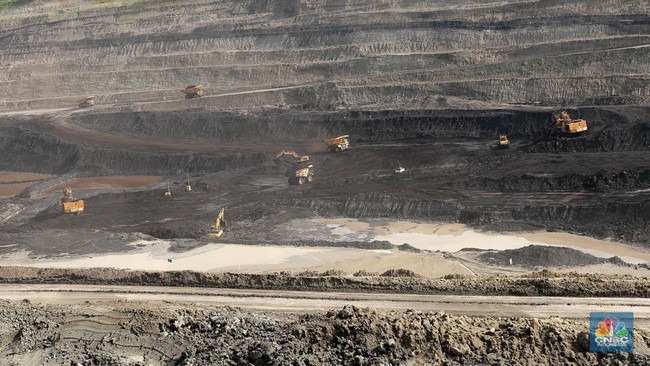
Jakarta — The Ministry of Energy and Mineral Resources (ESDM) has clarified the rationale behind its policy adjusting coal and nickel production through the approval of Work Plans and Cost Budgets (RKAB) for 2026.
Siti Sumilah Rita Susilawati, Secretary of the Directorate General of Minerals and Coal (Sesditjen Minerba), stated that the policy is not a production restriction but a planned adjustment determined a year in advance.
“The government did not decide on this adjustment suddenly—it was planned a year ago. These are state-owned mining operations; permits are proposed and the state has the right to evaluate them carefully. There is no issue if detailed explanations are not disclosed to the public,” Rita said at the CNBC Indonesia Mining Forum “How is Indonesia’s Mining Industry Doing?” on Wednesday, 11 March 2026.
According to Rita, three primary reasons underpin the production adjustment policy. First, a global supply-demand imbalance for both coal and nickel last year caused oversupply and price declines. Second, the adjustment aims to balance the market. Although Indonesia supplies approximately 60% of global coal demand, it cannot control prices independently.
“When we balance production and demand as a significant global supplier, we can influence prices,” she explained.
The third reason concerns extending the lifespan of mining reserves. Indonesia’s current coal reserves are estimated to last approximately 39 years at current production levels of around 800 million tonnes annually. Nickel reserves are considerably more limited, with production potentially reaching 300 million tonnes per year but reserves estimated at only 19–20 years.
“This policy is being implemented with full consideration of risks. The government is ensuring business certainty. This measure is being held in reserve for now, and revisions to the RKAB can be proposed in June or July after further evaluation,” Rita stated.