
More Than Just a Seat: Passenger Empathy Determines the Effectiveness of Priority Seats on the KRL
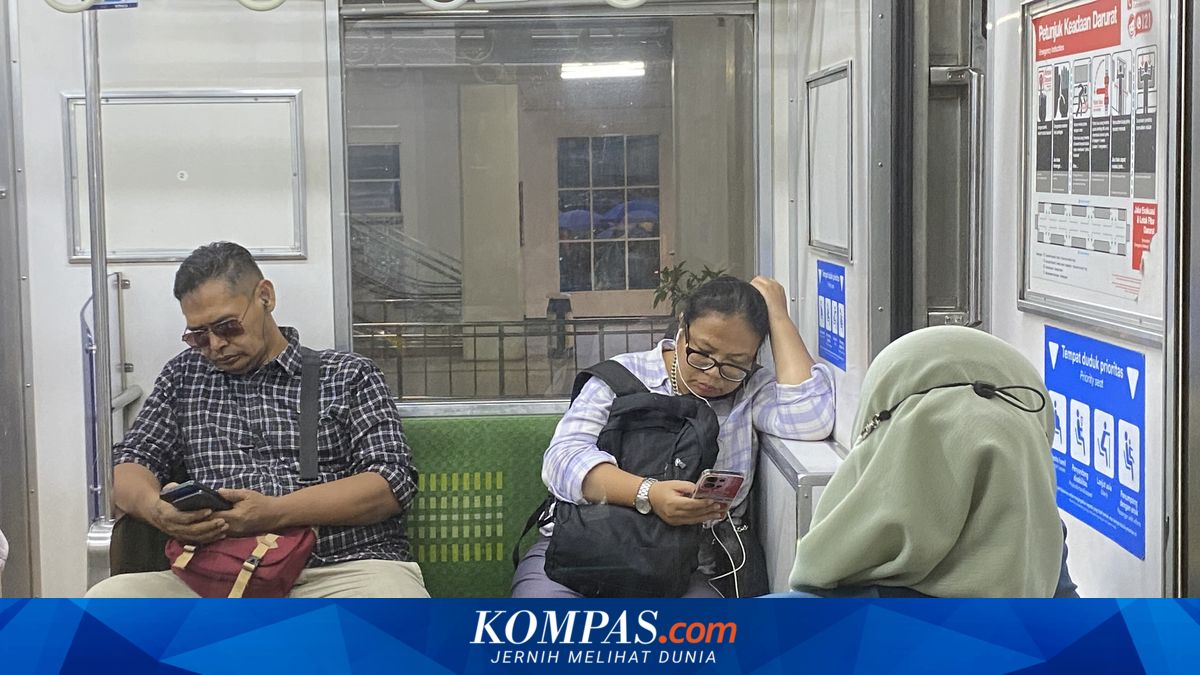
In the crowded carriages of the KRL speeding through the dense urban mobility of society, priority seats often lose their intended meaning. The facility, which should provide a safe space for vulnerable groups, is frequently treated like an ordinary seat. Transportation observer Deddy Herlambang believes that the existence of priority seats actually stems from long-standing social conventions in society. These conventions, he continued, have been reinforced through formal regulations such as the Disability Law, which refers to global principles, including the charter of the World Health Organization (WHO) and the United Nations (UN). However, according to Deddy, strong rules do not automatically ensure ideal practices on the ground. “This issue is part of human resource (HR) education from an early age that outputs the quality of the nation’s character,” he said. When character education does not run optimally, the impact appears in the form of a decline in social sensitivity towards vulnerable groups. In this context, Deddy assesses that the role of staff is not the main factor in ensuring priority seats are used as intended. He emphasises that an ideal public transportation system relies on the awareness of its users. “Field staff are actually not too important if the character of public transport users is already good,” he said. He explained that if passengers have strong discipline and empathy, order will form naturally without excessive intervention. Moreover, in crowded train conditions, the presence of staff inside the carriages is even seen as potentially limiting space. As a solution, Deddy stresses the importance of consistent and ongoing education for all public transport users. “Education every moment, every minute, every day through campaigns via written and voice media in every piece of information or announcement on mass public transport (bus/train) both at stops or stations and on KRL facilities or bus fleets that all available seats are the right of priority groups,” he stated. He believes that repeated announcements delivered inside the KRL are an appropriate step as a collective reminder. “The ongoing education shout for giving priority seats every minute on the KRL is quite good,” he said. Nevertheless, he emphasises that the effectiveness of education still depends on individual responses.