
Monitoring the MBG Kitchen Supply Chain, Gunungkidul Punk Farmers Rely on AI Technology
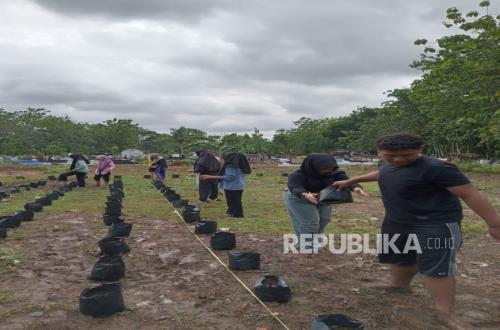
In the midst of a trend where the younger generation is increasingly abandoning the agricultural sector, a group of youths in Gunungkidul, Special Region of Yogyakarta (DIY), united under the Petani Punk community, are demonstrating tangible action. They are committed to becoming the primary suppliers of raw materials for the kitchens of the Free Nutritious Meals (MBG) programme in the Gunungkidul region, incorporating modern technology.
Without holding back, these young people are integrating Artificial Intelligence (AI)-based technology to ensure the quality of raw materials remains maintained and to oversee the smooth supply chain from upstream to the hands of the beneficiaries.
Currently, Petani Punk has established a strategic collaboration with the Bijana Paksi Sitengsu Foundation. This partnership aims to supply food needs to the MBG kitchens in their region.
The target is that by the end of April 2026, Petani Punk’s cultivation results will be ready to supply five MBG kitchen points spread across the Gedangsari and Playen areas.
To guarantee quality and transparency, they are using an integrated AI-based technology system. This system is developed with a Hub concept that integrates data from the five existing kitchens, allowing stock and distribution to be monitored in real-time.
Sibags, the initiator of Petani Punk, stated that Petani Punk Gunungkidul was founded in 2018. This movement was born as a response to concerns over the lack of farmer regeneration in rural areas.
“Instead of choosing formal jobs in urban sectors, these ‘punks’ are proud to go down to the fields, continuing their parents’ profession with a more progressive style and methods,” he explained.
He revealed that this step is proof that punk identity can also make a real contribution to national food security.
“We also embrace Generation Z in the villages to cultivate various types of commodities, from vegetables, fruits, staple foods, to the fisheries and livestock sectors,” Sibagz added.
Meanwhile, Tedi Anggoro, Secretary of the Bijana Paksi Sitengsu Foundation, emphasised the importance of this collaboration to ensure the availability of healthy and sustainable food for the government programme.
“Up to now, the progress of MBG kitchen infrastructure development has reached 80 percent. These facilities are designed not only as food processing places but also as spaces for local economic empowerment,” Tedi Anggoro explained.
From a technical perspective, Fajar Saptono from the IT Team explained that the use of AI enables a more open monitoring process from upstream to downstream. All processes, from planting time with suppliers to food reaching students’ hands, can be accurately recorded.
“With this digital monitoring system, it is hoped that a transparent and efficient food ecosystem will be created, while also instilling pride in young people to return to building villages through agriculture,” Fajar said.