
Momentum for Reciprocal Tariffs and Opportunities for Value-Added Jump in Plantations
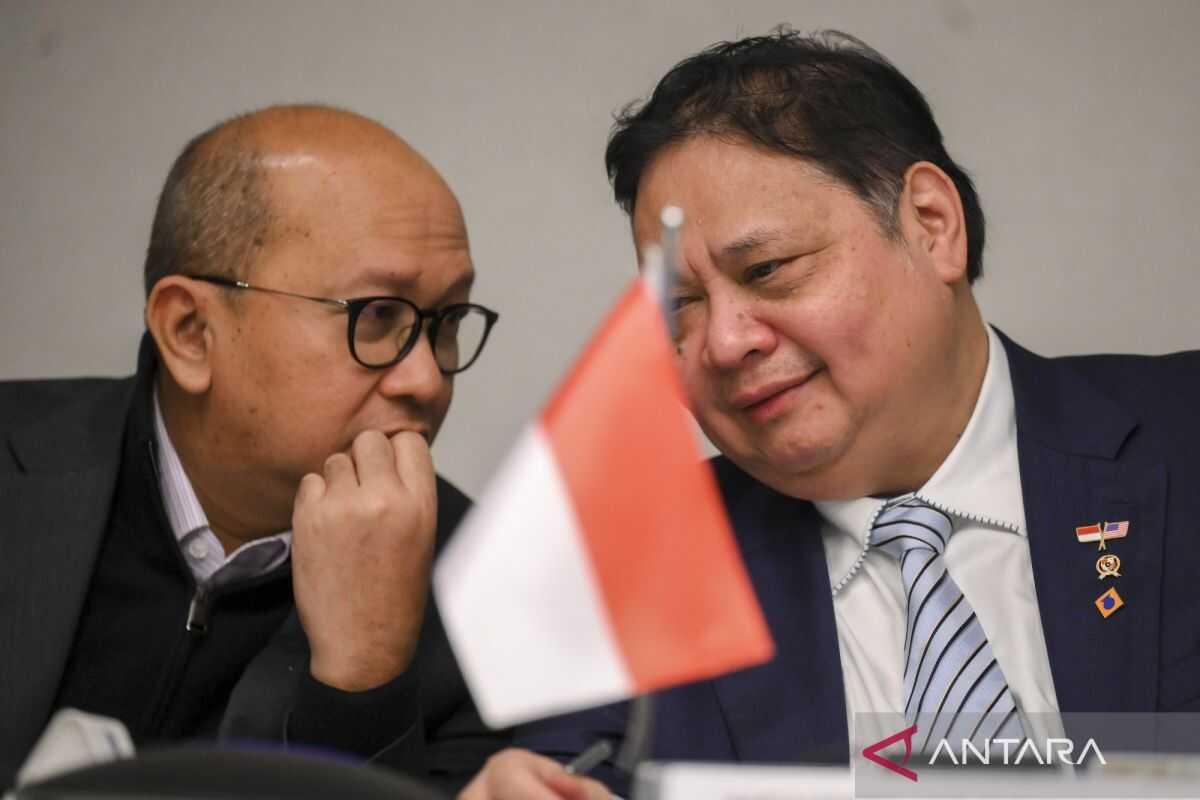
Jakarta — Amid rising global protectionism, when tariff policies can shift rapidly in response to domestic political dynamics, Indonesia has secured a strategic opportunity to expand exports of plantation commodities to the United States market.
This information was conveyed by Agriculture Minister Andi Amran Sulaiman, following the finalisation of an Agreement on Reciprocal Trade (ART) between Indonesia and the United States on 19 February 2026. In the statement, the Ministry of Agriculture noted that 173 tariff lines (HS codes) covering 53 groups of agricultural commodities and their derivatives received zero per cent tariff facilities in the US market.
More broadly, the government, through the Coordinating Minister for Economic Affairs Airlangga Hartarto, explained that a total of 1,819 tariff lines for Indonesian products, spanning both agricultural and industrial sectors, received zero per cent tariff treatment under the scheme. This includes flagship commodities such as palm oil, coffee, cocoa, spices and rubber, which have long been the backbone of national plantation exports and now enjoy more competitive market access to the United States.
Competitiveness Test
The euphoria surrounding “tariff-free” arrangements warrants careful examination. In the ART finalised by the White House on 19 February 2026, the US fundamentally maintains a 19 per cent reciprocal tariff on imports from Indonesia, except for certain products granted zero per cent reciprocal tariffs.
A frequently overlooked detail: the ART document confirms that these reciprocal tariffs are additional duties (additional duty) imposed above the most-favoured-nation (MFN) tariffs already in effect. In other words, “zero per cent” here, particularly in “eliminating additional duties”, does not automatically eliminate all import charges.
Herein lies the relevance for plantation commodities. Schedule 2 of the ART states that the US grants zero per cent reciprocal tariff for goods from Indonesia listed in Schedule 2B and refers to Executive Order 14360 (14 November 2025). The official annex to EO 14360 contains HTSUS classifications for various commodities aligned with Indonesia’s plantation strength—coffee, cocoa and their products, along with numerous spices. In the same annex, palm oil and palm kernel oil are explicitly listed, as is natural rubber.
Why does Washington provide such room? Because the US economy requires supplies of plantation commodities that cannot be fully produced domestically, whilst damping consumer price pressures. However, there is another equally decisive factor: the trade deficit.
US Census data shows that in 2025, US imports from Indonesia reached US$34.74 billion, whilst US exports to Indonesia amounted to US$11.03 billion, representing a deficit of approximately US$23.72 billion on the US side. This figure explains why “reciprocity” became the keyword, and simultaneously the negotiating arena, not only at the diplomatic table but also in domestic political conversation in the US.
From Indonesia’s perspective, the 2025 macroeconomic foundation is reasonably robust. The Central Statistics Agency notes that non-oil and gas exports in 2025 reached US$269.84 billion and the trade balance in 2025 showed a surplus of US$41.05 billion. However, the next target is not merely to repeat the surplus but to improve export structure to be more resilient against raw commodity price shocks.
Better tariff access must be deployed to accelerate the shift from raw commodities towards value-added products. If we only increase the volume of raw materials, value-added content and bargaining power will remain limited, whilst the risk of price volatility remains substantial.