
Moment When PDIP Legislator Engages in Fierce Debate on Colonial Issues in the Netherlands
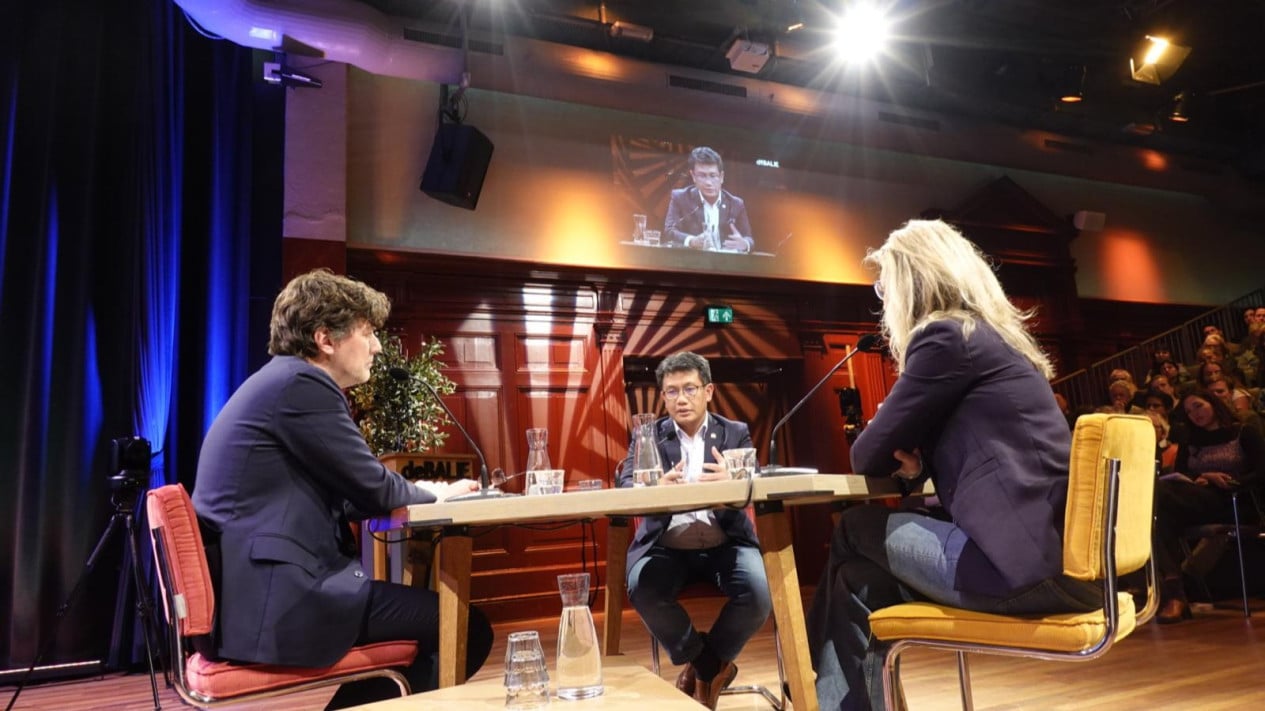
A heated historical debate unfolded at De Balie in Amsterdam on the theme “Eighty Years After the Revolution: A Shared Story”, held on Wednesday, 6 May local time, marking 80 years since Indonesia’s revolution. In the discussion, historian Bonnie Triyana and researcher Anne-Lot Hoek exchanged views on decolonisation, collaboration, and the trauma of war from two sides that often feature differing narratives.
Bonnie Triyana, who is also a member of the Indonesian House of Representatives (DPR RI), opened the debate by rejecting the assumption that Indonesia’s decolonisation began only in 1945. She provided concrete examples starting from the Japanese occupation in 1942.
“The Japanese government encouraged Indonesians to use the Indonesian language. I think that was also part of decolonisation, because the Indonesian language was never taught in schools. There was Malay, not Indonesian,” said Bonnie.
This PDIP politician also criticised accusations of fascist collaboration against nationalist leaders who worked with the Japanese. “If you read Sutan Sjahrir, he said that actually the Dutch colonial government was also fascist. In January 1927, the Dutch colonial government created a concentration camp in Digul,” she emphasised.
In response, Anne, who has extensively researched Bali, acknowledged the difficulties in finding sources of resistance from the colonial era. She revealed that memoirs of Dutch people who worked in Bali at that time still held romantic views.
“They did not see the emptiness, they did not see the rejection. Even someone wrote in the 1980s, still in their memoir, that the idea of Indonesian rejection was an absurd idea,” said Anne.
The debate grew more engaging when Bonnie introduced the Multatuli Museum in Lebak as Indonesia’s first anti-colonial museum. Bonnie explained, “Sa’idjah and Adinda are symbols of colonialism. They are victims of colonialism.”
Annalotte acknowledged the importance of the figure Multatuli, even though he was part of the Dutch colonial system.
The sharpest difference in perspectives emerged when discussing violence during the revolution. Anne recounted in detail the battles in Bali after the proclamation.
“The Dutch gathered all people considered to have political activities or resistance and placed them in camps across the island. There were many crimes, murders, it was very cruel,” she said.