
Mojtaba Khamenei's Message: Strait of Hormuz to Reopen After War, But War Not Over Yet
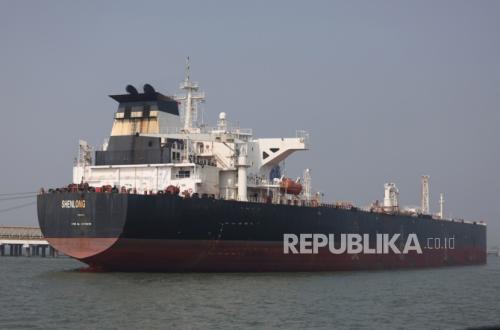
REPUBLIKA.CO.ID, TEHERAN – An envoy of Iran’s Supreme Leader, Mojtaba Khamenei, Abdul Majid Hakim Elahi, stated that his country is currently implementing strict control over the Strait of Hormuz. However, he said, Mojtaba guarantees that after the war with the United States (US) and Israel ends, Iran will reopen the strait. “Because the war is not over, Iran has strong control over it (the Strait of Hormuz). But I am confident that after the war, the strait will be opened, and countries will benefit from it,” Elahi revealed in an interview with the Russian news agency TASS on Friday (10/4/2026). He emphasised that Iran does not desire a crisis in the world due to the Strait of Hormuz. “Iran does not want to cause conflict or crisis for the world because of the Strait of Hormuz. We want to have good relations, and more than that, friendship, with all countries,” he said. Iran and the US have agreed to a two-week ceasefire on Tuesday (7/4/2026). The agreement was reached through mediation brokered by Pakistan’s Prime Minister Shehbaz Sharif. Through this agreement, the US agreed to stop its attacks on Iran. In exchange, Iran must open access to the Strait of Hormuz. Tehran’s decision to strictly limit ship traffic in the strait has skyrocketed global oil prices. Iran agreed to open the Strait of Hormuz during the ceasefire period. However, ship traffic in those waters must still be coordinated by Iran’s military. Iran also submitted a 10-point ceasefire proposal to the US. Its contents include the lifting of sanctions and the release of funds and assets belonging to Iran that were frozen by the US, full payment of compensation for reconstruction costs due to the war, and a total halt to attacks, not only on Iran, but also on Iraq, Lebanon, and Yemen.