
Mojtaba Khamenei's First Message to US: Close All Military Bases in the Middle East Immediately
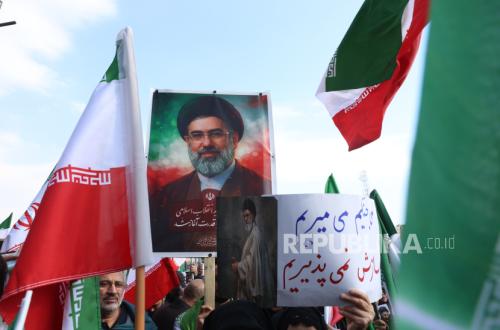
Tehran — Iran’s newly appointed Supreme Leader, Mojtaba Khamenei, has released his inaugural statement asserting Tehran’s policy direction amid the turmoil engulfing the Middle East. In a message read via Press TV on Thursday (12 March 2026), Mojtaba called for national unity and reaffirmed that the “global artery” of the Strait of Hormuz would remain closed to pressure Iran’s enemies.
In the statement, Mojtaba demanded that all US military bases in the region be closed immediately. If not, he warned, these facilities would continue to be targets for attack. While emphasising Iran’s desire for friendly relations with neighbouring countries, he asserted that military operations against US assets would not cease.
Mojtaba also referenced the role of resistance factions in the region. He stated that the armed groups in Yemen (Ansarullah/Houthis) would “complete their mission,” whilst groups in Iraq were described as eager to “assist the Islamic Revolution.”
“I wish to thank the brave fighters who are performing extraordinary duties at a time when our nation is under pressure and attack,” he said, whilst promising that Iran would continue fighting to prevent territorial division or foreign domination.
Health speculation
Middle East analysts viewed Mojtaba’s move as an attempt to reinforce Iran’s position of non-submission to Washington’s pressure. However, analyst Zeidon Alkinani noted that the speech was not delivered directly by Mojtaba himself, but rather by a news presenter.
This sparked speculation about the new leader’s health condition. Rumours emerged that Mojtaba may have been injured or was even a casualty in the ongoing conflict. “This situation creates considerable uncertainty regarding the legitimacy and ability of the Supreme Leader to stand firm in facing major challenges,” Alkinani told Al Jazeera.
Mojtaba’s statement was also viewed as more aggressive than the position of Iranian President Masoud Pezeshkian. A day earlier, Pezeshkian had suggested that Iran would be willing to consider ending the war if certain conditions were met.
Mojtaba’s focus on armed resistance was seen as a strategy to divert public discussion from fundamental domestic issues, such as economic reform and living difficulties that had previously triggered major protests in December and January.