
Mobile Phone Sales in Ruins, Traders' Fortunes Wretched
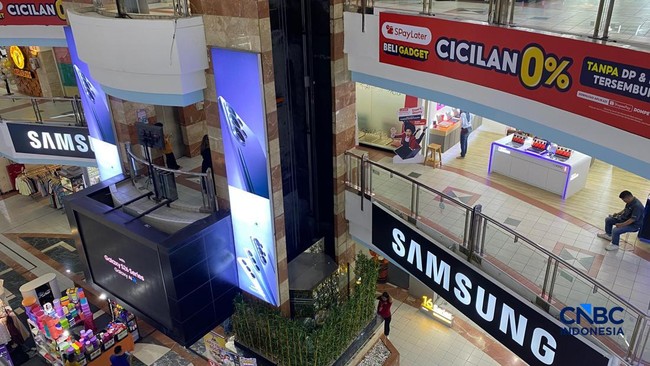
Jakarta, CNBC Indonesia - Mobile phone traders are also affected by the rising prices of handsets. Price adjustments have occurred since the end of last year due to chip shortages resulting from surging demand for AI.
A mobile phone trader at ITC Kuningan in Jakarta admitted that his sales have significantly declined over the past two months. They have even dropped by up to 50% since the beginning of this year.
“It affects a lot; my sales have been in ruins for two months,” he told CNBC Indonesia on Tuesday (7/4/2026).
Eid, which usually sees an increase, has not been much different. He admitted to selling fewer than 30 units this year compared to up to 40 units last year.
Sales declines have indeed occurred in many mobile phone shops. Another seller said he had informed buyers in advance about the price increases happening in many places.
“We just give them the knowledge; all prices are rising. Prices are up everywhere. Just wait; they’ll rise again because some shops have had increases twice,” the seller explained.
Meanwhile, a shop employee said many buyers still purchase phones even after knowing about the device price hikes.
The devices experiencing increases are mostly entry-level phones like the Samsung A07, which has risen by Rp100,000-Rp200,000.
Similarly, some mid-range phones have also increased, such as the Oppo A6, which has gone up by around Rp900,000.
Some shop sellers also revealed that phones with 4/64 GB memory are now priced at more than Rp2 million. Previously, that configuration was sold for around Rp1.4 million.
The rise in mobile phone prices, along with laptops, is due to chip shortages since the end of last year. This is because demand for chips in the AI industry continues to increase.
IDC has also predicted such price rises at the beginning of this year. Indonesia is said to be feeling the global chip crisis.
The impact is evident on cheap smartphones. It also affects mid and high segments, but with some costs still absorbable before passing them on to selling prices, ultimately keeping prices more controlled.
RAM Crisis Worsens, China Starts to Give Up
The impact of this RAM crisis has led several Chinese phone manufacturers to revise their shipment projections at the beginning of this year. Xiaomi and Oppo have reduced production by more than 20%, while Vivo has cut by nearly 15%.
The parent company of Tecno, Infinix, and Itel, Transsion, estimates a shipment decline of 70 million units.
Like Chinese producers, research firm Counterpoint has also slashed its global mobile phone shipment projections to minus 2.1% for the year. The largest revisions are for Chinese phone makers, with Honor, Oppo, and Vivo recording declines of 1% to less than 4%.
Meanwhile, a Techwire Asia report also mentions the impact of chip shortages on low-end devices. Producers cannot obtain enough DRAM and NAND for products in that segment and have options like raising prices or cutting standard features in phones.
The Asia-Pacific market is the most affected by the global memory chip shortage. Because cheap phones dominate this region.
For information, low-priced phones usually take thin margins. This leaves very little room to handle rising chip prices.
Counterpoint notes that component costs for low-end phones, ranging below US$200, have increased by 25% since early 2025. Meanwhile, for mid and high classes, it’s 15% and 10%.
Memory chip prices are also predicted to rise further in Q2-2026 by 40%. This will add 8%-15% to production costs.